
A gummy listing is not decided when the buyer tastes your sample. It is decided twelve weeks later, when the category manager opens the shelf report and decides whether your line earns a second order — or hands its facings to the next supplier on the list.
The Three Numbers a Buyer Actually Tracks
Category managers in grocery and convenience do not manage shelves by opinion but by three numbers. Facings: how many horizontal units of your SKU the planogram grants you. Velocity: units sold per facing per week, which lets a two-facing SKU be compared fairly against a five-facing one. Days of supply: how long current stock lasts at current speed, which decides when the replenishment order is cut.
Everything else is context. If you want a second order, make all three look healthy in week eight, not week one.
| Metric | What it measures | What moves it |
|---|---|---|
| Facings | Shelf width the planogram assigns to your SKU | Category role, pack width, visual block, negotiated listing |
| Velocity | Units sold per facing per week | Format distinctiveness, flavour clarity, price point, placement |
| Days of supply | How long current stock lasts at current speed | Shelf life, order cadence, promotion timing, seasonality |
| Sell-through at week 8 | Share of the first order actually sold | Launch support, trial prompt at the shelf, staff recommendation |
| Shrink and damages | Units lost to melting, breakage or expiry | Heat-resistant format, seal integrity, ambient stability |
| Reorder interval | Time between the first and second order | All of the above — this number decides your future |
Facings Are a Budget, Not a Compliment
Every facing a retailer grants you is rented space, and rent is paid in turnover. A SKU that sells steadily from one facing is a good citizen of the planogram; one that needs three facings to move the same volume is quietly draining the bay, and the buyer notices long before the next review. Experienced exporters therefore design the first programme for a small number of facings, and treat extras as a reward earned with velocity — never a request made in the first meeting.
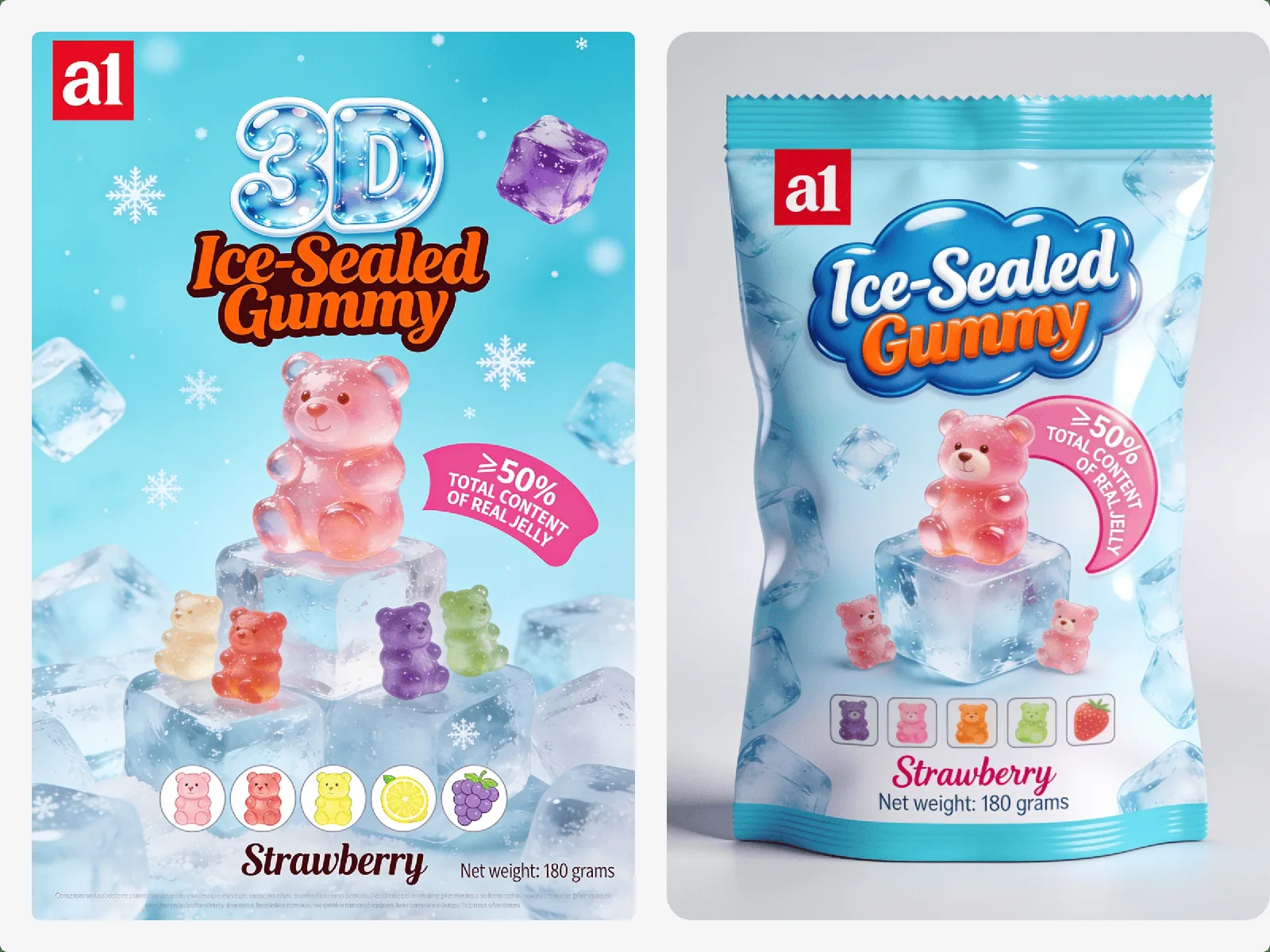
Pack width is a commercial decision, not only a design one. The a1 confectionery range ships in stand-up pouches from 40 to 200 g, deliberately narrow on the shelf: more SKUs sit side by side in the same bay, each with a clean colour block and a readable flavour word.
How a New Gummy Earns Its First Facings
On most candy shelves, anchor positions belong to proven formats: classic fruit bags, licensed novelty, and a trend line or two under test. A new import enters as a test SKU: one facing, one bay, one review cycle. The buyer asks a narrow question — does this format produce behaviour the shelf does not already have?
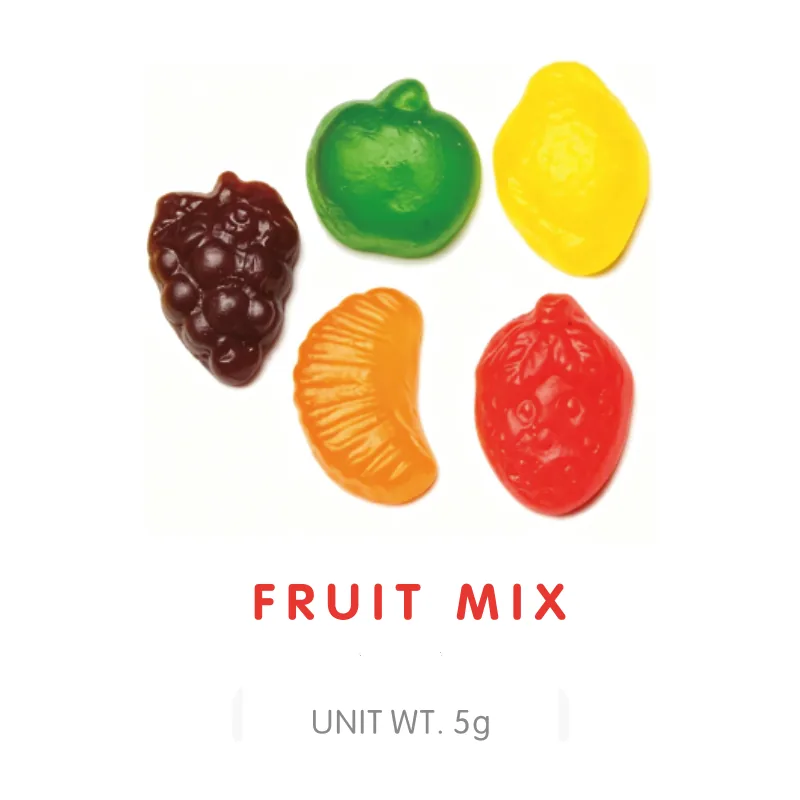
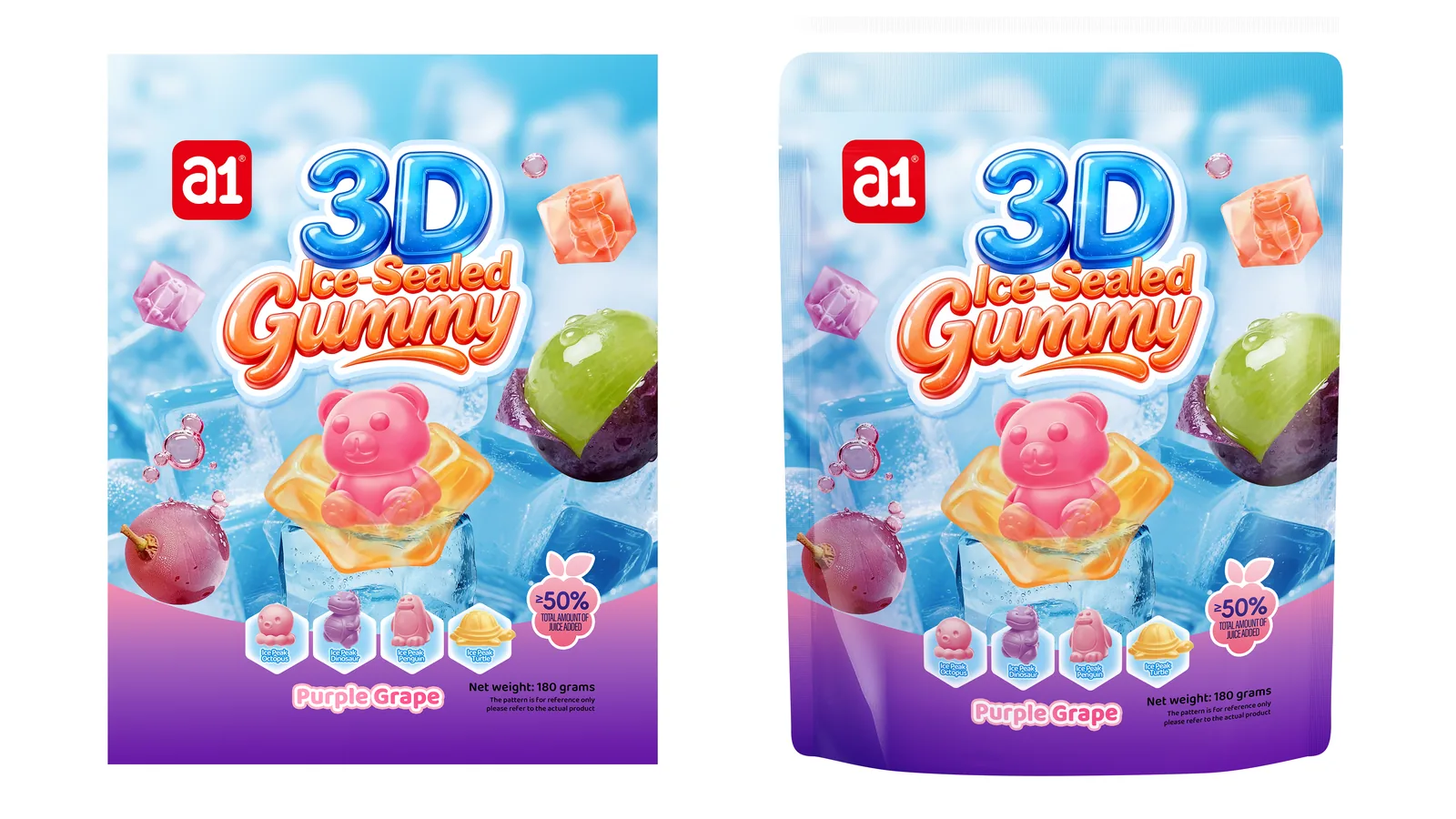
Formats that answer yes look different at two metres, and the difference survives a four-word explanation. A 3D ice-sealed gummy with an animal figure sealed inside the candy is "a toy inside the sweet". A peelable gummy with a gel core under a fruit skin is "you peel it yourself". Sour sanded gummies are "sour outside, real jam inside". None of them ask the shopper to read an ingredient list first — which is exactly what a facing needs.
Texture Is What the Repeat Purchase Reads
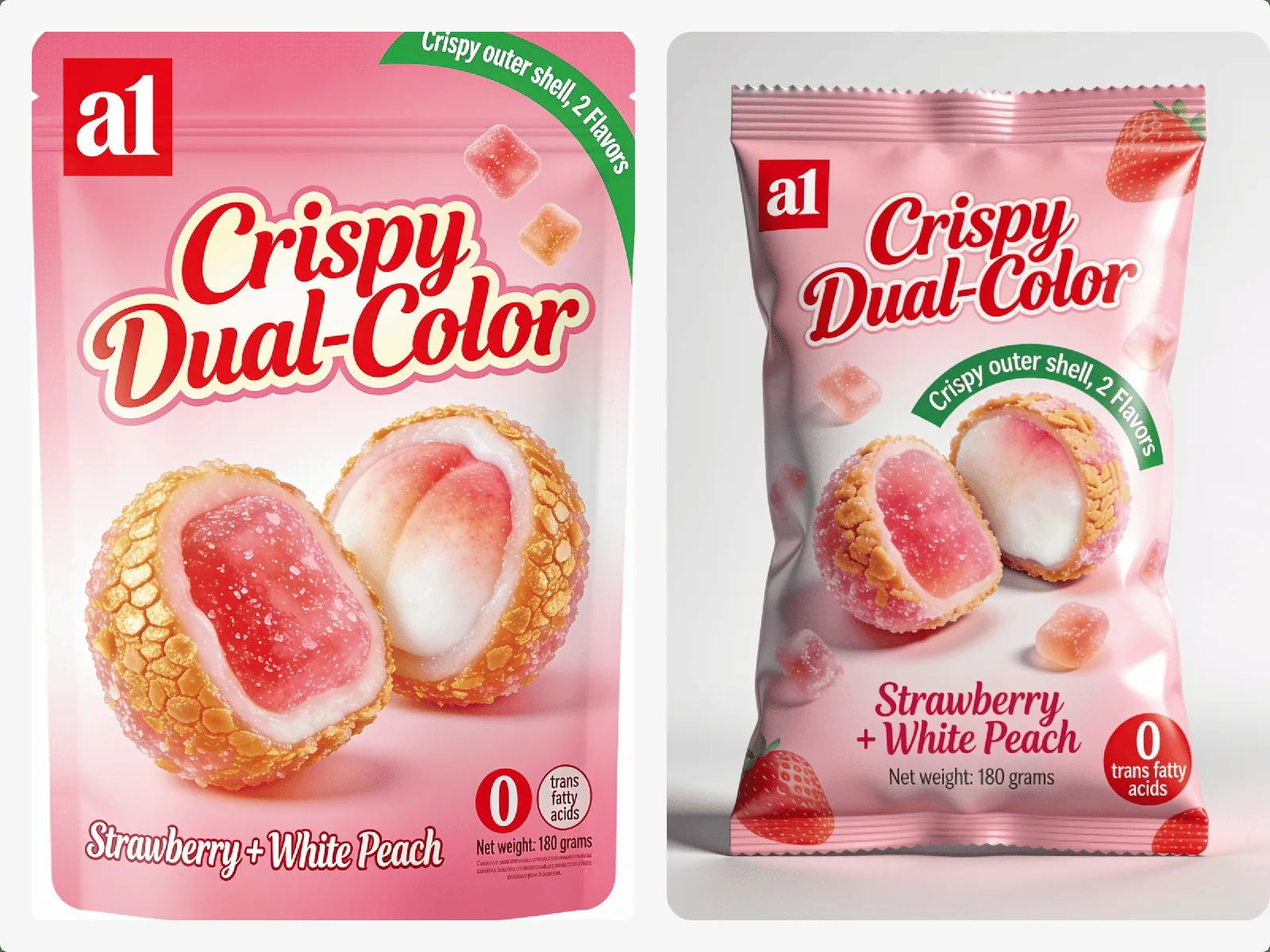
Colour sells the first unit; texture sells the second. A flavour is copied within a season, but a sensation cannot be imitated by reshaping a flat gummy. A crispy dual-colour gummy — brittle shell over a soft jelly core, gelatin-free, built on agar and pectin, two flavours in one bag — gives a contrast that brings the hand back. A peelable gummy turns eating into a small interaction: fruit skin over a gel core, 50% real fruit juice, no trans fat. Interactions are what shoppers describe to each other — word of mouth is the cheapest velocity a facing gets.
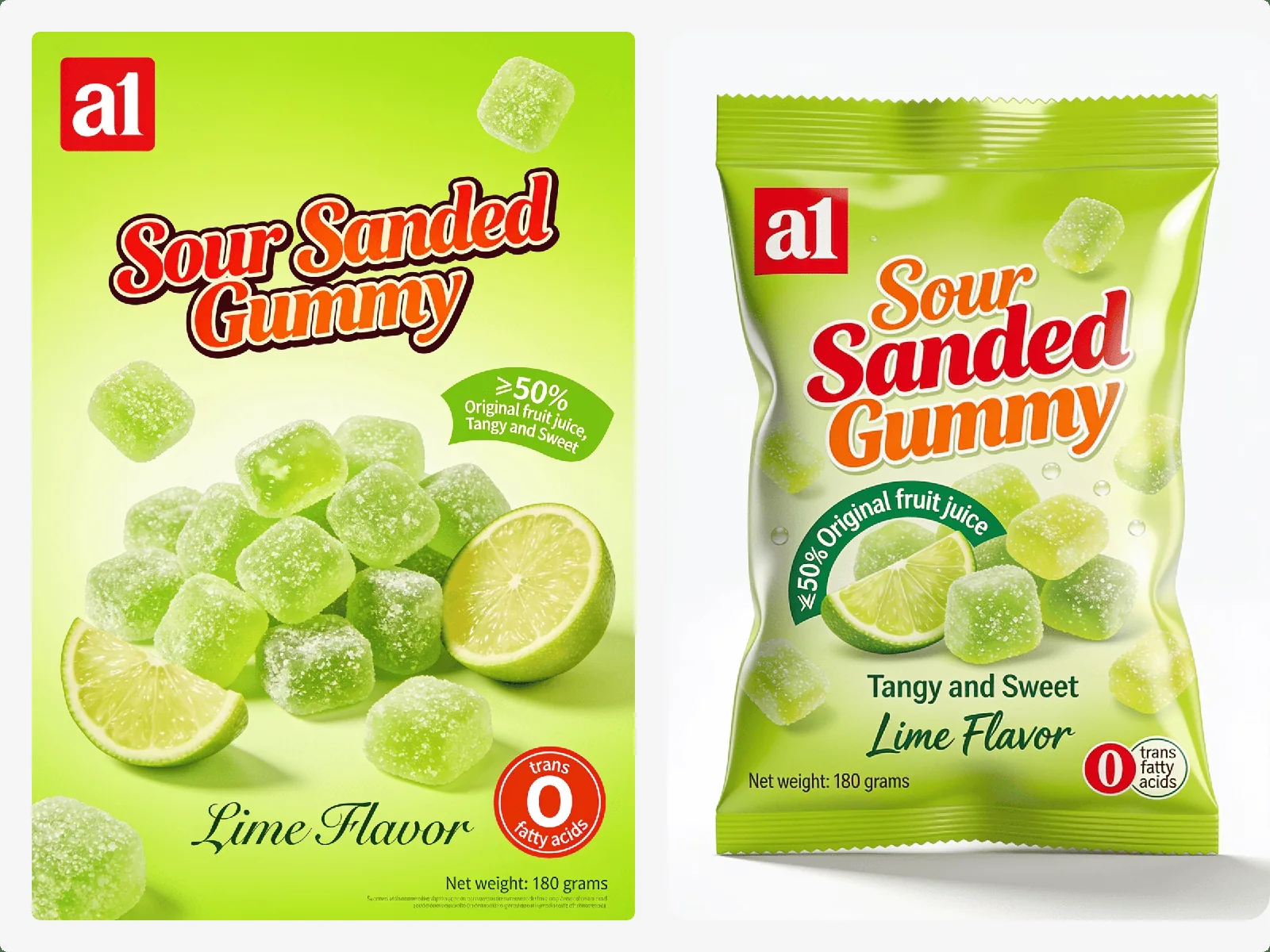
Sour formats read just as fast: acid-sanded shells signal intensity without words and travel better than chocolate. We mapped that trend for LatAm and CIS shelves in our sour sanded gummies article.
Twelve Months of Shelf Life Changes the Reading
Days of supply is where confectionery quietly beats most snack categories. The a1 gummy range carries a 12-month ambient shelf life, so a slow start is not a write-off: the buyer can hold stock, re-time a promotion and re-slot the bay without destroying value. Importers used to short-life bakery feel the difference immediately: it is the difference between a nervous listing and a patient one. Heat-resistant formats also keep the shrink line near zero on tropical routes.
Convenience Channels Read Faster
A hypermarket reviews its categories quarterly; a convenience chain reviews weekly. In forecourt and convenience formats the bay is smaller, facings per SKU fewer, and velocity is measured in days. This is where occasion-driven formats earn their place: a coffee gummy built around an energy occasion does not compete with the fruit bag beside it, it competes with the energy drink in the cooler next door — and the margin conversation is very different. We broke down that channel logic in our coffee gummies article.
Off-Shelf Placements Are Free Velocity
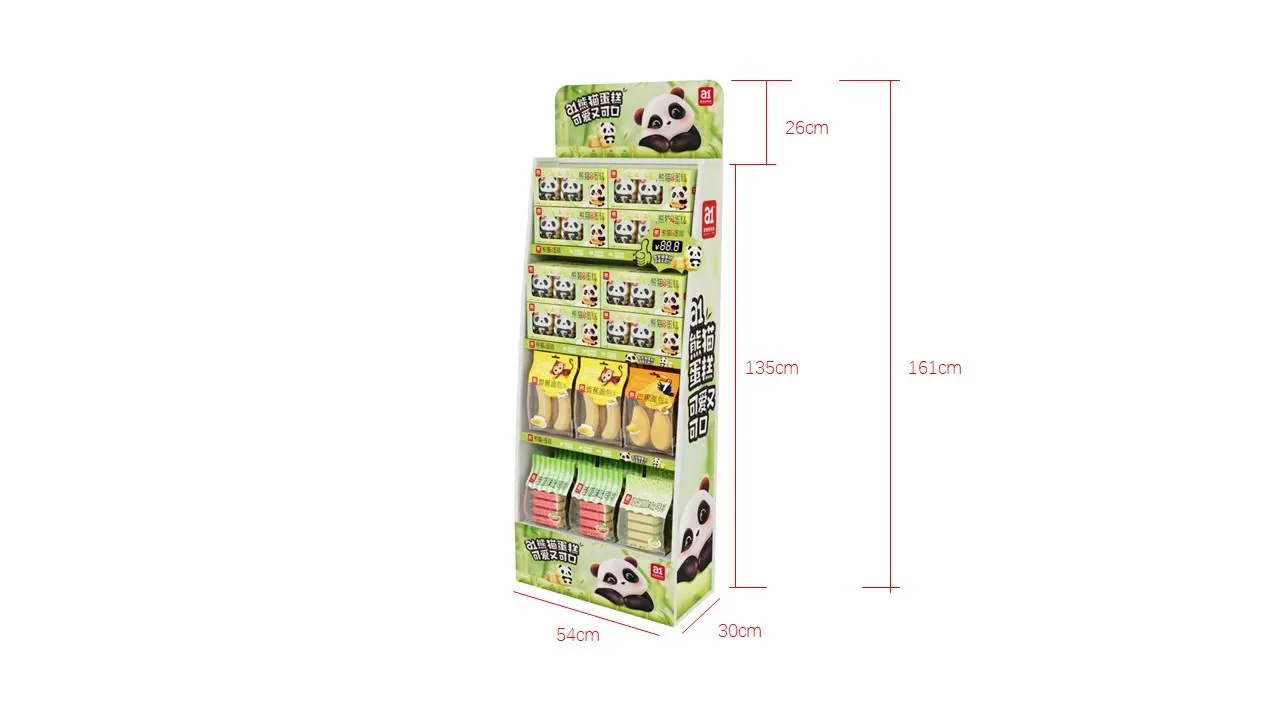
The planogram is not the only reading a buyer does. Secondary placements — display racks at the aisle end, stacks beside the checkout, seasonal dump bins — generate velocity without a single extra facing. A purpose-built display unit converts a one-facing SKU into a destination, which is why we supply display rack designs to programme partners. If your velocity report looks flat but the rack sold out, the problem is the planogram position, not the product.
What to Bring to the Listing Meeting
Buyers reward suppliers who arrive with the report already written:
- A one-page planogram proposal: SKUs, facings per SKU, each line's role, and an honest exit rule if velocity misses.
- A velocity assumption per facing, backed by a promotion plan — vague optimism reads as risk.
- The certificate pack: FSSC 22000, BRC, HACCP and HALAL, plus the registration status your market requires.
- Specification sheets and a sample case covering all texture families — let the committee taste what the planogram will show.
- A loading plan — cartons of each SKU in a 20GP or 40HQ mixed container, which decides landed cost per facing. We detailed the mixed-loading logic in our gummy MOQ article.
A Pre-Pitch Checklist
- Which category role will your SKU play: destination, seasonal, or impulse filler?
- How many facings are you asking for, and what velocity justifies them?
- Which texture family leads — crispy, peelable, ice-sealed, or sour sanded?
- Can a 40–200 g pouch span the bay's price points without new tooling?
- What exit rule can the buyer accept — and can a 12-month shelf life make it unnecessary?
- What does the second order look like: same mix, or reallocate facings to the winner?
- Who answers the buyer within 24 hours during the first review cycle?
Frequently Asked Questions
How many SKUs should a first gummy programme contain? Three to five, spanning at least two texture families. A single-SKU entry makes the buyer judge your whole capability on one bay position; a family shows the planogram can be built, not just filled. Packaging trade-offs are in our packaging formats article.
What if velocity is low after eight weeks? Diagnose before discounting: facing position, pack size against the shopper mission, and whether the promotion actually ran. A 12-month shelf life means none of these fixes destroys value — which is why confectionery listings survive experiments that would sink a fresh bakery SKU.
Can we test a market without a full listing commitment? Yes: MOQ from 500 cartons per SKU, 200-carton trial orders for new markets, shipped as a mixed container so three or four texture families share the same bay test.
Where to Start
Send us your market, channel and bay size, and we will return a facing-level assortment proposal with velocity assumptions, the certificate pack and a texture-family sample case. Start on the contact page: Katherine, Justin@a1food.cn, WhatsApp +86-189-6548-2111.