
Sour used to be one flavor on a gummy wall. Today it behaves like a format of its own: a crystalline crust, a specific taste arc, a repeat-purchase pattern unlike a plain gummy. For distributors building assortments for Latin America and the CIS, sour sanded gummies deserve a deliberate planogram slot — not a leftover one.
For importers, wholesalers and retail buyers weighing acid-coated gummies for a confectionery program, this guide covers: what "sour sanded" means in production, why the format wins in hot-climate and long-route markets, the two failure modes to spec against, and an eight-point pre-order checklist.
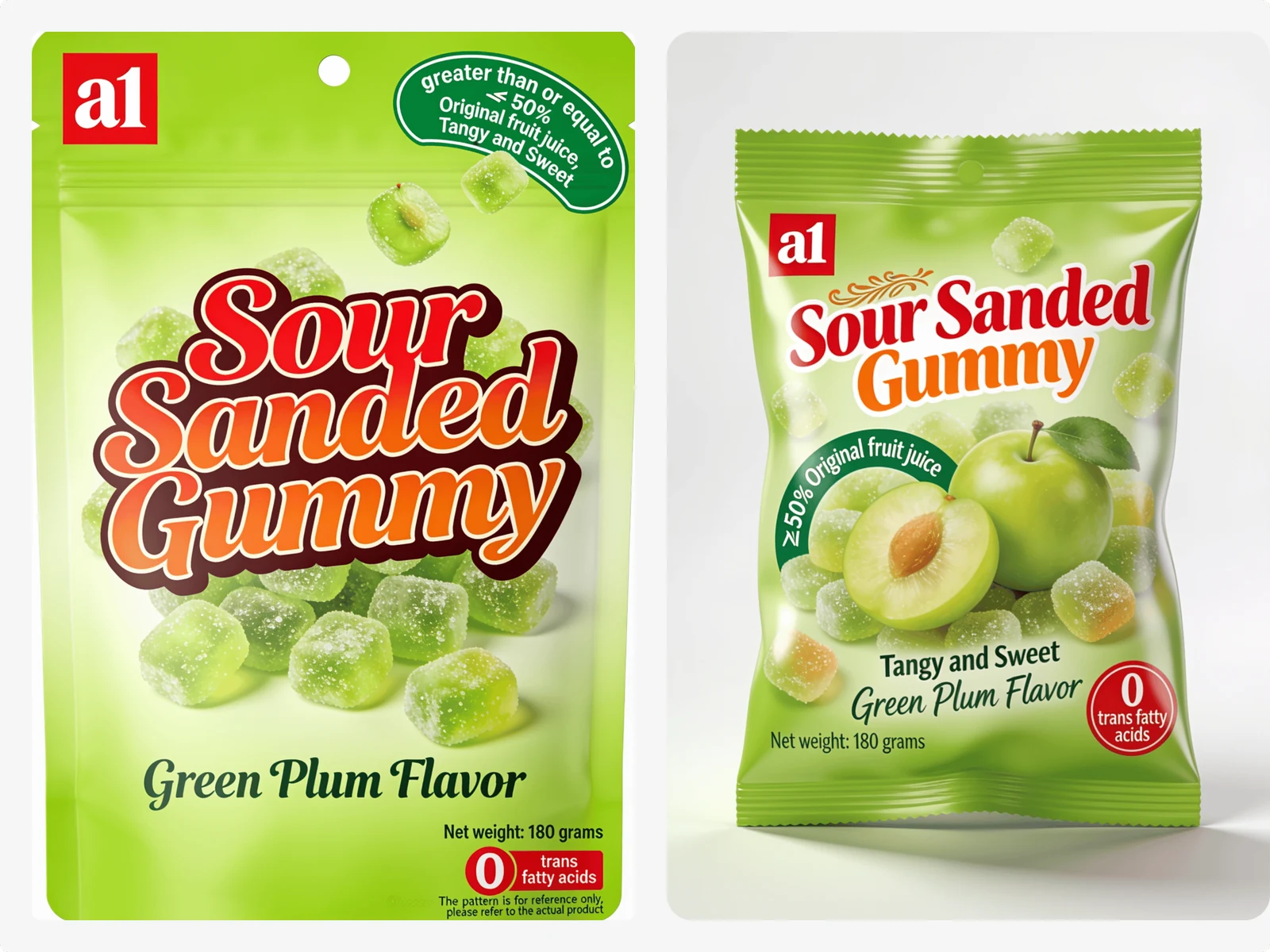
What "Sour Sanded" Actually Means in Production
"Sanded" refers to the crystalline acid-sugar crust applied to the gummy surface after demolding. A serious sanded SKU is a three-layer construction: an outer sanding of fine sugar blended with food acids, the gummy body that carries the chew, and — in filled versions like ours — a real fruit-jam core. The a1 Sour Sanded line is built on that filled construction, with natural-source colors and three launch flavors: green plum, lime and summer black grape.
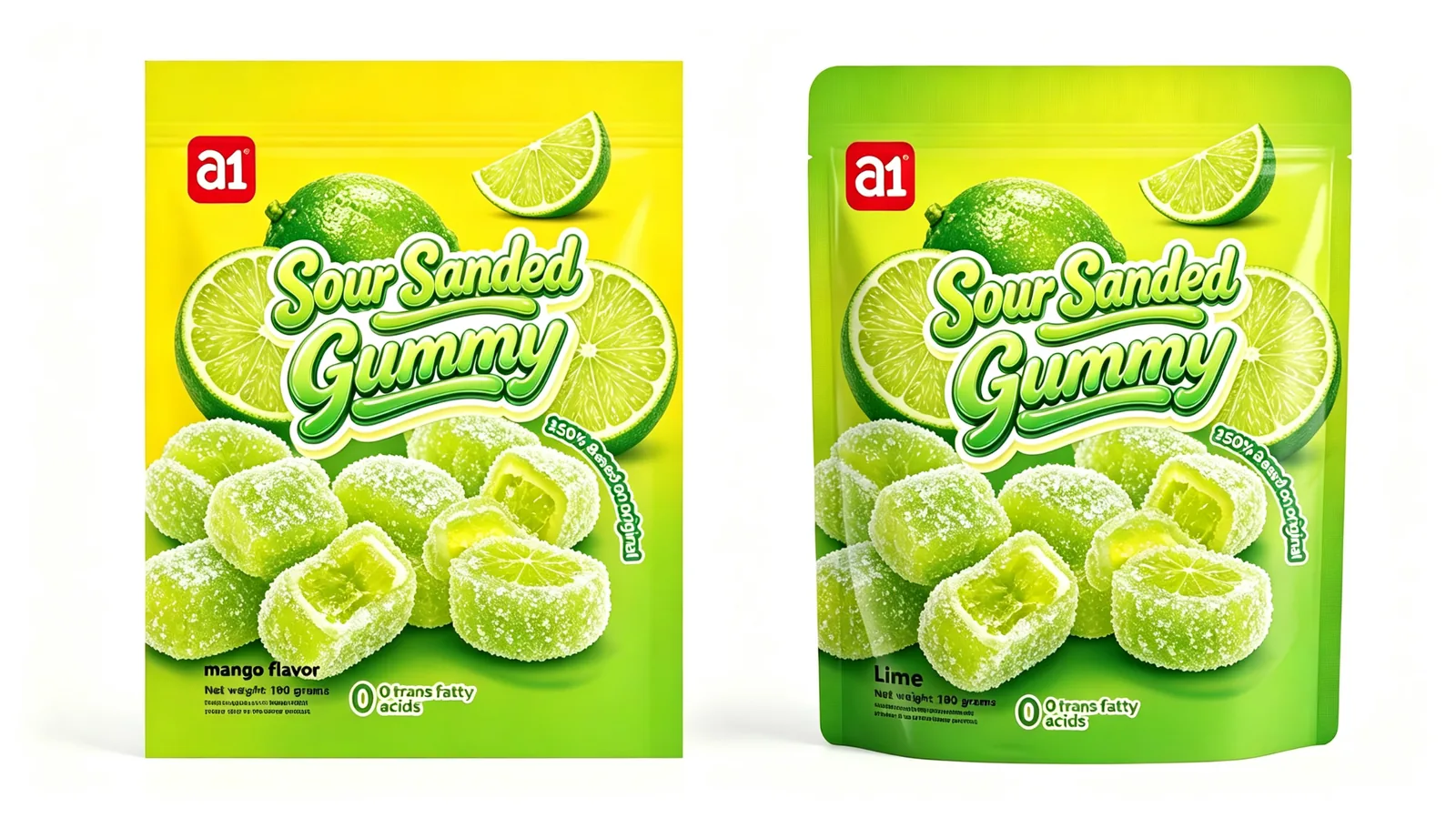
Each layer has a job, and that is what a buyer should taste for. The sanding delivers the first-second acidity hit; the gel body carries the chew; the jam core resets sweetness so the arc does not collapse into a flat, sugary finish. A well-built sour sanded gummy finishes sweeter than it starts — and that arc, not the initial sourness, drives the second and third piece in a sitting, and repeat purchase at the shelf.
Why Acid-Coated Formats Keep Winning Shelf Space
Three mechanisms explain why sour formats keep moving toward the center of the gummy wall, market after market:
1. The first-second signal. On a self-service shelf, the pale crystalline crust reads as "intense" from two meters away — and the same works in marketplace listing photos. A translucent gummy must be tried; a sanded one announces itself.
2. The repeat-purchase arc. The sour-to-sweet rollercoaster is what consumers describe as "not too sweet" — positioning that lands with parents and with young adults cutting back on sugar.
3. Differentiation without new molds. For a distributor, a sanded SKU refreshes an assortment without new shape tooling — the familiar gummy grammar buyers know, with a distinct look and taste position. A low-risk way to add a hero to the wall.
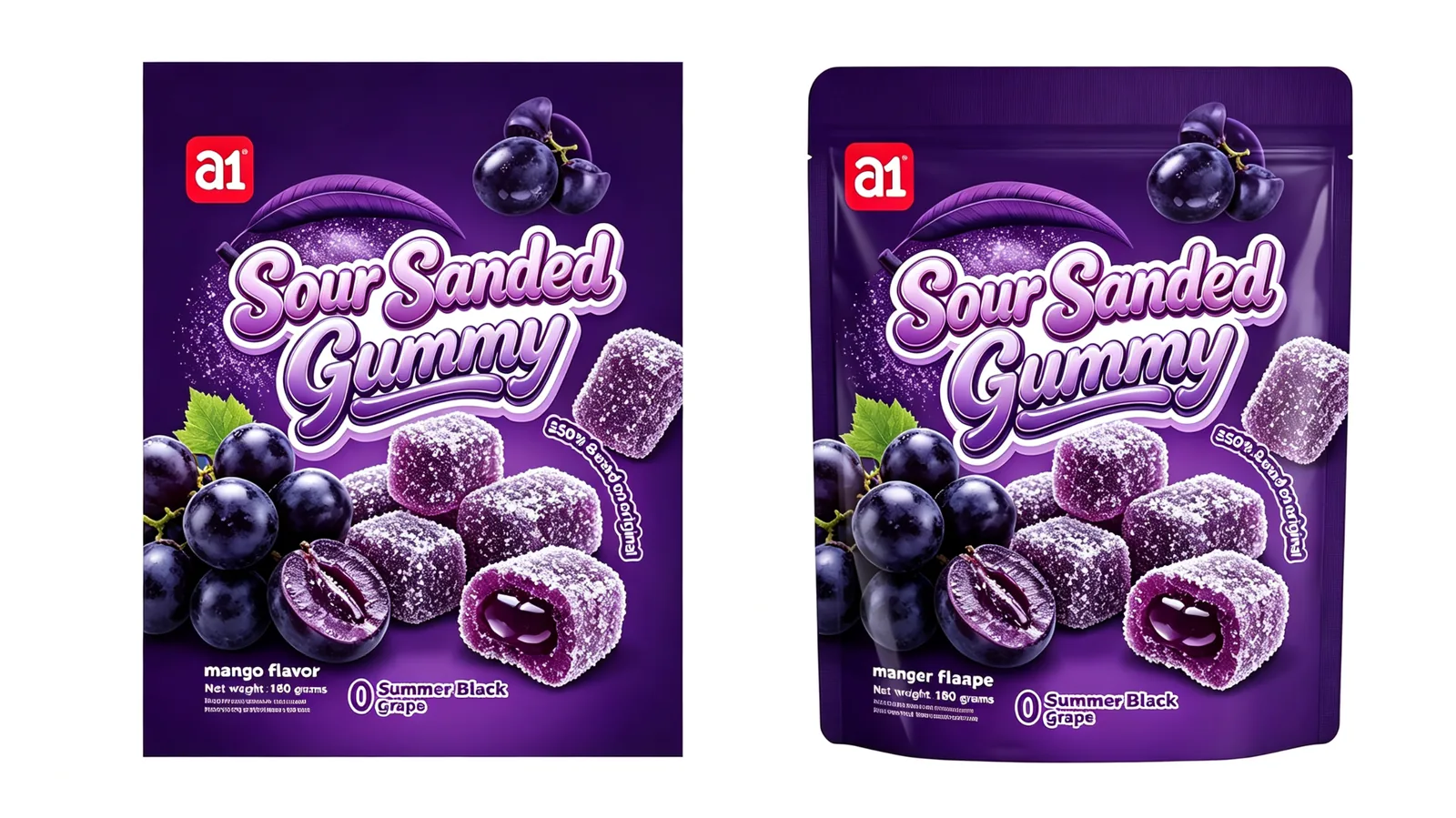
LatAm: Heat, Humidity and the Impulse Channel
Latin American candy retail runs on high-frequency, small-format purchases: neighborhood stores, kiosks, convenience chains, open-market stalls. Sour is already part of the local palate, and price laddering matters — which is why the stand-up pouch became the workhorse format: visible, resealable, manufacturable from 40 to 200 g with gram weights adjusted to the channel.
What importers must engineer for is the climate. The acid-sugar crust is hygroscopic: in humid coastal and tropical regions it picks up moisture, loses its sparkle, and can cake into a dull surface that photographs as "old" even when microbiologically sound. Two levers control it: pouch barrier performance and turnover speed. A 12-month ambient shelf life gives distributors room to route product through long retail chains without discounting near expiry — but the pouch specification, not the calendar, protects the crust on a humid shelf.
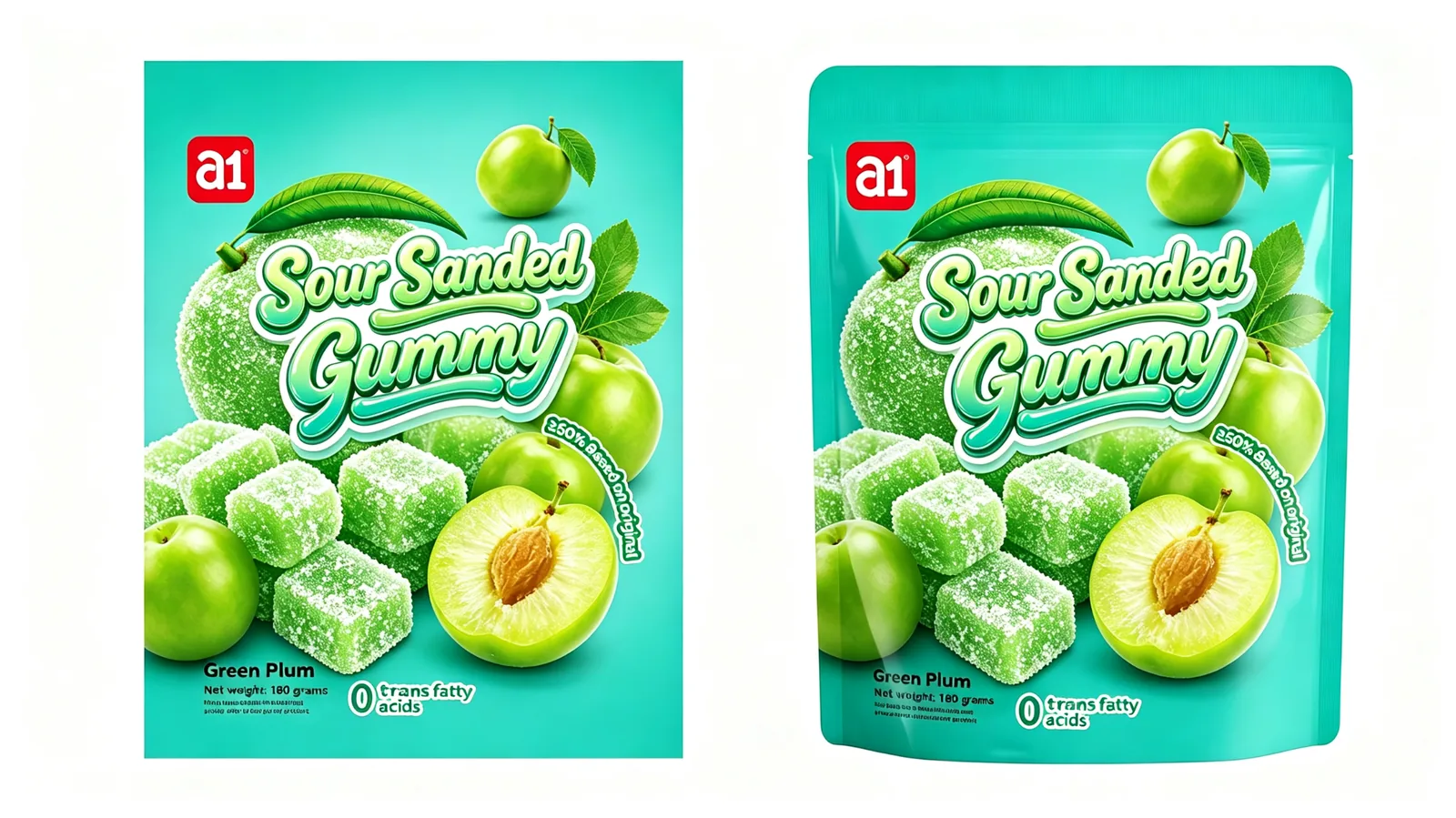
CIS: Long Routes, Big Boxes and Label Discipline
CIS distribution is a different game: sea freight plus thousands of kilometers inland, containers that see both a European winter and a hot warehouse summer, buyers purchasing in serious volumes. Gummies handle this better than most confectionery — no melt, wide ambient tolerance, and a 12-month shelf life that absorbs the long legs. The a1 brand already moves through regional retail systems such as Magnit, X5 Group and Samokat, so the route is proven; what separates suppliers is document discipline.
Label and import requirements in the region are handled by the importer, but the exporter controls the inputs: complete specifications, allergen and additive declarations, certificates of analysis per batch, and Halal certification where the channel requires it. Ask any candidate supplier for a full document pack before the first order — a factory that cannot produce one cleanly will not get cleaner after you pay.
The Two Failure Modes to Spec Against
Moisture pick-up. The crust is the product's merchandising and its most fragile layer. If the pouch barrier underperforms, crystals dissolve, pieces cling, and the bag looks tired long before expiry. Control it with a verified multilayer barrier film, moisture-conscious secondary packaging, and shelf-life validation that reflects the destination climate — not the factory's.
Acid migration. Food acids are active ingredients, not decoration. Over long storage they migrate within the piece, softening texture locally and flattening flavor near end of life. Well-managed formulations and a bounded 12-month window keep this inside spec; every batch leaves our line with a COA from our CNAS-accredited in-house laboratory, so the buyer's QC team verifies rather than assumes.

Sour Sanded vs Plain Gummy vs Filled: A Buyer's Comparison
| Dimension | Sour sanded | Plain gummy | Filled gummy |
|---|---|---|---|
| First-second impact | Highest — instant acid hit | Low, builds slowly | Medium, juice-led |
| Visual shelf signal | Strong — crust is visible | Weak — translucent | Medium |
| Humidity sensitivity | Highest — barrier critical | Lowest | Medium |
| Best channel fit | Impulse + open candy walls | Family packs, hypermarkets | Kids & gifting |
An Eight-Point Checklist Before You Sign
1. Confirm the three-layer construction on physical samples, not renders.
2. Taste the arc: the finish should be sweeter than the start.
3. Get the pouch barrier spec in writing, with the destination climate in mind.
4. Confirm a 12-month ambient shelf life and how it was validated.
5. Require a COA for every batch plus batch-level traceability.
6. Map certifications to your market: FSSC 22000, BRC, HACCP and Halal where applicable.
7. Fix commercial terms early: MOQ from 500 cartons per SKU, 200-carton trial orders for new markets.
8. Pilot in your fastest-moving channel before committing a full container — then scale.
These vetting questions are a subset of a fuller factory audit; if you are still shortlisting suppliers, our eight-point factory audit checklist covers the facility questions in depth.
From Trial Order to Repeat Order
The lowest-risk entry is a small trial: two or three flavors in a 200-carton-per-SKU test in one region, one channel. Watch days of stock, full-price sell-through, and whether the bag photographs well in your channels. If the position works, scale into a mixed container; our gummy MOQ and mixed 20GP loading guide covers the container math, and our pouch, jar and stick-pack comparison covers the format decision behind the bag.
Frequently Asked Questions
Does the sour coating deteriorate in hot climates? Inside a sealed pouch with a competent barrier, the crust is protected from what damages it — humidity and handling. Heat does not melt a gummy; the risk vector is moisture, which is why the pouch specification matters more than the temperature band.
Can sour sanded gummies ship in a mixed container with other formats? Yes. The line runs with a 12-month ambient shelf life — a low-risk component of a mixed confectionery load. MOQ from 500 cartons per SKU, 200-carton trial orders for new markets.
What can we legally claim on the pack? Products are positioning concepts; final on-pack claims follow the regulations of each target market. We supply the technical files; your label team localizes the wording.
Put Sour on the Planogram — Deliberately
Sour sanded gummies are not a novelty appendix to a gummy program. Built and specified correctly, they are a repeat-purchase format with a visual edge that works hardest exactly where a1's export routes already run: hot-climate impulse channels in Latin America and high-volume retail across the CIS. Start with a 200-carton trial, verify the arc with your own QC, and scale what the shelf proves.
To request samples, specifications or a quotation for your market, contact Katherine at a1 Snack Lab — Justin@a1food.cn or WhatsApp +86-189-6548-2111. MOQ from 500 cartons per SKU, 200-carton trial orders for new markets.