
Most distributors choose a gummy SKU by flavor, texture and price — and only notice the packaging format after the first container has already landed. By then the format has quietly decided shelf impact, container cube and how fast the product moves at retail.
For distributors and importers building a gummy program, the pack is not a detail to settle later. Stand-up pouch, jar and stick pack each change the economics of the same recipe in very different ways. This guide compares the three formats across the metrics that move volume — shelf presence, shipping cube, compliance and repeat purchase — so the format decision comes before the purchase order.
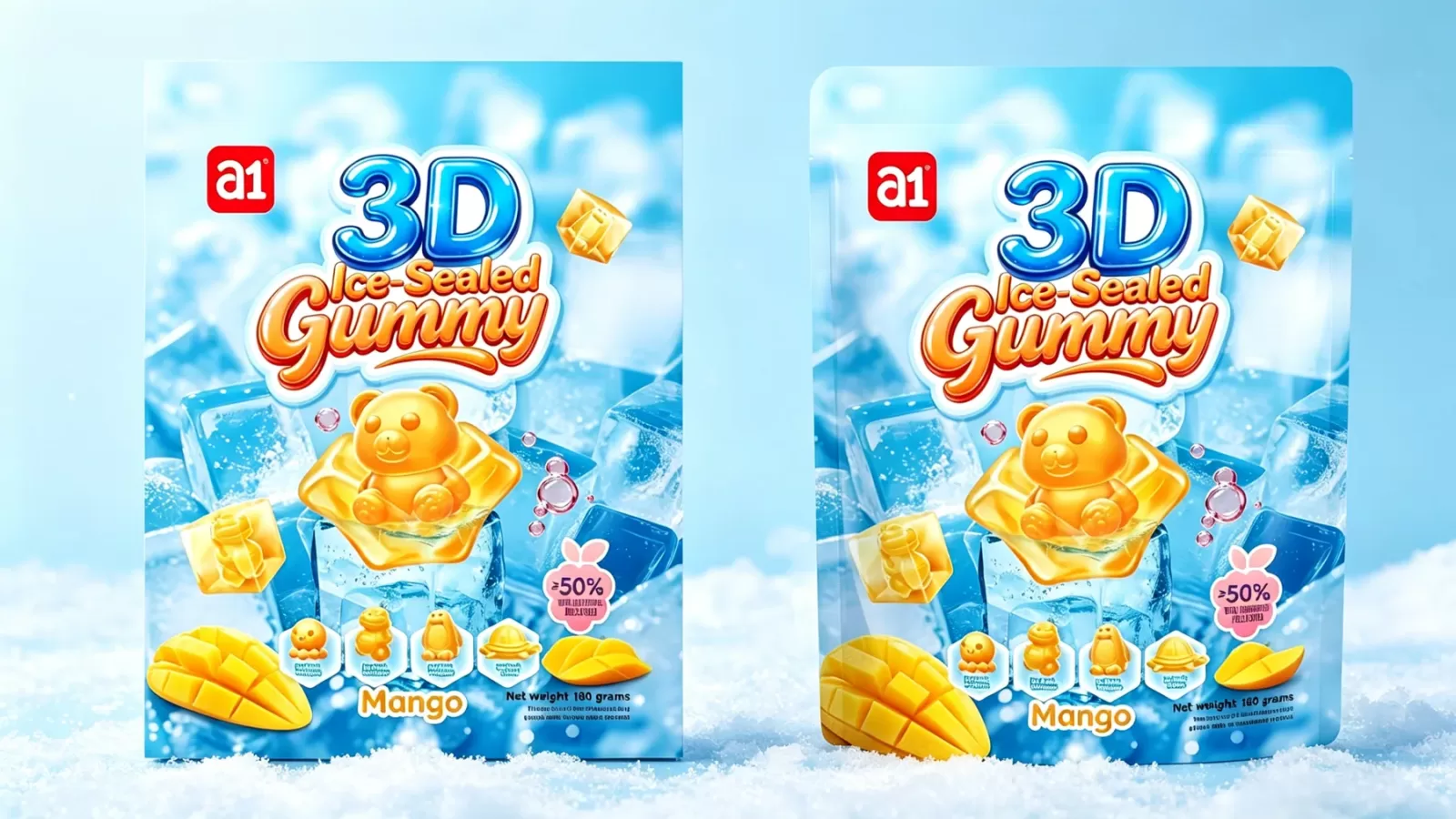
Why packaging format is a buying decision
A gummy is a low-involvement, impulse-friendly product. The pack is the first three seconds of the sale: it has to read from two meters, survive a long ocean route, and fit the shelf the buyer already runs. Choose the format against those constraints and the SKU sells itself; choose against them and no flavor rescue arrives in time.
Three constraints decide almost everything: shelf presence, cube efficiency and compliance surface. The three common formats answer them differently.
The three formats at a glance
Think of the choice as a trade between shelf presence, cube and ritual:
- Stand-up pouch: the best all-rounder — strong shelf face, light cube, low unit cost, resealable.
- Jar: the best for premium and repeat — larger format, pantry presence, higher perceived value.
- Stick pack: the best for trial and on-the-go — tiny cube, single-serve, sampling-friendly.
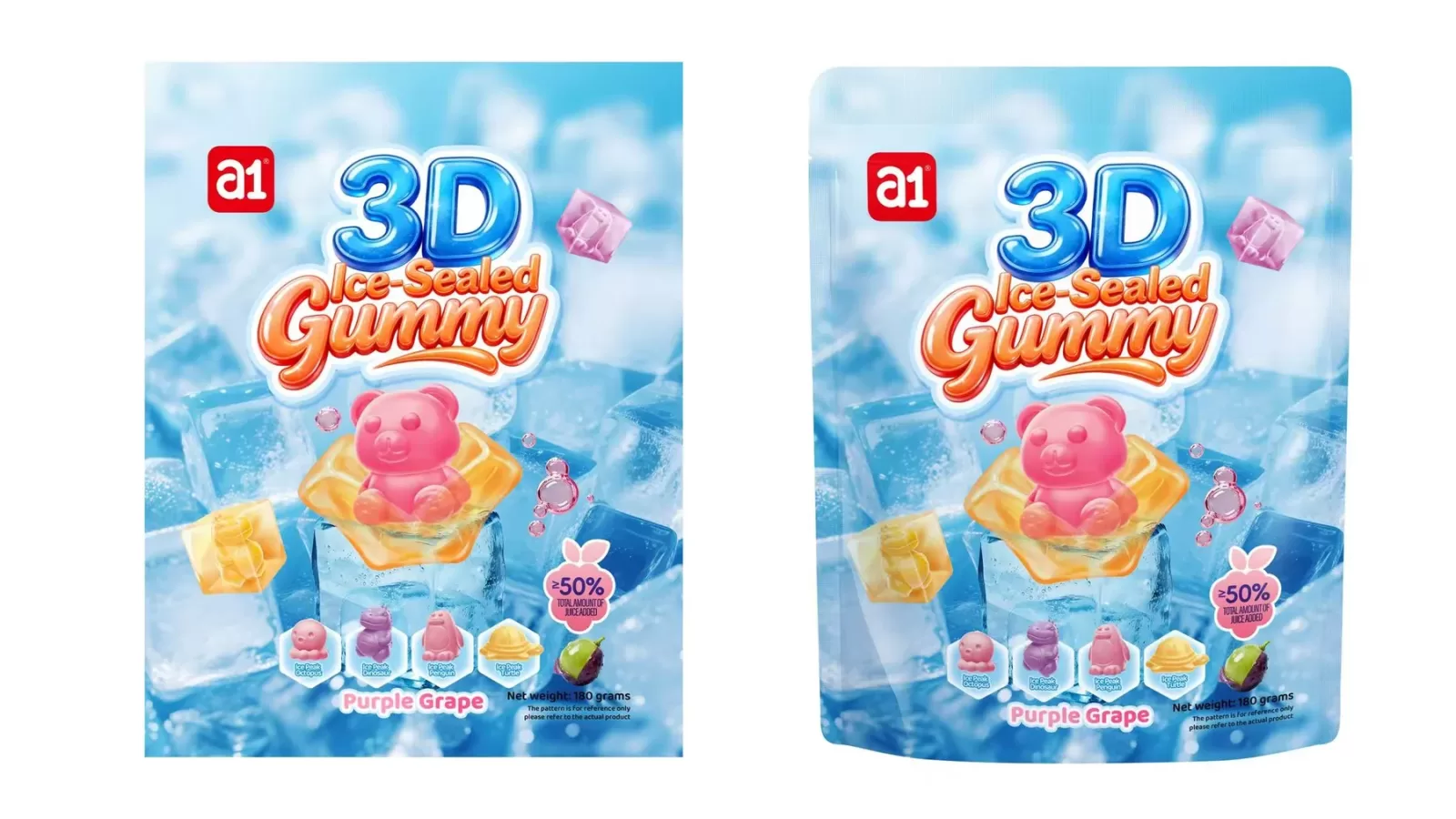
Stand-up pouch — why it dominates gummy SKUs
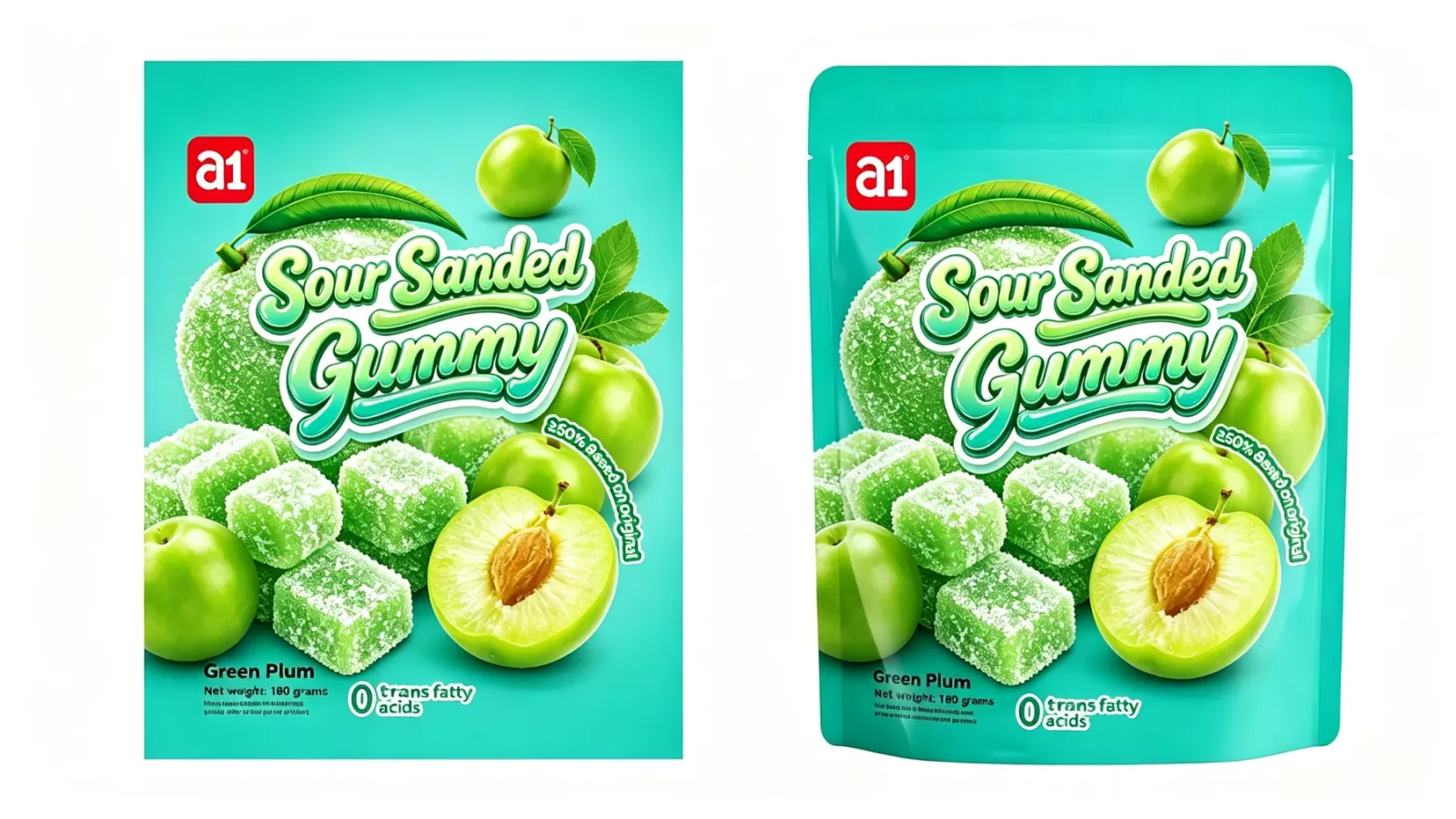
The stand-up pouch is the default for export gummies for good reason. It stands on the shelf with a large front face for branding, it is light and flat so a container holds far more units than jars, and a resealable zip keeps the product fresh across a long ambient shelf life. Our range is built around this format — pouches from 40 to 200 grams, 12-month shelf life — so a distributor can run a multi-SKU mixed container without fragmenting across formats.
For the candy aisle and convenience channels, the pouch also wins on impulse: a bright standing pack at eye level outsells a jar that has to be shelved or stacked. We cover the mixed-container math in our guide to MOQ and mixed 20GP loading for new distributors.
Jar — when it wins
The jar earns its place where the purchase is planned and the product is a repeat staple rather than an impulse grab. A clear jar reads as premium, sits on the pantry shelf as a brand billboard between purchases, and supports larger fill weights that lift basket size. It is the stronger choice for gifting assortments and for markets where the sharing format is the norm.
The trade-off is cube: jars are heavy and round, so a container holds fewer units and freight per unit rises. Distributors usually run jars as a premium tier alongside pouches, not instead of them. If you are building a gummy range, the jar is the step-up format for the second purchase.
Stick pack — single-serve and sampling
The stick pack is the smallest, lightest format and the best tool for two jobs: trial and on-the-go. A stick is a one-hand, one-portion format that fits checkout, gym and travel channels, and it is the cheapest unit to drop into a sampling campaign. For a distributor entering a market, stick packs put the brand in hands before committing to larger pouch or jar runs.
The limitation is shelf presence — a stick is small and easy to lose on a crowded peg — and portion cost is higher per gram. Most programs use sticks as an acquisition format that feeds the pouch and jar repeat formats.
How format drives shipping cube and MOQ
Format is where container economics are won or lost. A flat resealable pouch stacks tightly and fills a 20GP with far more units than the same recipe in jars; stick packs fill even more but at a higher per-gram cost. For a new distributor, the pouch is usually the most container-efficient launch format, and mixing several pouch SKUs in one shipment keeps MOQ per SKU low.
Our standard MOQ is from 500 cartons per SKU, with 200-carton trial orders available for new markets — which lets a launch combine several gummy SKUs in one mixed container rather than committing a full line to a single format. The full breakdown is in our mixed 20GP loading guide.
Label and compliance by format
Every format carries the same compliance surface — nutrition label, ingredients, allergens, origin and, for the US, FDA facility registration and Prior Notice. The format does not change what you must declare; it changes how much label area you have to do it well. The pouch and stick give less face for a full multi-market label, so plan the artwork for the strictest target market first.
If your range includes sugar-free or functional concepts, the on-pack claims must follow the regulations of each target market — a claim that is legal in one region can be a problem in another. We walk the US documentation path in our guide to importing candy to the USA, and the claim-by-market side in our functional gummies 2027 outlook.

A distributor's format-selection checklist
Before you lock the format for a gummy program, walk through these eight points with your supplier:
- Which channel leads — impulse (pouch), repeat pantry (jar), or trial and on-the-go (stick)?
- What fill weight matches the market — 40 to 200 g pouch, larger jar, or single-serve stick?
- How many facings does the buyer give the category, and does the format fit the shelf?
- What is the cube target per container, and which format protects unit freight?
- Which markets are in scope, and does the label area cover the strictest one?
- Is the food facility registered with the FDA (for the US) and certified Halal where required?
- What is the trial-order path before a full container?
- Does the supplier run COA-per-batch and full traceability for compliant export?
MOQ, mixed containers and lead time
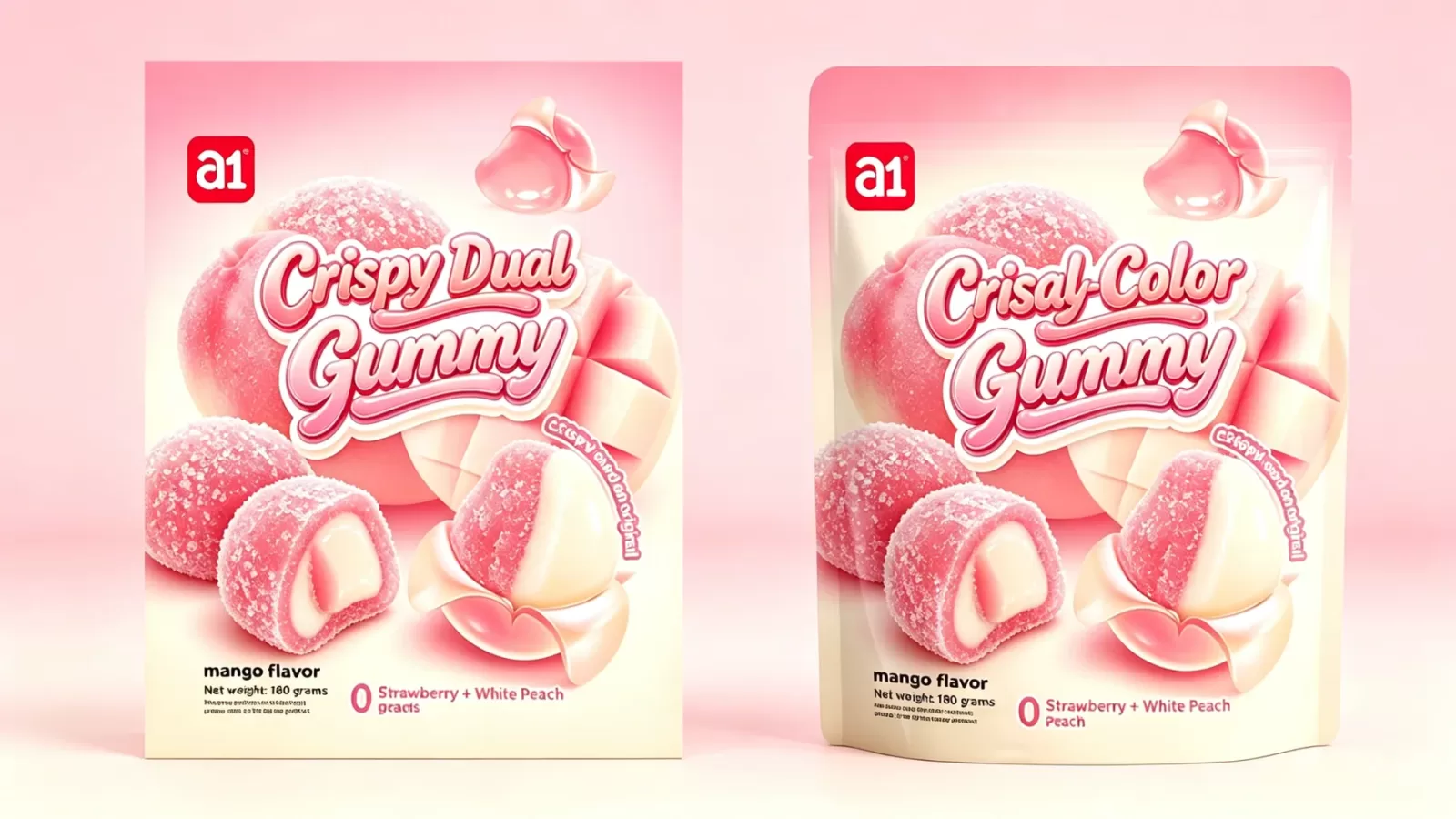
For a gummy launch, most distributors do not want a full container of one SKU — they want a balanced mix across formats and flavors. Our standard MOQ is from 500 cartons per SKU, with 200-carton trial orders for new markets, so a launch can combine several pouch SKUs and a jar or stick tier in one mixed shipment. To see the range, explore the 4D Crispy Dual-Color Gummy and the 3D Ice-Sealed Gummy.
If you are scoping a 2026 or 2027 gummy program, share your target markets and the formats to test. We will confirm certification and documentation fit, outline production and transit lead time, and scope a compliant mixed order.
Frequently asked questions
Which gummy format sells fastest at retail? For impulse and convenience channels, the stand-up pouch usually outsells jar and stick because it commands eye-level shelf presence at the lowest cube cost. Jars win on repeat pantry purchase; sticks win on trial.
Does the format change my compliance obligations? No — nutrition label, ingredients, allergens and, for the US, FDA facility registration and Prior Notice apply to all formats. The format only changes how much label area you have to present them well.
Can I mix pouch, jar and stick in one container? Yes. The standard MOQ is from 500 cartons per SKU with 200-carton trial orders for new markets, so a launch can mix several gummy SKUs and formats in one shipment.
What shelf life can I plan a gummy program around? Our gummy range is specified for 12 months ambient shelf life, which supports the ocean route plus retail lead time.
Ready to scope your gummy program? Contact our team — tell us your markets and the formats you want to test.