Ask a new distributor what stops a first gummy order, and the answer is almost never the product. It is the arithmetic. MOQ sounds like a single number, but it is not: the minimum order quantity applies per SKU, while your freight is paid on the container. Between them sits the decision that makes or breaks a first order: how many SKUs, and how they share the box.
This guide covers how MOQ and container loading work together, why a mixed container wins in a new market, and the eight questions to close before you approve a proforma invoice.
MOQ and Container Volume Are Two Different Numbers
The confusion starts with vocabulary. MOQ — minimum order quantity — is a production commitment: the smallest quantity a factory schedules for one SKU in one run. Container volume is a logistics constraint: the space your cargo occupies. Treat them as one number and you over-commit or under-fill your container.
Our standard position is MOQ from 500 cartons per SKU, with 200-carton trial orders for new markets. Four SKUs commit you to 2,000 cartons; the trial tier on all four is 800. Whether they fill a container — or half of one — depends on a figure most first-time buyers never ask: the cubic volume of one export carton.
The Loading Math: Three Figures to Request per SKU
Before you plan any mixed order, request three figures per SKU, in writing:
- Carton dimensions — length × width × height of the export carton, in centimetres.
- CBM per carton — the carton volume in cubic metres.
- Cartons per container — how many of that SKU load into a 20GP and a 40HQ on the supplier's standard plan.
For reference, we calculate loading on a 68 CBM usable basis for a 40HQ. A 20GP offers roughly 33 CBM of internal volume; for cartonized food cargo, plan on about 28 CBM usable after stacking patterns and door clearance (standard container specifications; your supplier's loading plan converts them into cartons per SKU).
The arithmetic is simple: cartons per container = usable CBM ÷ CBM per carton, rounded down for stacking loss. Our bakery range shows how sharply it moves: a stuffed toast carton at 0.0308 CBM loads 2,204 cartons per 40HQ; a panda pudding cake carton at 0.0448 loads 1,518. Candy cartons follow the same logic, each SKU with its own number. Get it before you promise a customer a full container — not after.
What a First Mixed Order Actually Looks Like
| Order structure | Carton commitment | What it proves |
|---|---|---|
| 2 SKUs × 500 cartons | 1,000 cartons | A minimum workable range |
| 4 SKUs × 500 cartons | 2,000 cartons | A working first shelf: hero + juice + texture + flavour |
| 4 SKUs × 200 cartons (trial) | 800 cartons | A market test on an unsold route |
At the trial tier, a four-SKU test returns the only two data points that matter — which SKU reorders, which one sits — for a fraction of a standard order. A full 40HQ of one SKU cannot.
Why Mixed Loading Wins for a New Distributor
- Risk is spread, not concentrated. A SKU that misses the shelf costs you a fraction of the order, not all of it.
- You learn faster. Four SKUs across four shelf positions generate reorder data no forecast can replace.
- Cash is not buried. A mixed order ties up less working capital per SKU — which matters most in month one.
- No dead stock. The underperformer ends at 200 to 500 cartons, not at a pallet you cannot move.
- The second order writes itself. By month three you are topping up the winners, not guessing.
The Trade-Offs You Accept
Mixed loading is not free. Four costs come with it, and a serious supplier names them first:
- Freight per carton is higher. One dense, uniform SKU uses container space better than a mix — on a mixed 20GP you pay for flexibility.
- Loading takes longer. Four SKUs mean four stacking plans, more carton checks, a longer stuffing window.
- MOQ still applies per SKU. Mixing does not lower the 500-carton floor — it multiplies it by the number of SKUs you choose.
- More artwork upfront. Every extra SKU means one more design, label review and compliance check before production.
For a first order into a new market most buyers accept all four: you pay slightly more per carton to buy information.
A First-Range Template: Four SKUs That Cover the Shelf
Building a first mixed container for a general retail channel? This is the structure we recommend most often — four SKUs, four different jobs:
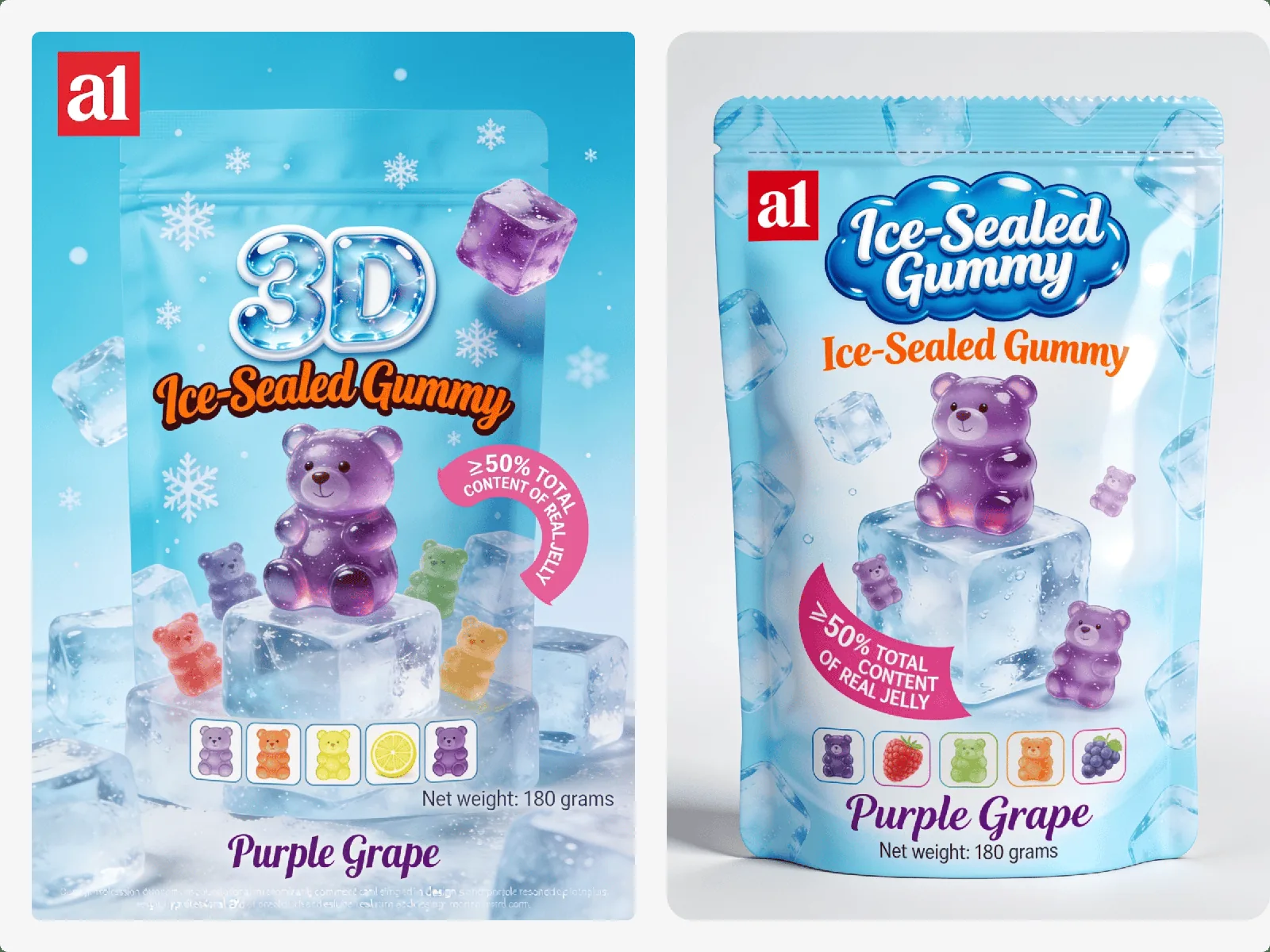
- A visual hero. Something a child picks up and a buyer remembers: our 3D Ice-Sealed Gummy seals a 3D animal inside every piece and holds shape in heat — a real advantage on hot routes.
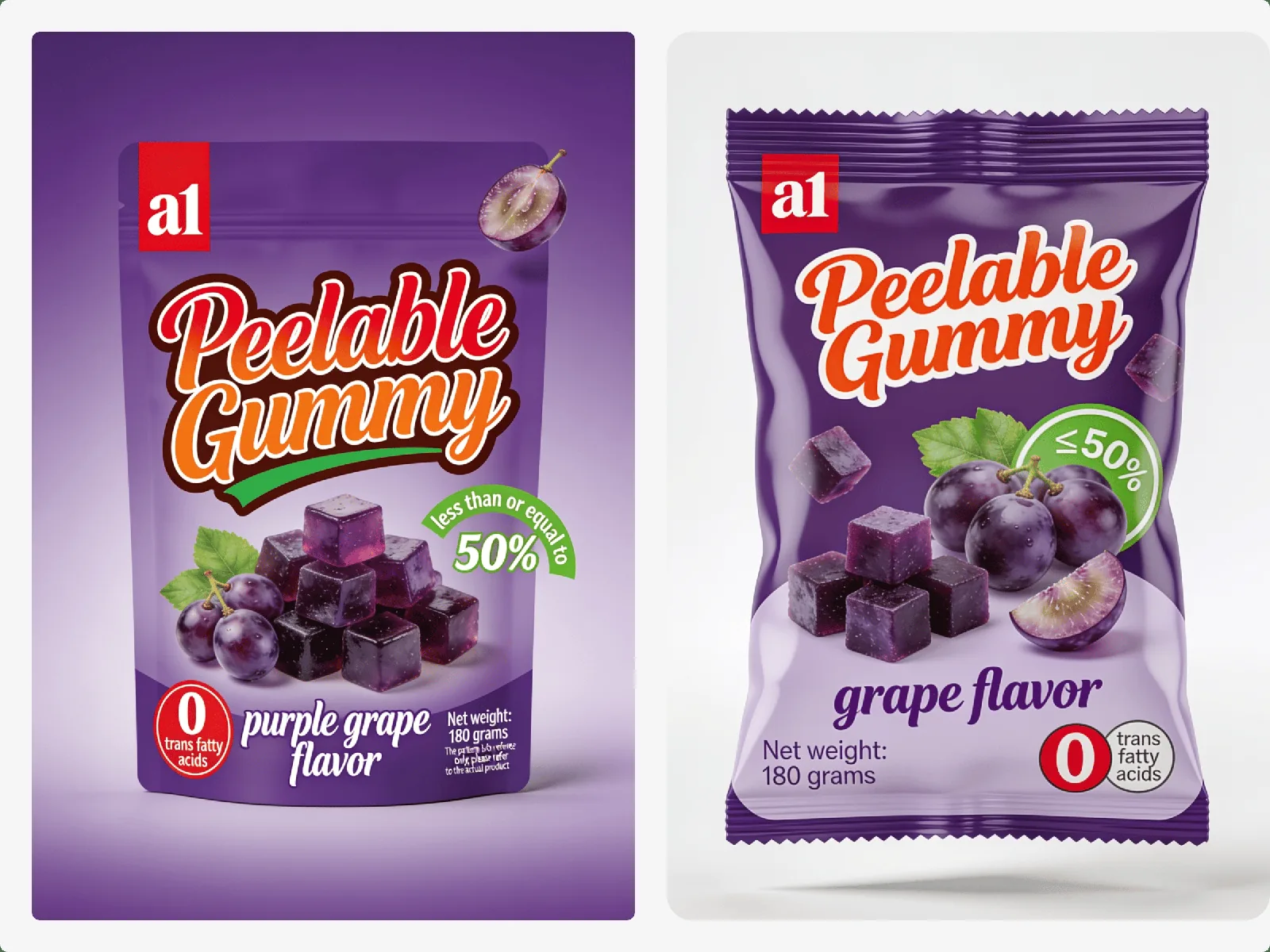
- A juice story. The Peelable Gummy carries 50% real fruit juice and zero trans fat, and the peel-to-reveal format is the shelf's demo moment.
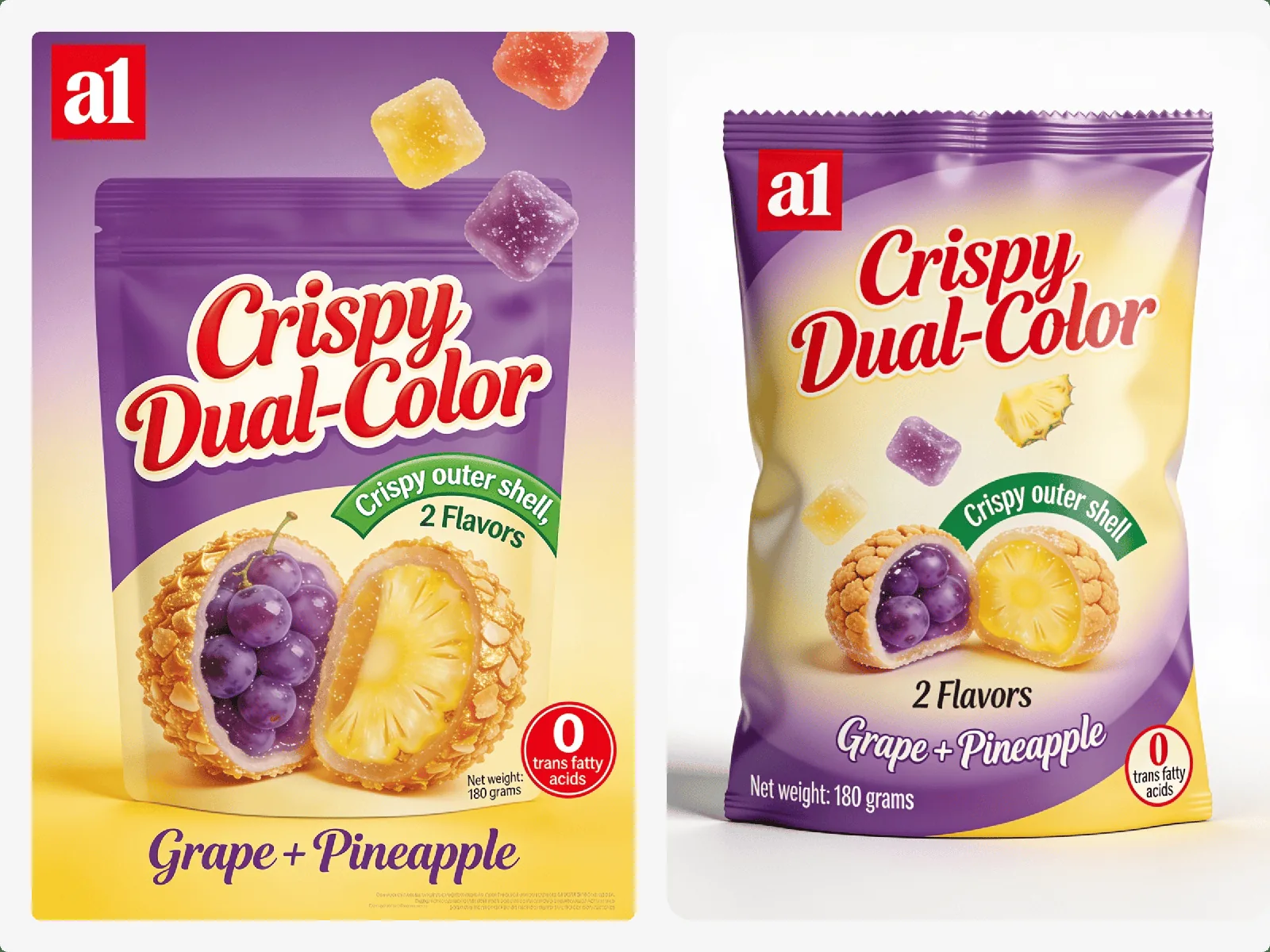
- A texture differentiator. The 4D Crispy Dual-Color Gummy pairs a crisp shell with a soft core, uses no gelatin — agar and pectin instead — and packs two flavours into one bag.
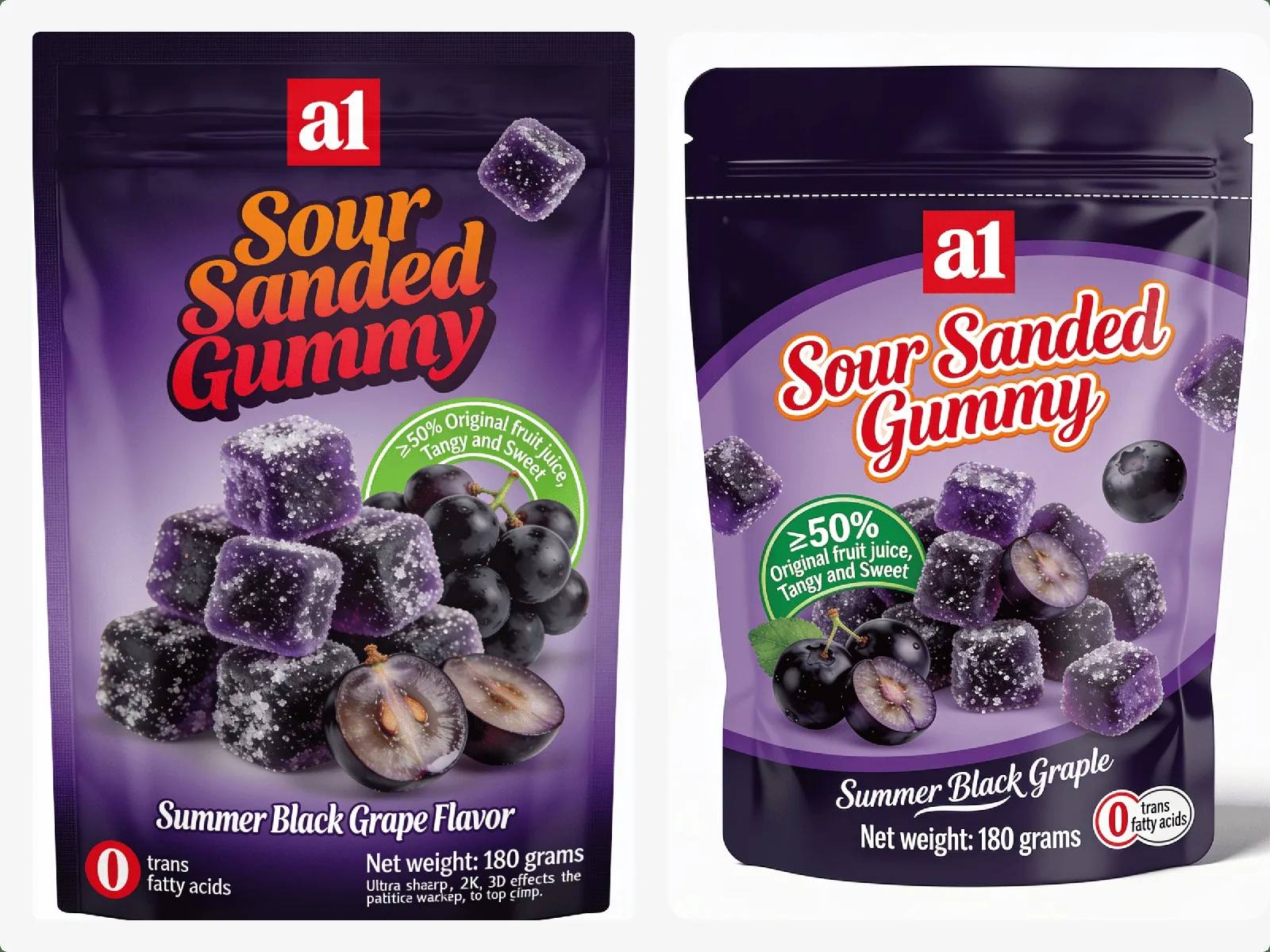
- A flavour-value driver. The Sour Sanded Gummy carries a real jam filling of at least 2.0% with natural colours: the repeat-purchase workhorse of the sour segment.
Once it proves itself, extend the range with the zero-sugar coffee line and functional concepts — collagen, GABA, vitamin C, lutein with DHA, zinc, calcium — noting that final on-pack claims for any functional positioning must follow the regulations of each target market.
One more reason the candy line suits a mixed first order: the whole range runs on 12 months of ambient shelf life, against six for bakery. A full year to sell through makes a mixed candy container one of the lowest-risk ways to open a new market.
Eight Questions to Close Before You Approve the PI
- MOQ in writing, per SKU — 500 cartons standard, 200 for a trial market, confirmed for the SKUs you named, not a sample list.
- Carton CBM and cartons per 20GP / 40HQ, per SKU — the numbers your freight forwarder and shelf plan depend on.
- Pallet or floor-load — who supplies pallets, to what specification, and how the stacking plan distributes weight.
- Certificates per SKU — our lines run under FSSC 22000, BRC, HACCP, HALAL and BSCI; confirm the scope covers every SKU in the mix, especially for Gulf programmes (see our halal certification guide).
- Per-batch COA and traceability — our own CNAS-accredited laboratory issues a certificate of analysis for every batch.
- Label review per destination — a claim standard in one market can be non-compliant in the next; final on-pack text must follow each target market's rules before artwork sign-off.
- Shelf life remaining on delivery — the range runs on 12 months ambient; agree the minimum remaining at arrival for your channel.
- Documentation for the US — we operate FDA-registered food facilities. Registration is not approval, and no responsible supplier will tell you otherwise.

From Enquiry to First Container
The process is the same for two SKUs or ten: send your target market, target price band and product concept; we return samples with an FOB quotation; production and QC run on certified lines with a COA per batch; then export documents, logistics and repeat-order support.
For a worked loading example see our guide to importing stuffed toast from China; for gel selection, pectin vs gelatin gummies. We ship to 40+ markets and supply retail systems including Sam's Club, Costco, 7-Eleven, Kaufland, Lawson, GS25, Circle K, Magnit and X5 Group.
Tell us the destination port and shipping month, and we will return a mixed-container plan with cartons per SKU, MOQ tiers and the loading math attached. Contact Katherine at Justin@a1food.cn or WhatsApp +86-189-6548-2111, or use our contact form.