
Seasonal gummy candy wholesale is a calendar business before it is a product business. A distributor does not lose a Halloween or Ramadan shelf because the gummy tasted wrong — they lose it because the container landed three weeks after the shelf was set. We manufacture gummies across 19 SKUs in four series, ship to more than 40 markets, and hold a 12-month ambient shelf life on the whole confectionery line. This page is the lead-time literacy we wish every first-time seasonal buyer brought to the table: how to count backwards from a shelf date, which clocks actually slip, and how to run three peaks without letting them eat each other.
Seasonal is a calendar, not a catalogue
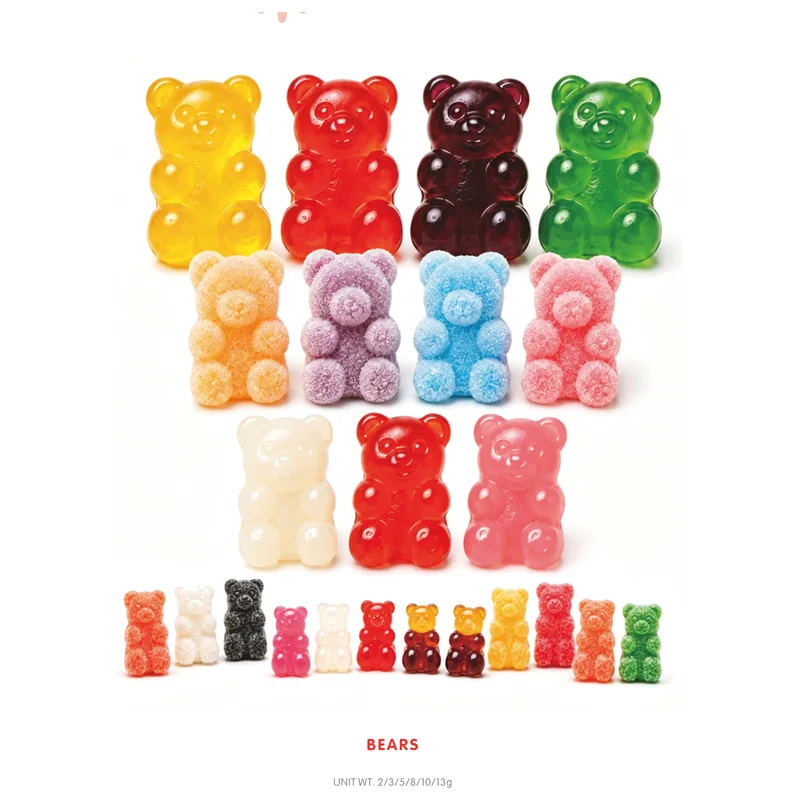
A catalogue buyer asks "what do you make?" A seasonal buyer should ask "when must this be on the shelf, and what has to be true two months before that?" The difference sounds small. It decides everything. A sparkling gummy bear that sells steadily in March can be a Halloween impulse item in October with the same recipe — but only if the artwork, the certification file and the container were sequenced around the shelf date instead of the factory's convenience.
Three peaks dominate our customers' calendars: Halloween in late October, Ramadan and Eid (which move earlier on the Gregorian calendar each year), and Chinese New Year (which floats between late January and February). Each gives you a fixed shelf date and a moving production window. The whole game is counting backwards.
Counting backwards from the shelf date
Start at the day the product must be on the shelf and subtract four clocks. None of them is optional, and they overlap — which is why "how long does production take?" is the wrong first question.
The four clocks that run at once
- The order clock — inquiry, specification freeze, samples and sign-off. This is the clock buyers most often underestimate, because it depends on how fast they return artwork and formula decisions.
- The production clock — raw material preparation, depositing, drying and packing. Stock tooling keeps this short; a new sculpt adds development and approval time.
- The ocean clock — a common industry range for a long ocean route is roughly 25–40 days, depending on lane and port. Treat that as a generic industry spec, not a promise; confirm the actual transit for your destination.
- The clearance-and-shelf clock — import documents, labels, customs and the retailer's own receiving window. A container that clears on the Friday before a holiday week can still miss the shelf.
Count all four back from the shelf date, then add a buffer. If your answer is "we can decide the flavour in September for an October shelf," the maths is already wrong. The decision that slips is rarely depositing — it is artwork, tooling sign-off or a certificate that was not in the file.
Three peaks, three lead-time profiles
Halloween: fixed date, shape-driven
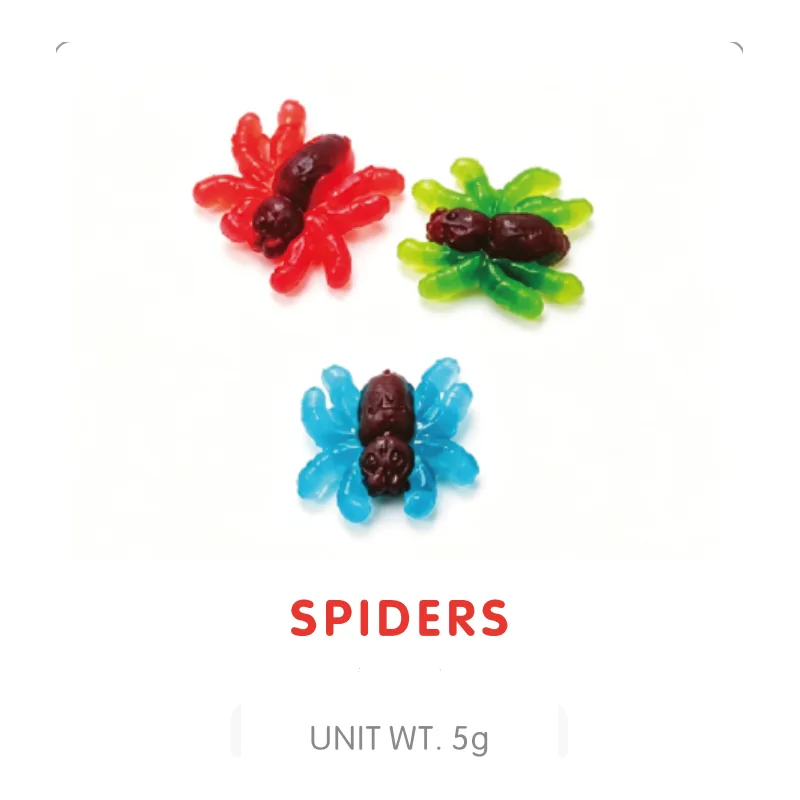
Halloween is the easiest to plan because the date does not move — 31 October, every year. That certainty is also a trap: because the date is known, buyers leave decisions late. The winning formats are shape-led. Our novelty series includes spider, snake and worm formats that read as "Halloween" without a new mould, which is exactly the kind of SKU that can be booked early and repeated year over year. The risk here is not the date; it is discovering in September that the shape you wanted needs tooling that was never approved.
Ramadan and Eid: moving date, certification-driven
Ramadan shifts earlier by roughly 10–11 days each Gregorian year because it follows the lunar calendar. A shelf plan that worked last year will be too late this year if you simply copy the dates. The hard gate is HALAL: a1 holds HALAL certification for both the bakery and confectionery lines. For a Gulf buyer, a seasonal gummy without a valid HALAL file is not a product — it is a problem at customs. Plan the certification file into the order clock, not after it.
Chinese New Year: floating date, gift-format-driven
Chinese New Year floats between late January and February, so the production window moves with it. This is a gifting occasion: format and pack presentation matter more than novelty shape. Stand-up pouches in the 40–200 g range can be positioned as gifting formats, and this is where a printed artwork deadline tends to bite hardest. Confirm the exact festival date for the year you are shipping before you freeze anything.
Stock tooling or a custom mould?
Seasonal does not automatically mean custom. The fastest seasonal program is usually a stock SKU with occasion-specific artwork: a existing shape, a new bag, a known stability file. A custom mould earns its lead time only when the shape itself is the selling point — and even then it is a physical asset with an owner, as we set out in our custom gummy manufacturing guide.
Our own range shows the trade-off. The 3D ice-sealed format is heat-stable for long, hot routes; the peelable format carries 50% real fruit juice; the crispy dual-color format is gelatin-free. Each can serve more than one occasion if the calendar is built around it. The question to ask is not "can we make a new shape?" but "does a new shape sell enough extra shelves to justify the approval time it consumes?"
The clock that actually slips: artwork and dieline
Ask any factory what delays a seasonal launch and the honest answer is rarely the depositor. It is artwork. A pack design that arrives late, or a dieline that was never frozen, will eat the entire buffer you built into the order clock. We treat artwork and dieline control as a pre-production decision with its own sign-off, version by version — the same discipline that, in our own runs, caught a design that had crept into the seal and window area before it reached a seasonal shelf.
Freeze the dieline first. Then sign artwork per SKU. Then release the production order. Doing it in any other order is how a perfectly good gummy misses a perfectly predictable date.
Certifications that gate a seasonal shelf
A seasonal window is unforgiving because there is no second chance after the date. The documentation has to be in the file before the container moves: our in-house CNAS-accredited laboratory issues a COA for every batch with full traceability, and the line holds FSSC 22000, BRC, HACCP, HALAL and BSCI. For the United States, a1 is an FDA-registered food facility — registration is not approval of any product.
Where a functional gummy is involved, treat any on-pack claim as a positioning concept only; final on-pack claims follow the regulations of each target market. A factory can supply the format and the documentation. It cannot supply a compliance opinion for your market, and a seasonal window is the worst time to discover you needed one.
Our own constraint: what we learned running three peaks
Here is the part that comes from our own floor. We ran the same format-matching exercise across our four series that we recommend to a seasonal buyer. We found that the arguments never start at the depositor — they start at the artwork calendar and at which certificate is missing from the dossier. We rejected the old assumption that every occasion deserves a new mould; most of our formats can serve two peaks if the pack is planned around them. We switched to matching stock SKUs to occasions first, opening new tooling only when the shape genuinely drives the shelf, and freezing artwork on the same reverse timeline as the order clock. That order of operations is not a slogan: it is the difference between repeating a format every year and re-developing it every year.
One container, three occasions: the mixed-load question
Most seasonal buyers are not filling a container with a single SKU. They are assembling a Halloween shape, a gifting format and a year-round seller into one mixed load. That is sensible: MOQ from 500 cartons per SKU, 200-carton trial orders for new markets. Case counts and 40HQ utilisation for candy are confirmed against the final spec — we will not invent a carton count that the spec does not support. Ask for the numbers in writing before you commit to a mixed container.
If you have not yet chosen a sourcing route for the program, read our bulk gummies page first; it sets out the formats that travel well and how mixed loads are built.
Shelf life after the peak
Every seasonal buyer eventually asks the question they are slightly embarrassed to ask: what if it does not all sell? The confectionery line's 12-month ambient shelf life is the answer to that fear. A Halloween program that over-sells its forecast is still a sellable gummy in February, provided the pack and the storage were right. That is the structural advantage of ambient gummies over short-life formats in a seasonal business — build it into your plan instead of treating it as luck.
Pre-signing lead-time checklist
Hand this list to whoever signs. Each line should have an answer in a document, not in a conversation.
- Shelf date fixed — the exact on-shelf date for each occasion, in writing.
- Four clocks counted back — order, production, ocean and clearance, each with a buffer.
- Dieline frozen before artwork sign-off, per SKU.
- Stock versus custom decided — new tooling justified by shelf value, not habit.
- HALAL file current for Gulf programs; certification list attached.
- Documentation package listed — COA, retained samples, traceability.
- Mixed-load case counts confirmed against the final spec, not assumed.
- Claim language scoped to the target market's regulations where relevant.
Frequently Asked Questions
How far ahead should I order seasonal gummies? Count backwards from the shelf date through four overlapping clocks — order and sign-off, production, ocean transit and clearance — then add a buffer. There is no universal number, and anyone who gives you one without knowing your lane and your artwork timeline is guessing.
Do I need a custom mould for a seasonal gummy? Usually not for a first program. A stock format with occasion-specific artwork is faster and carries an existing stability file. Custom tooling earns its keep only when the shape itself is the selling point.
Why does Ramadan need a different plan every year? Because the date moves earlier on the Gregorian calendar each year. Copying last year's production and shipping dates will leave you late. Confirm the current year's date and count backwards again.
What certification matters most for a Gulf seasonal shelf? A current HALAL file is the hard gate. a1 holds HALAL certification for both confectionery and bakery lines; the wider file includes FSSC 22000, BRC, HACCP and BSCI, with a COA from our CNAS-accredited in-house lab on every batch.
Can I mix several occasions in one container? Yes. MOQ from 500 cartons per SKU, with 200-carton trial orders for new markets, makes a multi-occasion mixed load practical. Carton counts and container utilisation are confirmed against the final spec — never assumed.
Final on-pack declarations and claims follow the regulations of each target market. Write to Katherine or Justin@a1food.cn, or WhatsApp +86-189-6548-2111. Start with the shelf date and work backwards with us. See also our Ramadan and Eid bakery calendar for how a moving date reshapes a whole category.