
Most first-time gummy importers judge a factory by its price list and a handful of product photos. The factory audit is what tells you whether that price survives a port inspection, a retailer audit and a second reorder. For a distributor, importer or private buyer, the manufacturer decision is the first decision — and the one hardest to reverse once containers are in motion.
Choosing a gummy manufacturer is the highest-leverage decision in a confectionery import program. It touches food safety, market compliance, shelf life, supply continuity and your brand's reputation in a new market. A structured factory audit turns that black box into a scorecard you can run before you sign, walking a first-time importer through the risks that actually sink a launch.
Why the supplier choice is the first decision
The manufacturer is the one constant across every SKU, every shipment and every market you enter. Choose wrong and you inherit compliance gaps, inconsistent batches and a partner who cannot scale a reorder. Choose well and the rest of the program — MOQ, packaging, freight — becomes a negotiation rather than a fire drill. The audit is how you score that choice on paper.
What a factory audit actually de-risks
Three risks decide whether a gummy program survives its first year. Regulatory risk is whether the product clears customs and retail compliance in your market. Quality risk is whether every batch matches the approved sample and carries the documentation to prove it. Continuity risk is whether the supplier can deliver a stable second and third order, not just a brilliant first one. An audit prices those risks before you commit working capital, not after.
The 8-point gummy manufacturer audit checklist
- Certifications matched to your markets. Look for FSSC22000, BRC, HACCP and BSCI as baseline food-safety systems, plus HALAL where required. The certificate must match the market: HALAL for the Gulf, BRC for European retail, and an FDA-registered food facility for the US. Our guide to importing candy to the USA breaks down what US customs and FDA actually check.
- Production capacity and redundancy. Ask how many bases and lines run gummy production, and whether a single line stop can halt your order. A manufacturer with two production bases and eight lines can absorb a disruption that would stall a single-site shop.
- R&D and custom SKU development. Can the factory develop your flavor and format, or only run a fixed catalog? In-house R&D centers and a patent portfolio signal that the supplier can build a differentiated SKU rather than resell a commodity.
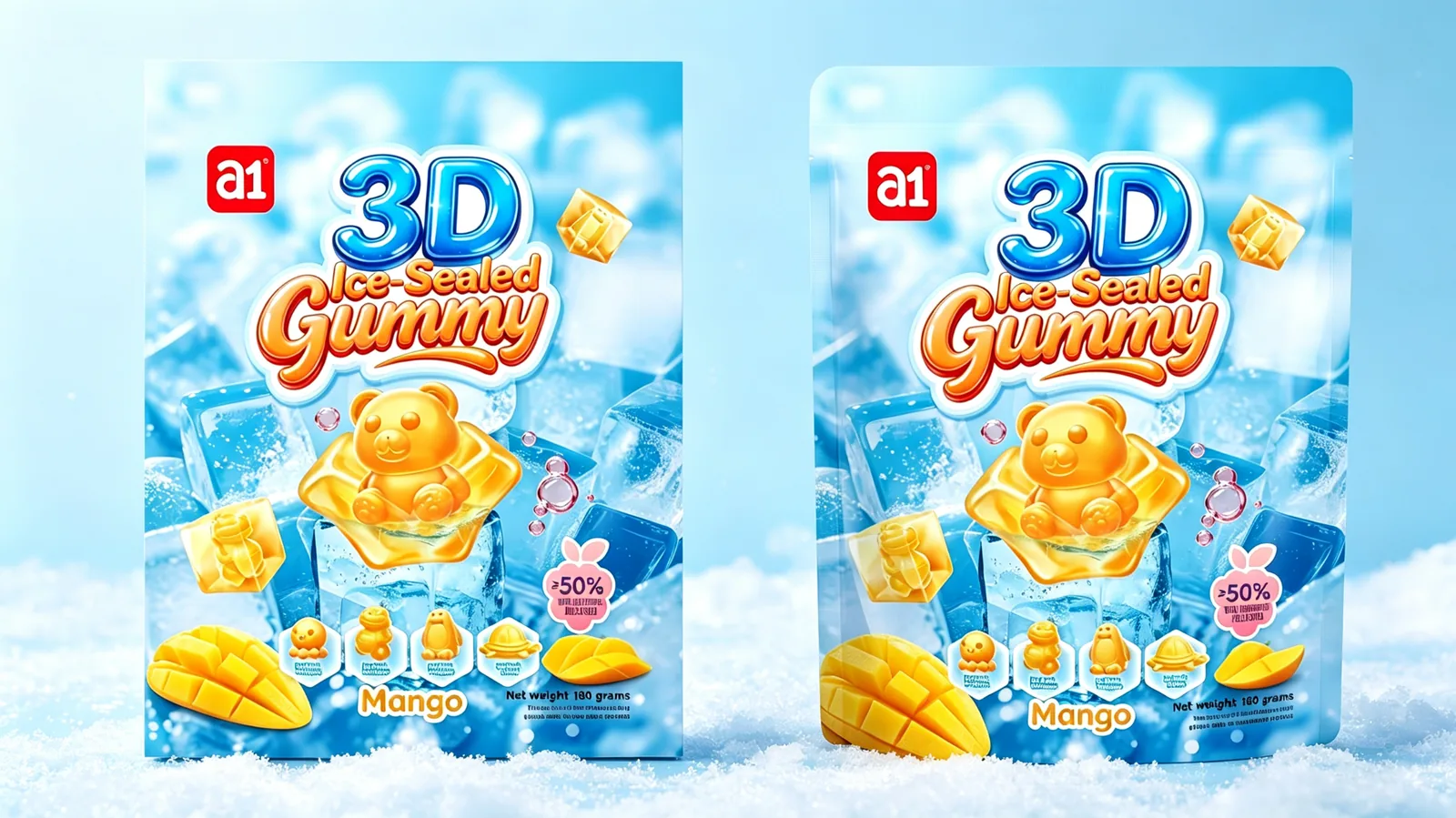
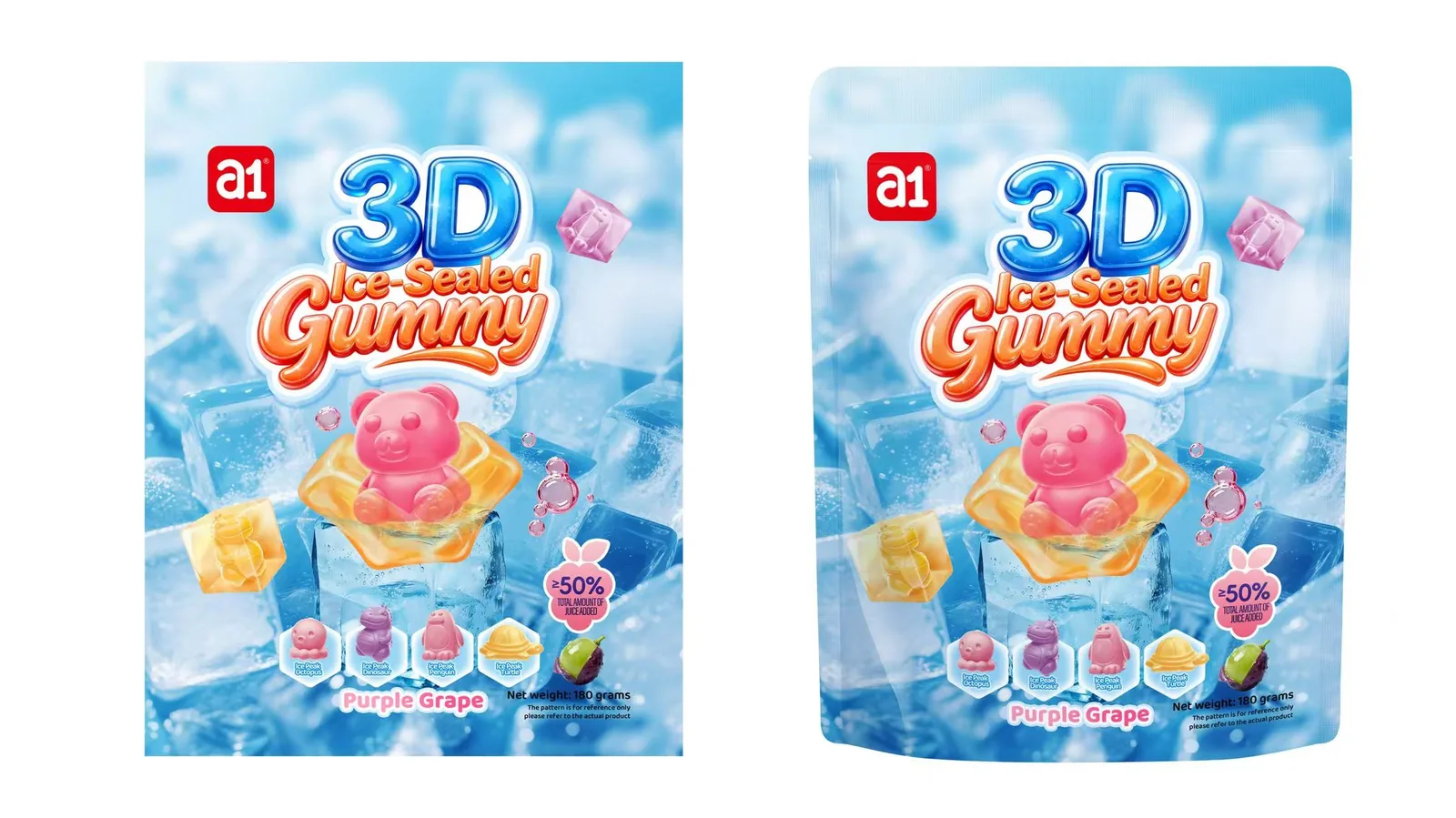
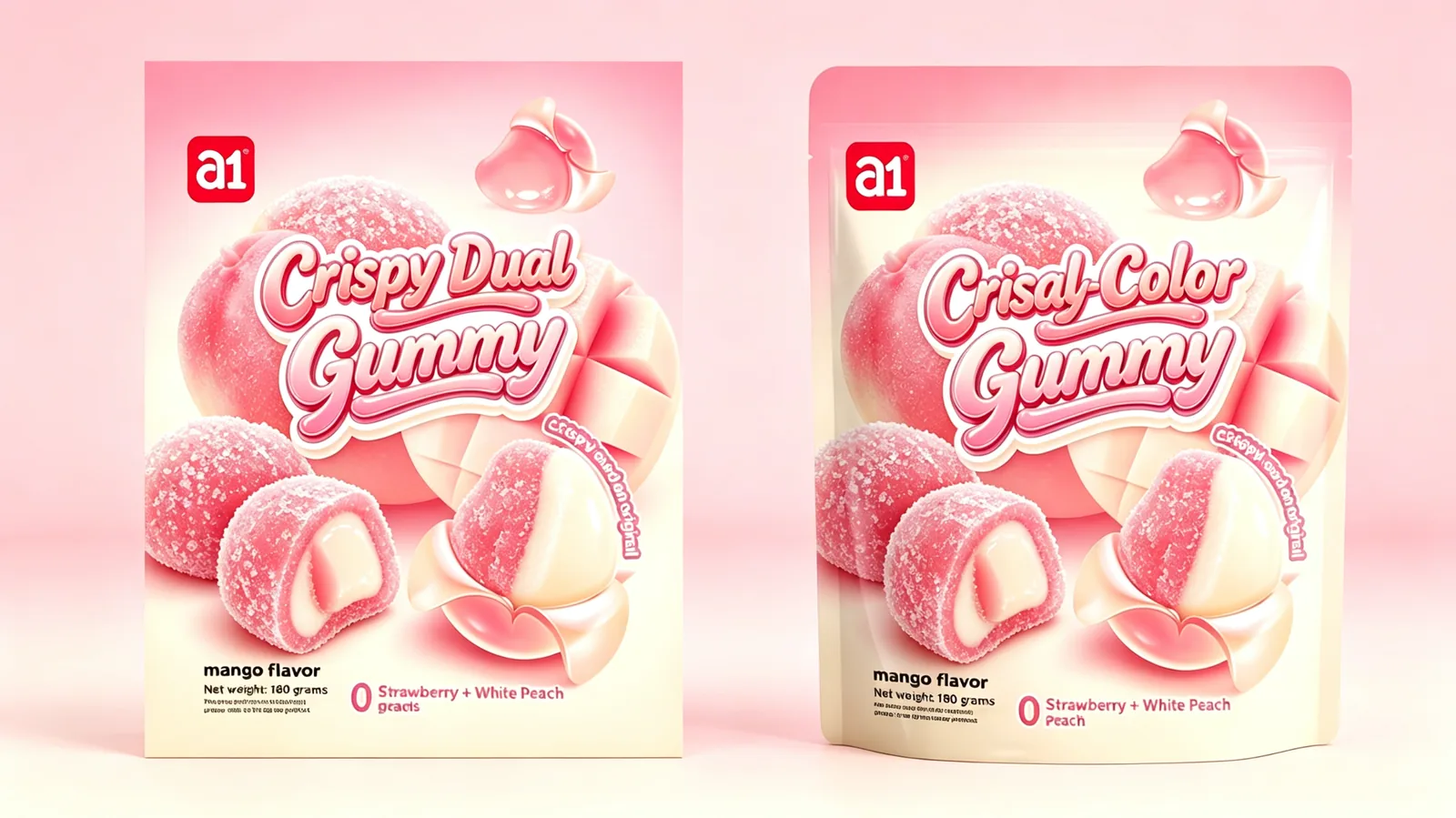
- In-house lab and traceability. Demand a CNAS-recognized laboratory, a Certificate of Analysis per batch, and full batch-level traceability. This is the documentation that clears customs audits and retailer QA. See how we present our 3D ice-sealed gummy and 4D crispy dual-color gummy ranges with that backing.
- Shelf life and tropical-route stability. A 12-month ambient shelf life is what lets a candy program absorb ocean freight plus retail lead time with healthy remaining shelf life at delivery. Ask for the stability protocol and the accelerated shelf-life data, not just a number on a spec sheet.
- MOQ flexibility and mixed containers. The order minimum should fit a test market, not force a full container of one SKU. Our standard is a MOQ from 500 cartons per SKU with 200-carton trial orders for new markets, so a launch can mix several gummy SKUs in one shipment. The math is in our mixed-container guide.
- Sample lead time and tooling. How fast can you hold a physical sample, and what is the mold and artwork approval timeline? Long, opaque sampling is a leading indicator of slow production later. Pair the sampling plan with the right packaging format for your channel before you commit tooling.
- Export documentation and market track record. Ask for proof of market experience: FDA facility registration and Prior Notice capability for the US, HALAL certification for the Gulf, and a reference list across export markets. We ship to 40-plus markets, which is the kind of track record a first-time importer can lean on.
How certifications map to your target markets
Match the certificate to the destination. For the Gulf and Halal-aware markets, HALAL certification is non-negotiable. For European retail, BRC is the audit buyers expect. For the United States, the facility must be an FDA-registered food facility, with Prior Notice handled on each shipment. FSSC22000, HACCP and BSCI are the baseline systems that sit underneath all of them.
Capacity, R&D and the reorder question
Continuity is where new importers get burned. A factory that nails the first order but cannot repeat it costs you the retailer listing and the relationship. During the audit, ask for regional references and for the capacity headroom that protects a reorder. A supplier with two bases and eight lines and three R&D centers is structured to scale a program rather than stall it, which is what protects your reorder.
Lab, traceability and the COA-per-batch standard
The COA-per-batch plus full traceability is the quiet advantage that separates a serious manufacturer from a trader. It is what your buyer's QA team will ask for during a recall simulation and what customs may request on arrival. Our zero-sugar coffee gummy and the rest of the range are shipped against that standard.
Shelf life and the tropical route
Candy is shipped further than most importers expect — across tropical lanes where heat and humidity test every formula. A 12-month ambient shelf life is the structural defense: it supports the ocean route plus retail lead time with comfortable remaining shelf life at the shelf. During the audit, ask for the stability data and the packaging barrier spec before you rely on the number on the label.
MOQ, mixed containers and trial orders
A test market should not require a bet-the-business order. Our standard MOQ is from 500 cartons per SKU, with 200-carton trial orders for new markets, so a distributor can run a balanced mixed container across several gummy SKUs instead of committing a full line to one format. The full breakdown is in our mixed-container guide.
A distributor's pre-signing checklist
Before you lock the manufacturer, score these eight points with the supplier on a single page:
- Which certifications match my target markets — HALAL, BRC, FDA registration, FSSC22000/HACCP/BSCI?
- How many production bases and lines run gummy, and what is the single-point failure risk?
- Can the factory develop my SKU, or only run a catalog?
- Is there a CNAS lab, COA per batch and full traceability?
- What is the ambient shelf life, and is there stability data to back it?
- What is the MOQ per SKU and the trial-order path for a new market?
- What is the sample lead time and the mold or artwork approval timeline?
- What is the export track record — FDA, HALAL, 40-plus markets?

Frequently asked questions
Do I need to visit the factory in person? For a first order, at minimum run a documented audit pack plus a video walkthrough of the lines and the lab. An on-site visit is better, but a serious manufacturer will already have the certificates, the COA samples and the traceability records to share remotely.
Which certification matters most? It depends on the market: HALAL for the Gulf, BRC for European retail, and an FDA-registered food facility for the US. FSSC22000, HACCP and BSCI are the baseline systems underneath all of them.
Can I mix gummy SKUs in one container? Yes. The standard MOQ is from 500 cartons per SKU with 200-carton trial orders for new markets, so a launch can mix several gummy SKUs in one shipment instead of betting one line on a single format.
Ready to scope your gummy program? Contact our team — tell us your target markets and the formats to test, and we will confirm certification and documentation fit, outline production and sampling lead time, and scope a compliant mixed order.