
Every baker who has lost money on a tropical shipment blames the sponge. Almost none of them should. A baked sponge is a low-moisture, structurally stable body that behaves predictably inside a container. The filling is the part that moves: it weeps, migrates, softens, or breaks its emulsion — and the filling decides whether your pallet arrives saleable or lands in a discount channel.
This guide compares the two filling families that dominate export bakery — juice-and-fruit-filled cakes and cream-and-pudding-filled cakes — under the conditions that break shipments: 30 to 45 days at sea, port dwell in direct sun, and repeated cold-to-hot transitions.
Why the Filling Fails Before the Sponge Does
Two processes run continuously inside a packaged cake, and both accelerate with heat.
Moisture migration. The filling almost always carries more free water than the sponge around it. Water moves along that gradient until the two zones equalise: a damp, dense sponge ring around the filling, and a filling that has lost body. The invisible result is a real shelf life shorter than the label promises.
Fat migration and emulsion stress. Cream and pudding fillings are emulsified systems — fat and water held in balance by emulsifiers and stabilisers. Heat stresses that structure. Push it far enough and the fat phase separates, showing up as oil staining the sponge, a greasy mouthfeel, and faster rancidity.
Filling choice is therefore a sourcing decision, not a flavour decision.
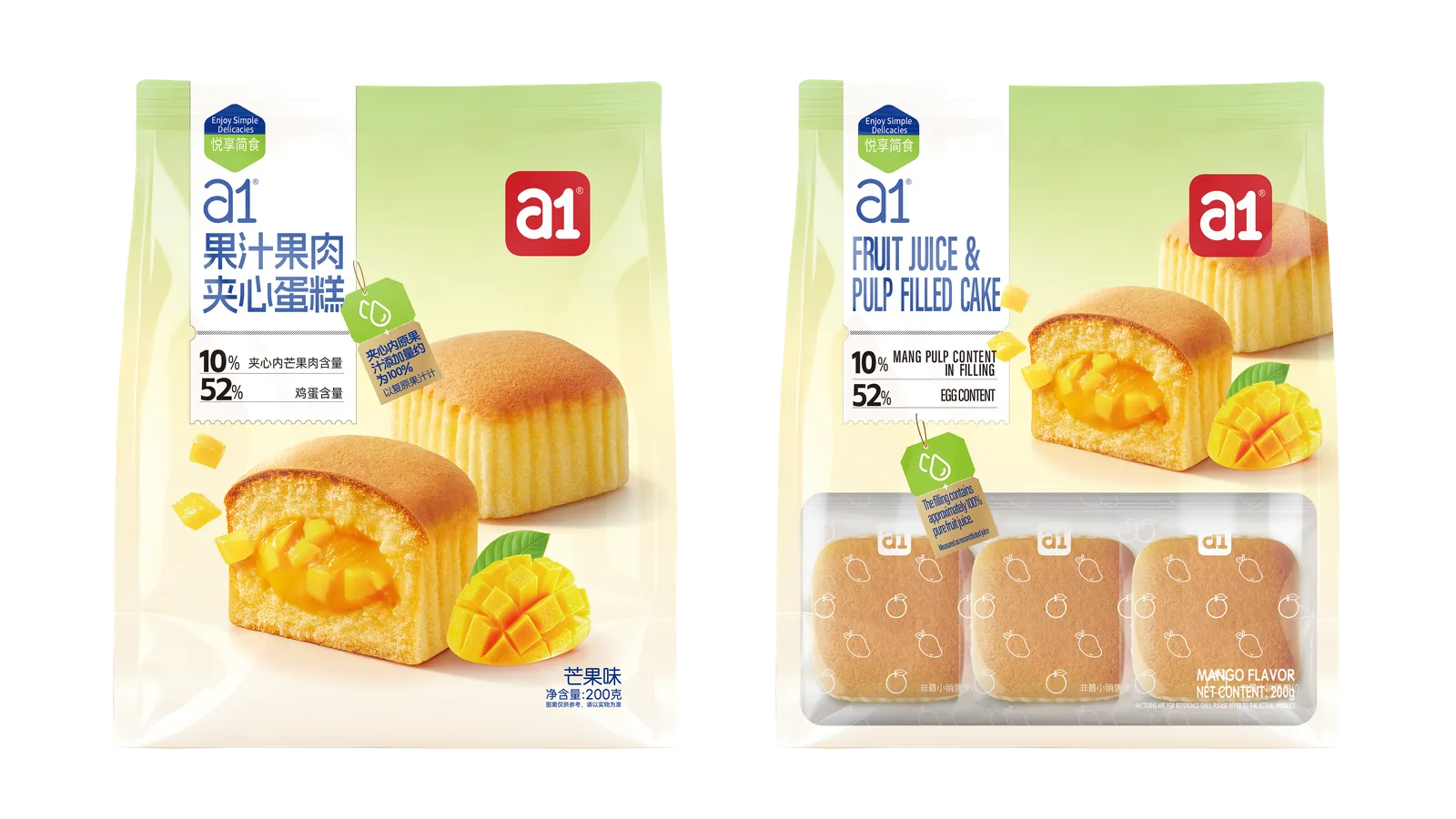
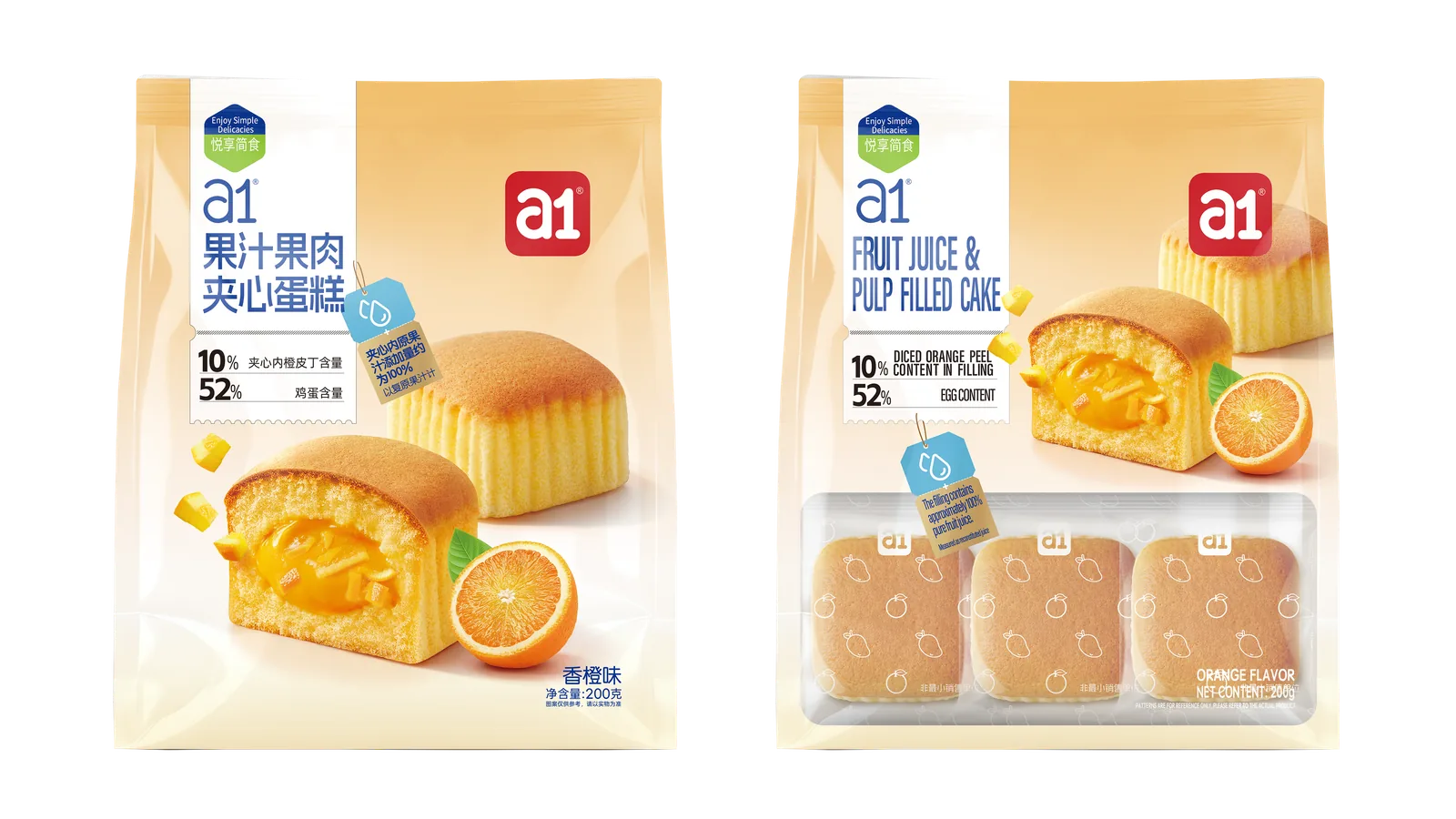
Juice-and-fruit-filled cakes bind water inside a gelled fruit preparation, such as our mango and orange juice-and-fruit-filled cakes. Because the water is held in a gel network rather than sitting free, the driving force behind migration is lower from the start, and the engineering effort goes into gel strength across the temperature range of the route.
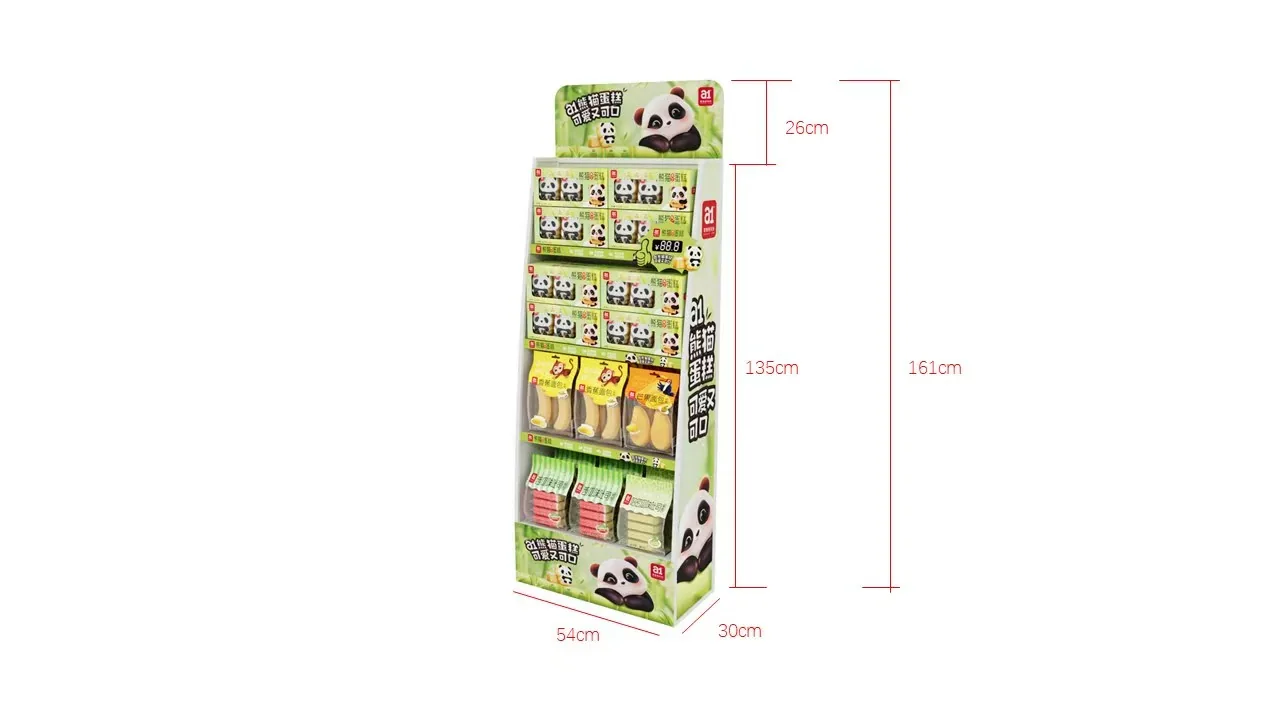
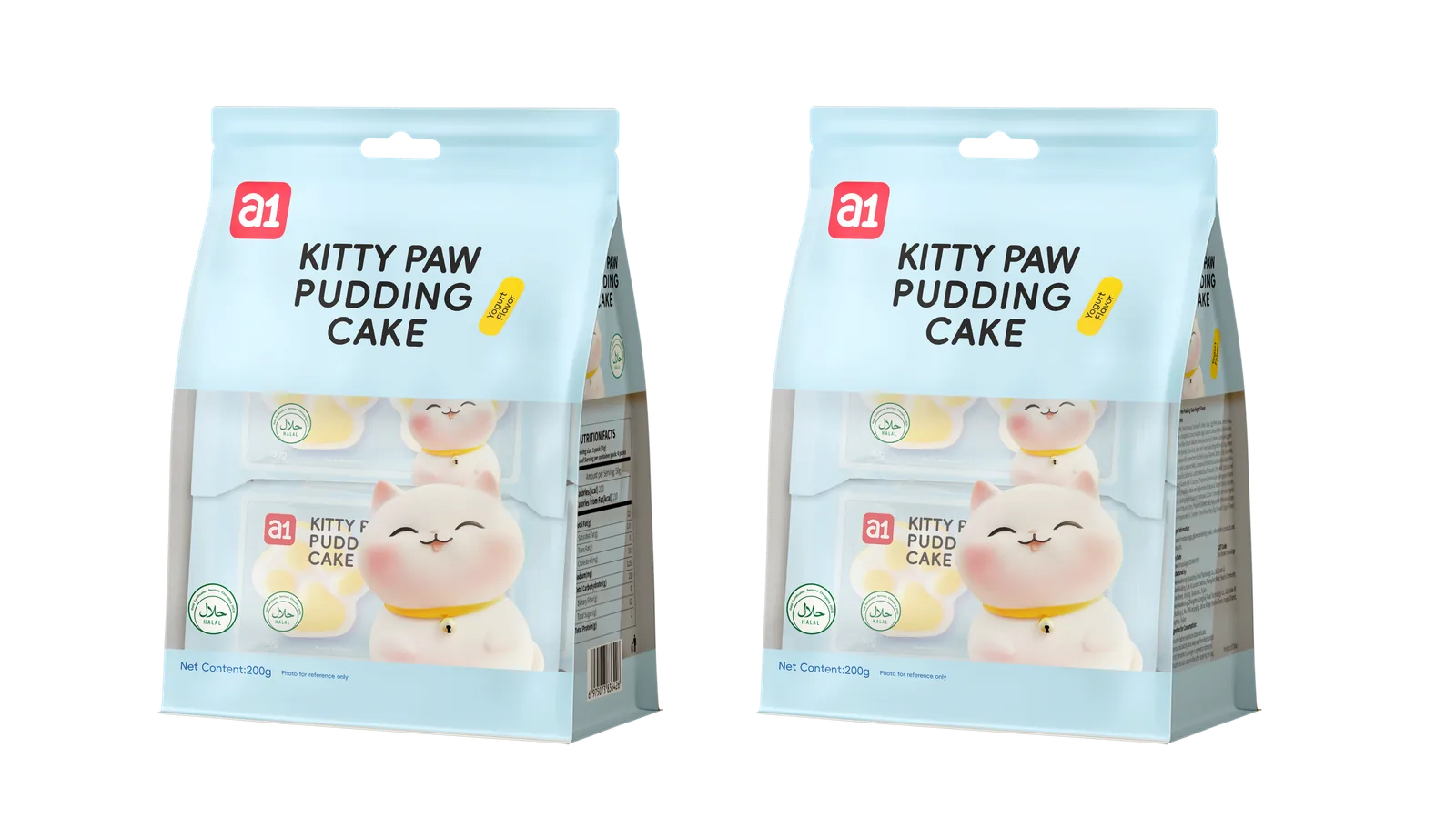
Cream-and-pudding-filled cakes rely on an emulsified fat-and-water system — for example our panda pudding cake and cat paw pudding cake. These fillings deliver a softer, richer mouthfeel and are more forgiving on cold and temperate routes, where the emulsion is not being cooked in a container.
Juice-Filled vs Cream-Filled, Side by Side
A buying framework, not a verdict: both filling families ship successfully to 40+ markets.
| Dimension | Juice-and-fruit-filled | Cream-and-pudding-filled |
|---|---|---|
| Filling architecture | Water bound in a gel network | Fat and water held in an emulsion |
| Main failure mode in heat | Water weeping, gel softening | Emulsion breakdown, oil migration |
| Migration into sponge | Slower with correct gel strength | Faster; sponge can turn damp and heavy |
| Texture after a hot route | Holds shape, brighter fruit notes | Can turn heavy or greasy |
| Cold-climate behaviour | Gel firms up, texture tightens | Stays softer; better cold-chain choice |
| Best-fit channels | Ambient, high-heat, long transit | Short transit, temperate climates |
| Consumer story | Visible fruit cues, "real fruit" | Indulgence, cream and pudding cues |
| Label watch-out | Fruit-content wording varies by market | Cream references trigger allergen control |
Route by Route: Which Filling Fits Which Market
Climate and transit time set the default, not consumer preference.
| Route | Climate stress | Filling that usually wins |
|---|---|---|
| Gulf & Middle East | High heat, humidity swings | Juice-and-fruit-filled |
| West & Central Africa | Heat, humidity, long dwell | Juice-and-fruit-filled |
| Latin America | Long transit, hot ports | Juice-and-fruit-filled |
| Southeast Asia | Short transit, high humidity | Either; juice preferred |
| Russia & CIS | Cold, freeze-thaw cycles | Cream-and-pudding-filled |
| Temperate Europe | Mild, short transit | Either; route is not the constraint |
The Sourcing Checklist: Eight Things to Verify Before You Sign
Ask for each of these in writing.
- Declared filling type and fruit content — the filling family and the fruit solids level actually used in production, not in the sample.
- Moisture and water-activity targets — for filling and sponge, with the migration margin stated.
- Accelerated shelf-life protocol — test conditions, duration, and the measured result at end of declared shelf life. The single most useful document in a tropical tender.
- Packaging barrier specification — film structure, moisture-barrier layer and seal integrity data.
- Exact carton count per 40HQ — the number your freight math depends on.
- Destination-market label review — fruit and cream content described in wording the target market permits. See our bakery certification checklist.
- Per-batch COA and full traceability — our own CNAS-accredited laboratory issues a certificate of analysis for every batch.
- Ambient logistics in writing — a statement that the product is shelf-stable with no reefer requirement. This protects you in a claim.
See our guide to importing stuffed toast from China for MOQ and 40HQ loading detail.
Where Tropical Shipments Actually Fail
The failure is rarely the filling specification. It is the container. Four points cause most of the damage:
- Stack compression — cartons at the top of a 40HQ carry the load of everything below them.
- Heat at the door and roof — outer and upper pallets run hotter than the core.
- Condensation on opening — a sun-heated container opened in a humid port releases moisture onto the nearest cartons.
- Double handling — every transshipment adds a day of unprotected heat.
For reference, our bakery range loads as follows per 40HQ: stuffed watermelon and melon toast 2,204 cartons, mango bread 2,000, rice cake cookies 2,066, banana bread 248 g 1,860, panda pudding cake 1,518 and cat paw pudding cake 1,431. Get these numbers early — they set your landed cost per carton.
Shelf Life Math: Six Months and the Bid You Win
Our bakery range is built on six months of ambient shelf life, with rice cake cookies at nine months. That is deliberate: retail tenders in most markets require a minimum share of shelf life remaining on delivery. A six-month product arriving with five months left clears the bar with room to spare; a four-month product is rejected at the dock even if it was perfectly made.
The consequence is uncomfortable but simple. Do not buy the cheapest filling; buy the filling that still has margin at the end of the route. Our registrations support that — FSSC 22000, BRC, HACCP, HALAL and BSCI, with FDA-registered food facility status for the United States. Note the wording: registration is not approval, and no responsible supplier will tell you otherwise.

On the label, keep two things straight. Fruit and cream content must be described in wording the destination market permits — a claim that is standard in one market can be non-compliant in the next, so final on-pack text should be reviewed by a local regulatory advisor before artwork is signed off. And this range makes no health or functional claims: the positioning is indulgence and fruit character, and where a functional concept is involved it must be checked against the rules of each target market.
From Spec Sheet to First Container
We cover both filling families because the right answer depends on your route, your channel and your consumer. Send us your target market, target price and product concept; we return samples with an FOB quotation; production and QC run on certified lines with traceability and a certificate of analysis per batch; then export documentation, logistics and repeat-order support.
On volume, our standard position is MOQ from 500 cartons per SKU, with 200-carton trial orders available for new markets — enough to test the route and the shelf before committing to a container programme. We ship to more than 40 markets and supply retail systems including Sam's Club, Costco, 7-Eleven, Kaufland, Lawson, GS25, Circle K, SM Group, Magnit, X5 Group, Samokat and FamilyMart. Our panda pudding cake case study shows how a character-led SKU wins shelf space.
Tell us the destination port and the shipping month, and we will tell you which filling we would put on that route. Contact Katherine at Justin@a1food.cn or WhatsApp +86-189-6548-2111, or use our contact form.