
Chocolate Banana Bread: Recipe & How Factories Make It
Chocolate banana bread is one of those searches that starts in a home kitchen and ends in a purchasing office. A buyer typing it into a search box asks a different question than a home baker: not "how do I bake it this weekend," but "can a factory make this consistently, ship it 30 days by sea, and hold it on my shelf for six months?" This guide answers the industrial version — recipe logic, production line, export maths and paperwork — from a manufacturer shipping banana bread to 40+ markets.
Factory Banana Bread Is a Different Product from the Café Loaf
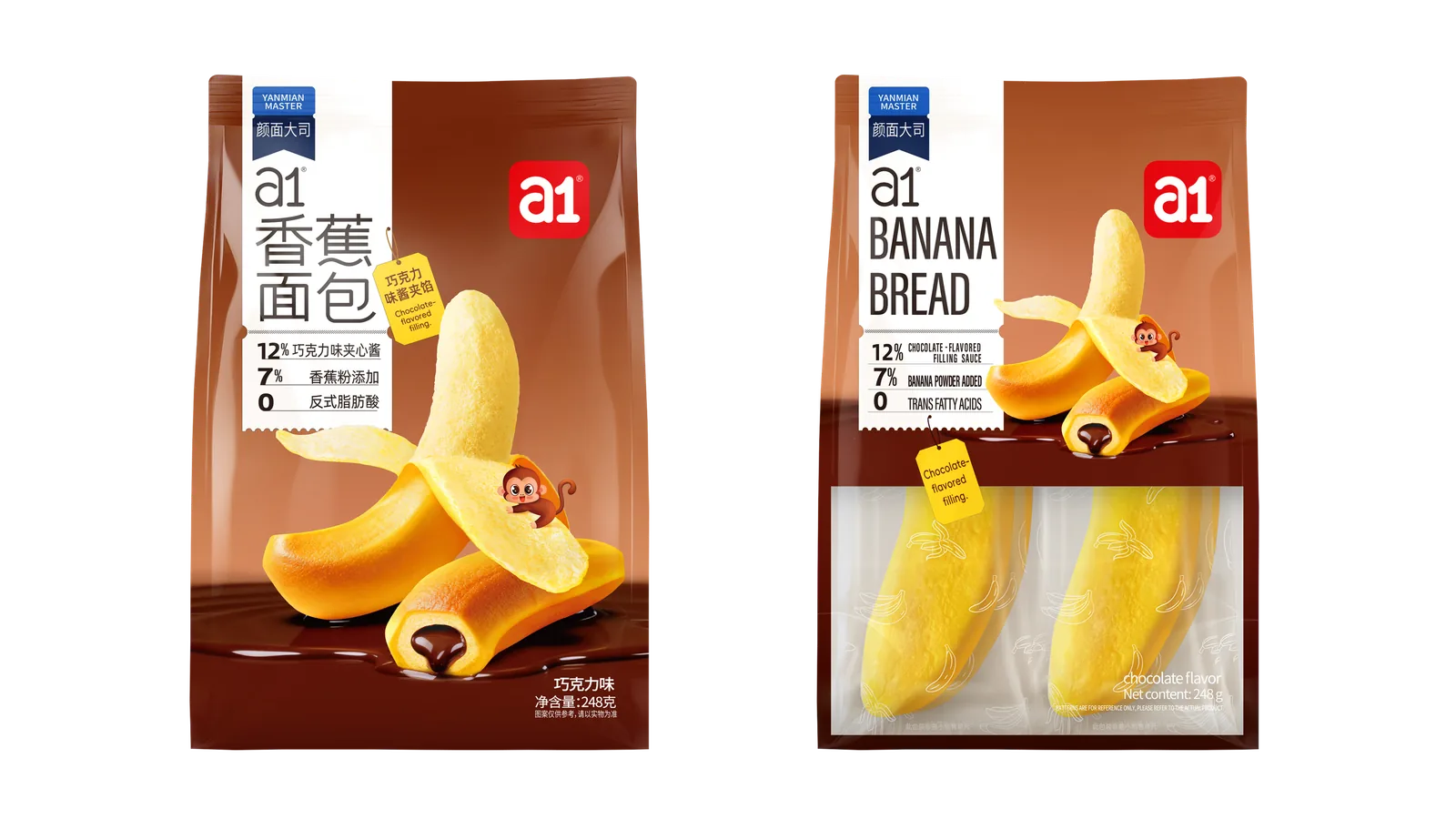
Home recipes run on overripe fresh bananas and a 60-minute oven clock. An industrial version sold at ambient temperature cannot work that way: fresh banana pulp carries a heavy water load and keeps darkening after baking — exactly what a six-month shelf life cannot tolerate. So the factory format is engineered differently: banana powder as the aroma carrier, a controlled filling system, packaging as a moisture barrier. The result looks like a toy and eats like soft bread — our line moulds 1:1 into a peeled-banana shape that identifies itself on a crowded shelf without translation. For retail sourcing, this distinction decides everything downstream.
The Recipe, As Printed on the Pack
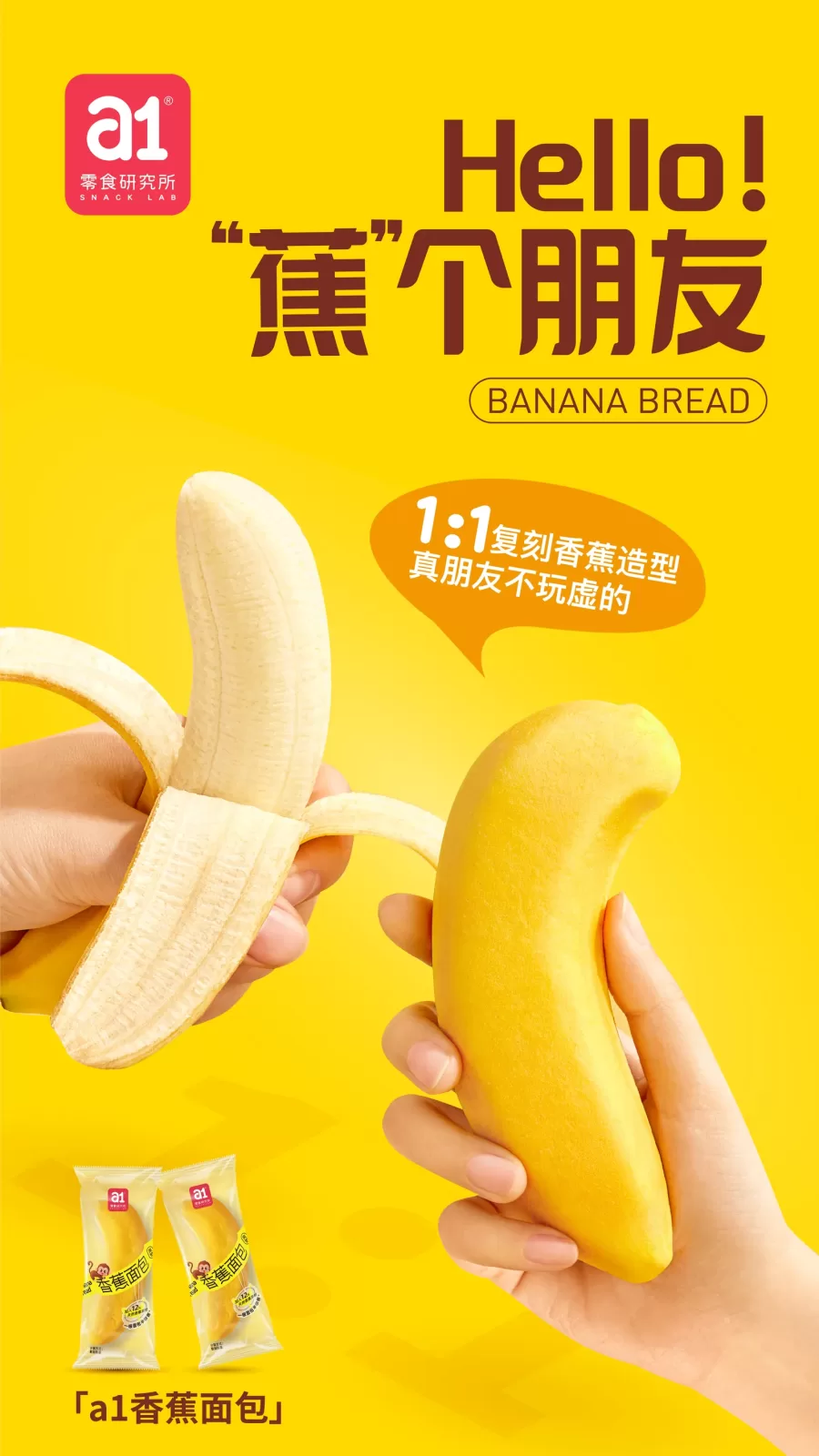
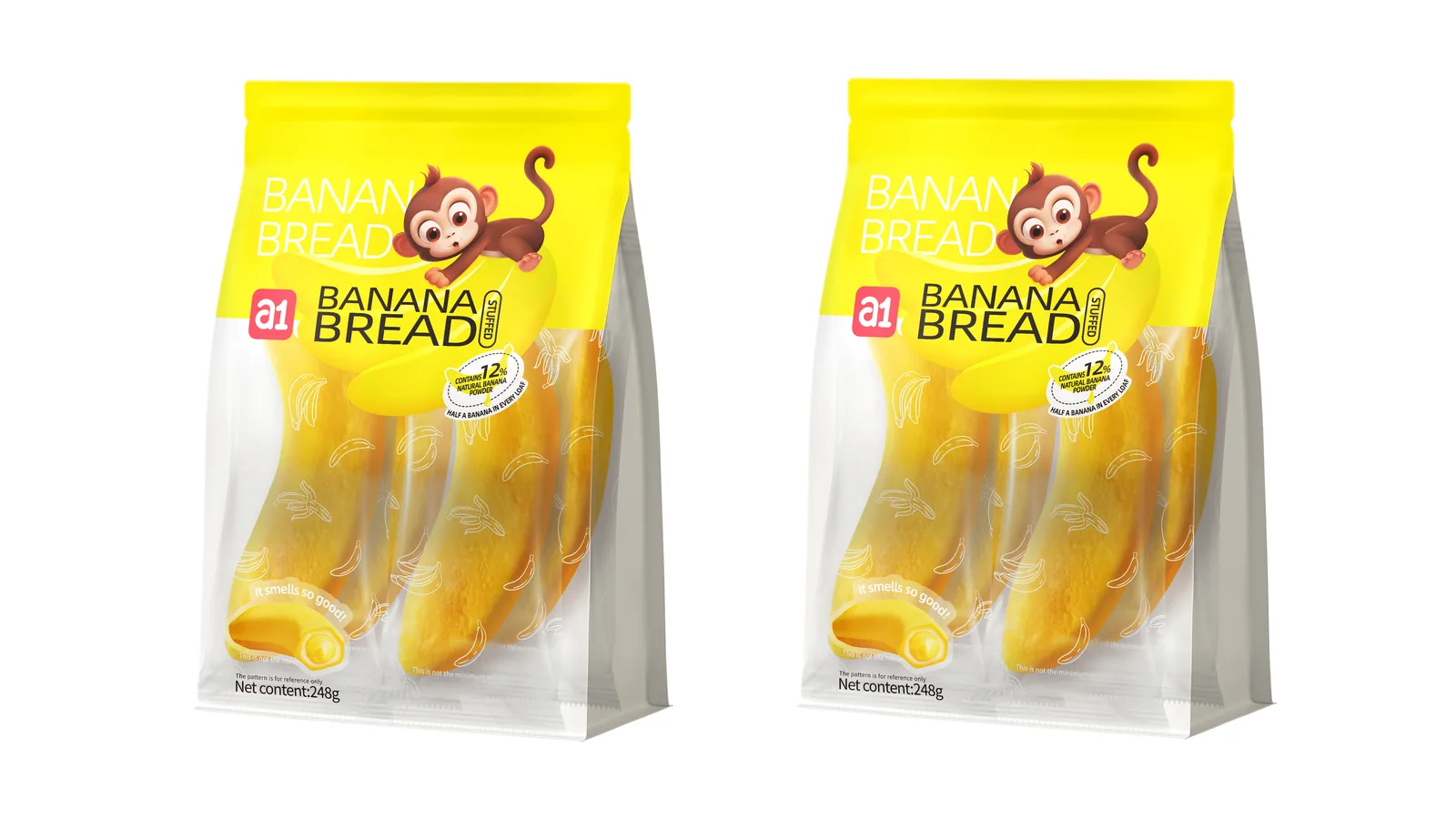
The honest way to present an industrial recipe is to read the pack: every printed claim can be verified at customs or on a tasting table. Our classic banana bread states it contains 12% natural banana powder — "half a banana in every loaf." The chocolate variant goes further: a 12% chocolate-flavoured filling sauce, 7% banana powder added, 0 trans fatty acids declared. Why powder instead of pulp? It delivers aroma and sweetness without the water fresh fruit brings — what makes a six-month ambient product possible at all. The full spec sits on our a1 Banana Bread product page; when comparing suppliers, ask for their banana-content and filling-content numbers the same way: printed, not described.
Chips, Sauce or Marbling: Choosing the Chocolate Format
Buyers arrive with one of three mental pictures: a banana chocolate chip bread (chips folded through the crumb), a filled loaf with a chocolate core, or a marbled swirl. On a line and on an ocean route they are not interchangeable. Chips are heat-stable but distribute flavour unevenly in a dense crumb; a swirl photographs well but is hard to dose at line speed; a sealed filling core is the most controllable, because deposit weight is verified piece by piece. That is why our chocolate banana bread is a filling format — the 12% sauce core is deposited before baking and stays sealed inside the crumb through 30 days of rolling at sea.
How the Production Line Builds It
Industrial banana bread runs as a continuous sequence, each step protecting texture or shelf life. Dry ingredients are dosed by weight; the banana powder premix is blended in; the batter is mixed under time and temperature control. The filling is deposited before baking, at a weight the line verifies piece by piece. Baking runs through a multi-zone tunnel so the crumb sets evenly. Then the step importers underestimate most: loaves are force-cooled to ambient before wrapping — wrapping warm bread traps condensation, the classic root cause of mould claims months later. Only after cooling does the flow-wrap close a 4-slice bag, 12 bags to a carton. Every batch leaves with a Certificate of Analysis from our CNAS-accredited laboratory, so the numbers you approved are the numbers that land.
The Trade-Off We Made: Powder Over Pulp, Chocolate Over Jam
Here is the judgement call behind almost every banana program we run, and the part only a manufacturer can tell you. When buyers first spec an export banana bread, the instinctive request is "make it taste more like fresh banana." The honest answer: fresh pulp and a six-month ambient clock fight each other. Water migrates from the wettest component to the driest for the product's whole life, and a water-based filling keeps throwing moisture into the crumb month after month. A fat-based chocolate filling is far quieter — it holds its water and stays where it is put. That is one structural reason chocolate banana bread travels better than jam-filled formats on tropical routes — see our comparison of chocolate-filled versus jam-filled bakery. Choosing banana powder as the aroma carrier was the same logic: it trades away part of the "fresh from the oven" story and buys a shelf life we can print with a straight face. When a supplier promises both, ask exactly how.
Six Months on the Water: Shelf Life as a Buying Criterion
Our bakery line carries a 6-month ambient shelf life, and for a buyer that number is bid arithmetic, not marketing. Add 25 to 40 days of ocean freight plus port handling and inland distribution, and a supermarket's "two-thirds remaining on arrival" clause already consumes a third of the clock. A 90-day product cannot enter that tender; a 6-month bread can. How the clause is written and which formats clear it is covered in our guide to 6-month shelf-life bakery for supermarket bids.
Loading Maths: What One 40HQ Actually Holds
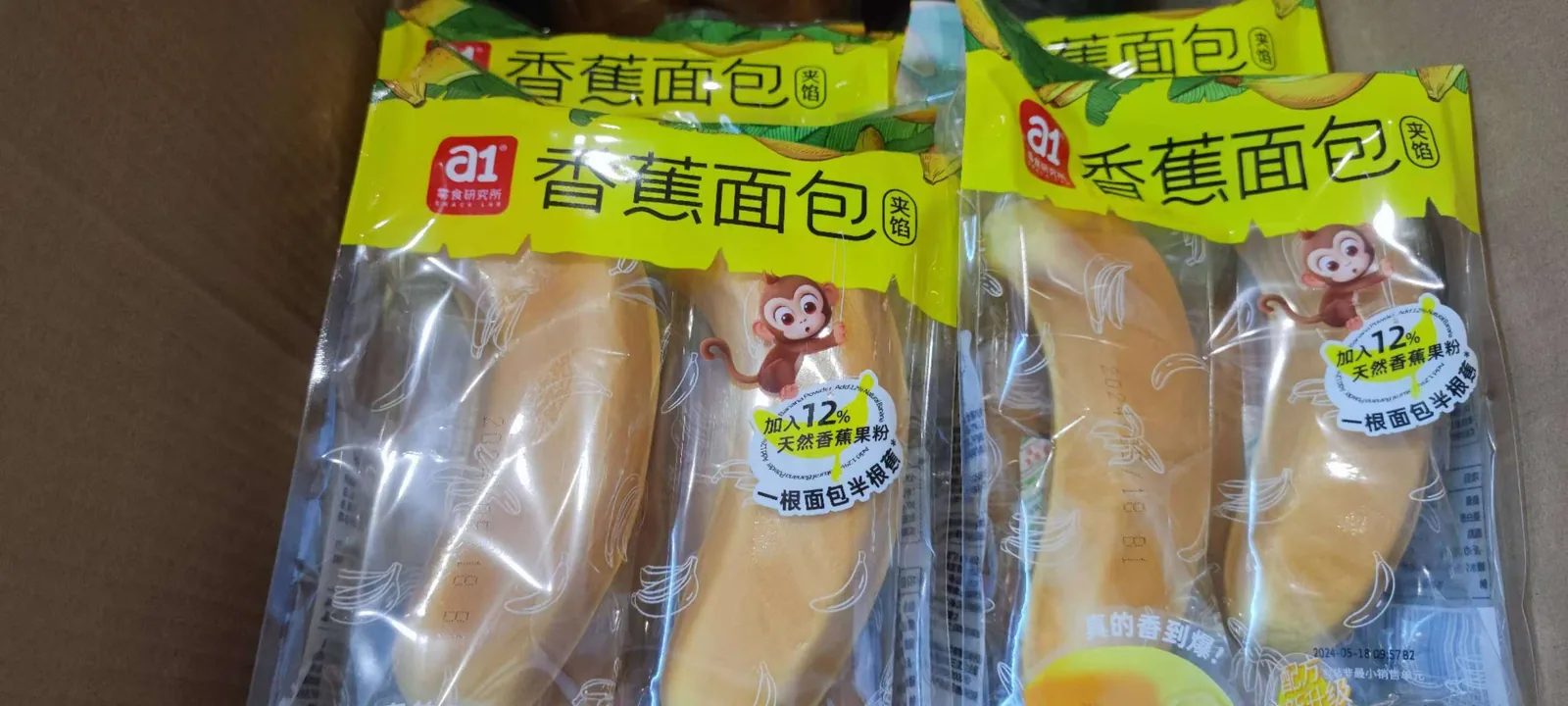
Per our 2026 product list: the 248 g banana bread (4 slices per bag) ships 12 bags per carton, with roughly 1,860 cartons per 40HQ container; the 372 g six-slice format loads about 1,778 cartons. For comparison, our mango bread loads about 2,000 cartons per 40HQ — see the a1 Mango Bread page. One bakery SKU rarely fills a container economically, so we support mixed loading: a first order can combine banana, mango and toast formats in one 20GP or 40HQ. Standard minimum: MOQ from 500 cartons per SKU, with 200-carton trial orders available for new markets.
Certifications and Paperwork Buyers Verify
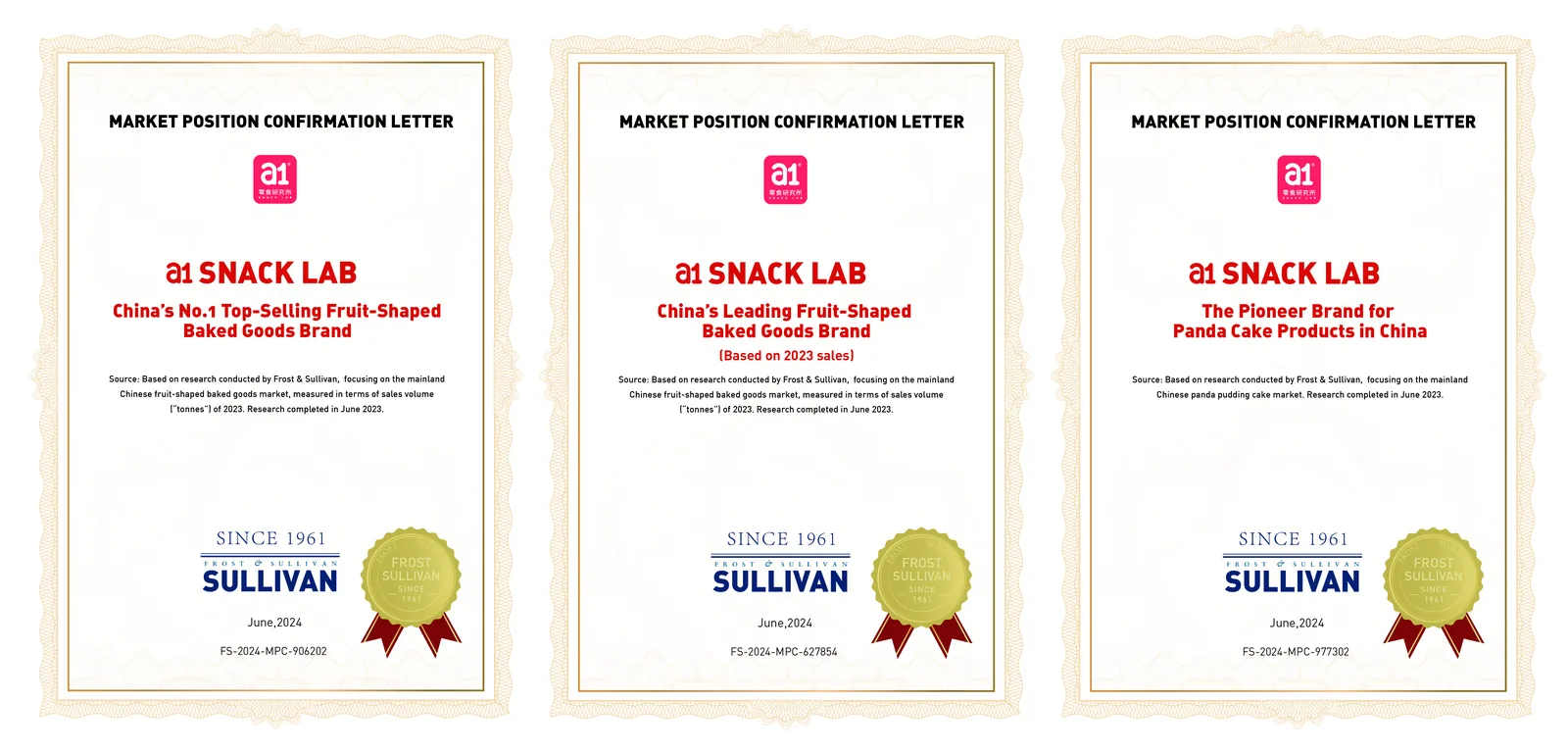
A bakery program is only as bankable as its paperwork. Our facilities hold FSSC 22000, BRC, HACCP and HALAL, with BSCI for social compliance, and our food facilities are FDA-registered — registration is a facility status with the U.S. FDA, not an endorsement of any individual product. Every batch ships with a COA from our CNAS-accredited lab. Behind the line: two production bases, eight lines, 200+ patents. On the market side, Frost & Sullivan issued a market position confirmation in June 2024 recognising a1 as China's No.1 top-selling fruit-shaped baked goods brand based on 2023 sales — a third-party, verifiable reference point.
A First-Order Checklist
Before you sign, put eight things in writing: (1) printed banana-content and filling-content percentages; (2) the chocolate format — filling core, chips or swirl; (3) the shelf-life claim and the arrival-condition clause your channel requires; (4) the certification set your market expects; (5) batch-level COA and traceability; (6) the packaging format — bag weight, slices, cartons per container; (7) the MOQ and the mixed-load option; and (8) the label spec for your market, including local-language artwork. With those eight on paper, the reorder becomes routine.
Frequently Asked Questions
Is factory banana bread the same as American-style banana loaf? No. It is an ambient snack-format soft bread engineered around banana powder and a controlled filling. The two do different jobs; benchmarking one against the other disappoints you in both.
Can we get chocolate chips instead of a filling core? Chips are possible as a variant, but for a first export order we recommend the filled format — a sealed core survives heat and humidity better than loose chips in a dense crumb.
What is the minimum order? MOQ from 500 cartons per SKU, with 200-carton trial orders available for new markets — enough to test shelf and velocity before a full container.
How do we verify the claims before signing? Ask for the printed pack, a recent COA, the certificate set (FSSC 22000, BRC, HACCP, HALAL) and the market position documentation — every claim here maps to one of those documents.
Ready to spec your first container? Contact our export team — Katherine and the desk will return a spec sheet, certifications and a mixed-loading plan for your market.