A convenience store wins or loses its day before 9 a.m. The morning rush is the single highest-turn window in the store, and the breakfast bakery set is the fixture that captures it. Yet most distributors plan that set after the fact — they pick a few familiar SKUs and hope the shelf sells. For an importer or wholesaler building a convenience channel, the morning bakery planogram is a shelf-engineering problem, not a recipe problem. This guide shows how to build a morning planogram that converts, using ambient-stable SKUs that need no cold chain and survive the long route from a Chinese factory to a CVS peg.
Why the Morning Window Is the Convenience Battlefield
The 7–9 a.m. commute is when a convenience store earns its bakery margin. Shoppers buy on impulse, on the way to work, with one hand on the door and the other reaching for something they can eat now or at the desk. That behavior decides what the product must be:
- Speed. It has to be grab-and-go — opened and eaten with no utensils.
- Portability. It rides in a bag, a pocket, or a cup-holder without turning to crumbs.
- Repeatability. The same item, same taste, every week — because morning buyers are creatures of habit.
A breakfast set that misses any of these loses the window to a competitor's sandwich or a bottled drink. The planogram is how you make sure your SKUs are in the right place when the rush hits.
The Four Hard Constraints a Breakfast Set Must Meet
Before you choose flavors, the set has to satisfy four constraints that convenience buyers voice in every RFQ:
- Ambient stability. Most convenience shelves are not refrigerated. A breakfast SKU that needs cold chain is a non-starter for 90% of the channel.
- Grab-and-go format. Single-serve or small multi-packs, no preparation, no mess.
- Sturdy packaging. It must survive the ocean route, the warehouse, and the shopper's bag — no crush, no oil bleed.
- Long shelf life. Six to nine months ambient gives the buyer buffer against slow early velocity and long lead times.
Our breakfast line is built around exactly these constraints. Per our 2026 product list, the ambient shelf life and 40HQ load by SKU are:
| Product | Format | Shelf life (ambient) | 40HQ load |
|---|---|---|---|
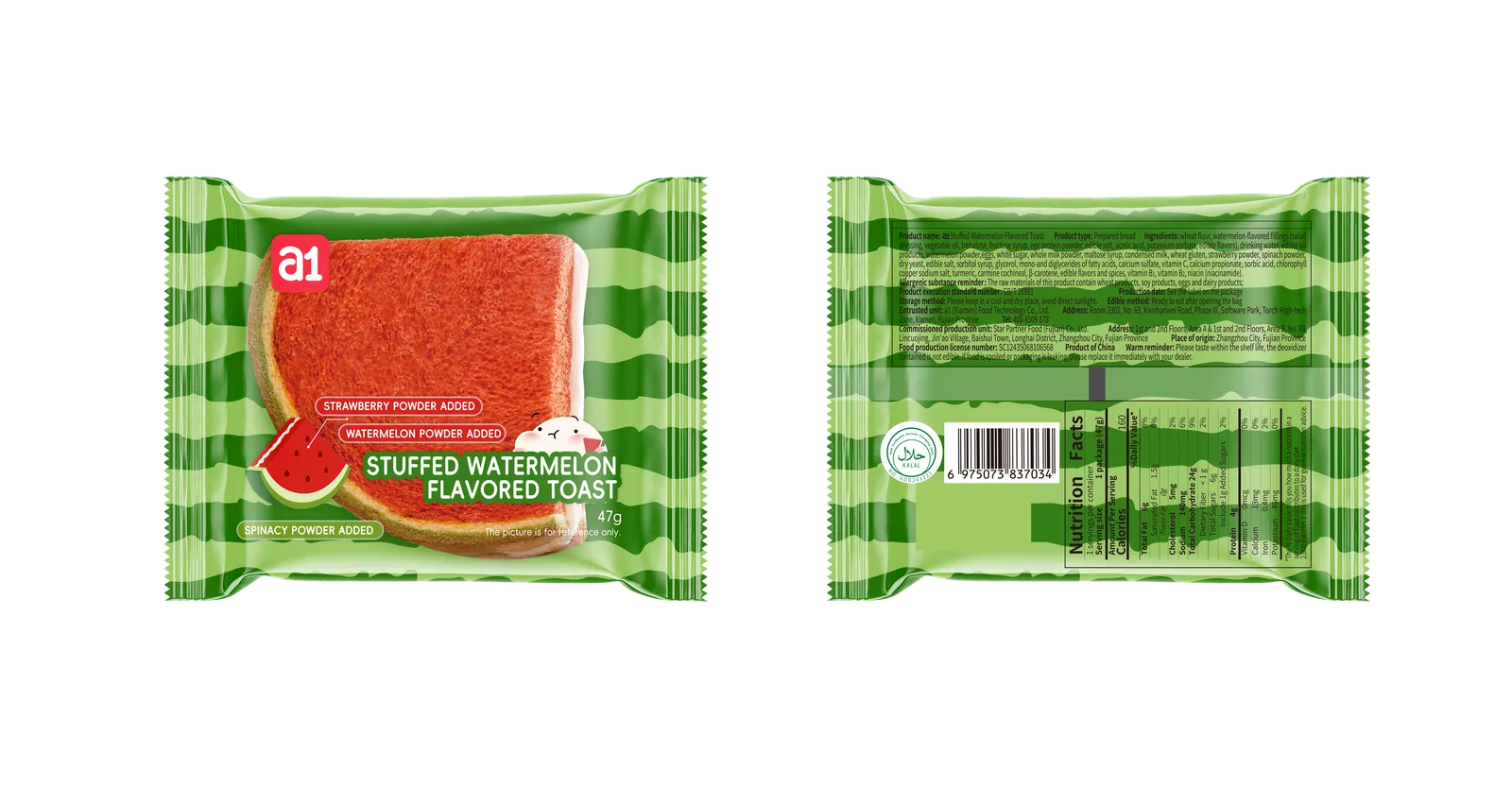
| Stuffed watermelon toast | 188g × 12 bags | 6 months | 2,204 cartons |
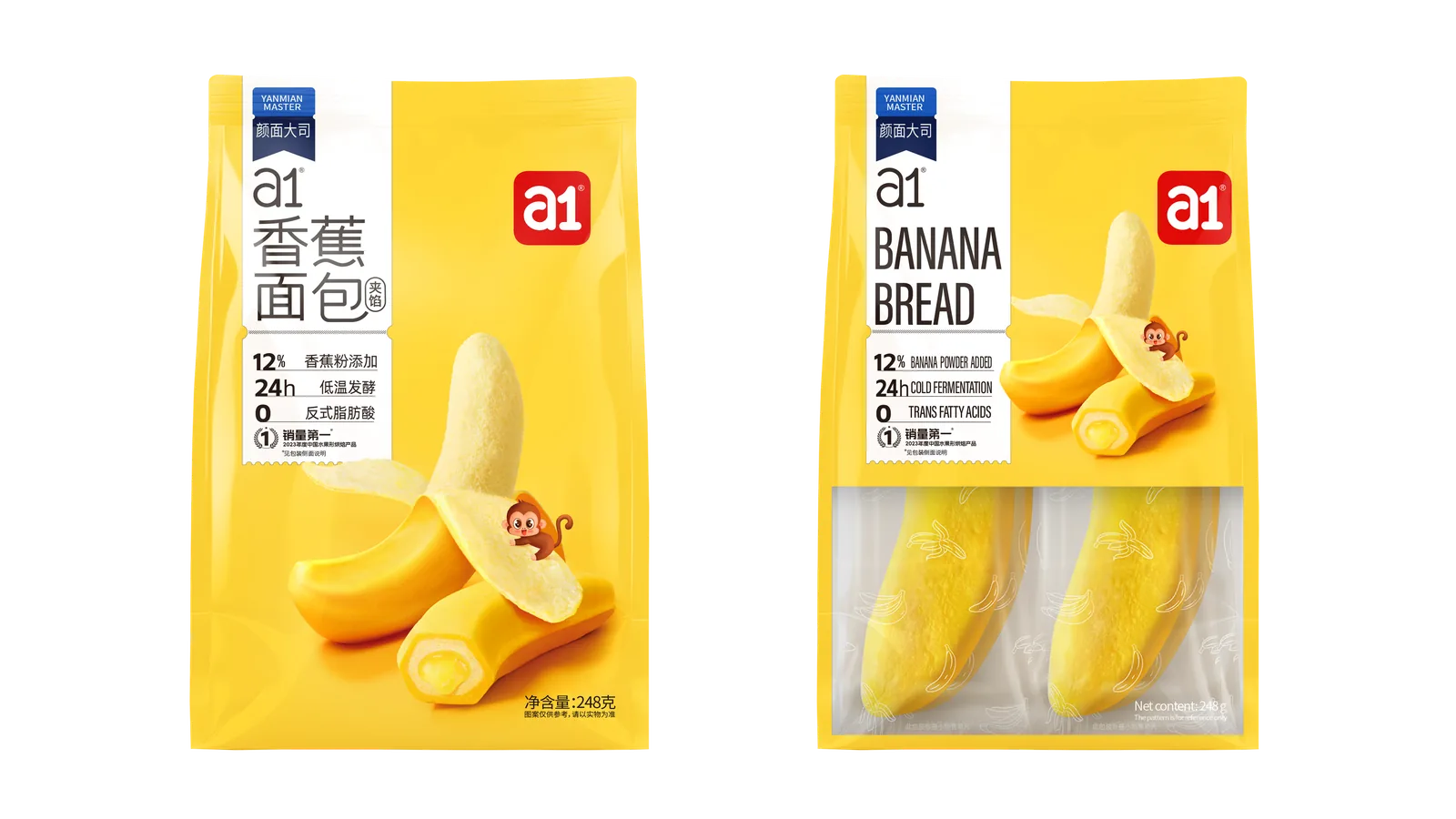
| Banana bread | 248g × 12 bags | 6 months | 1,860 cartons |
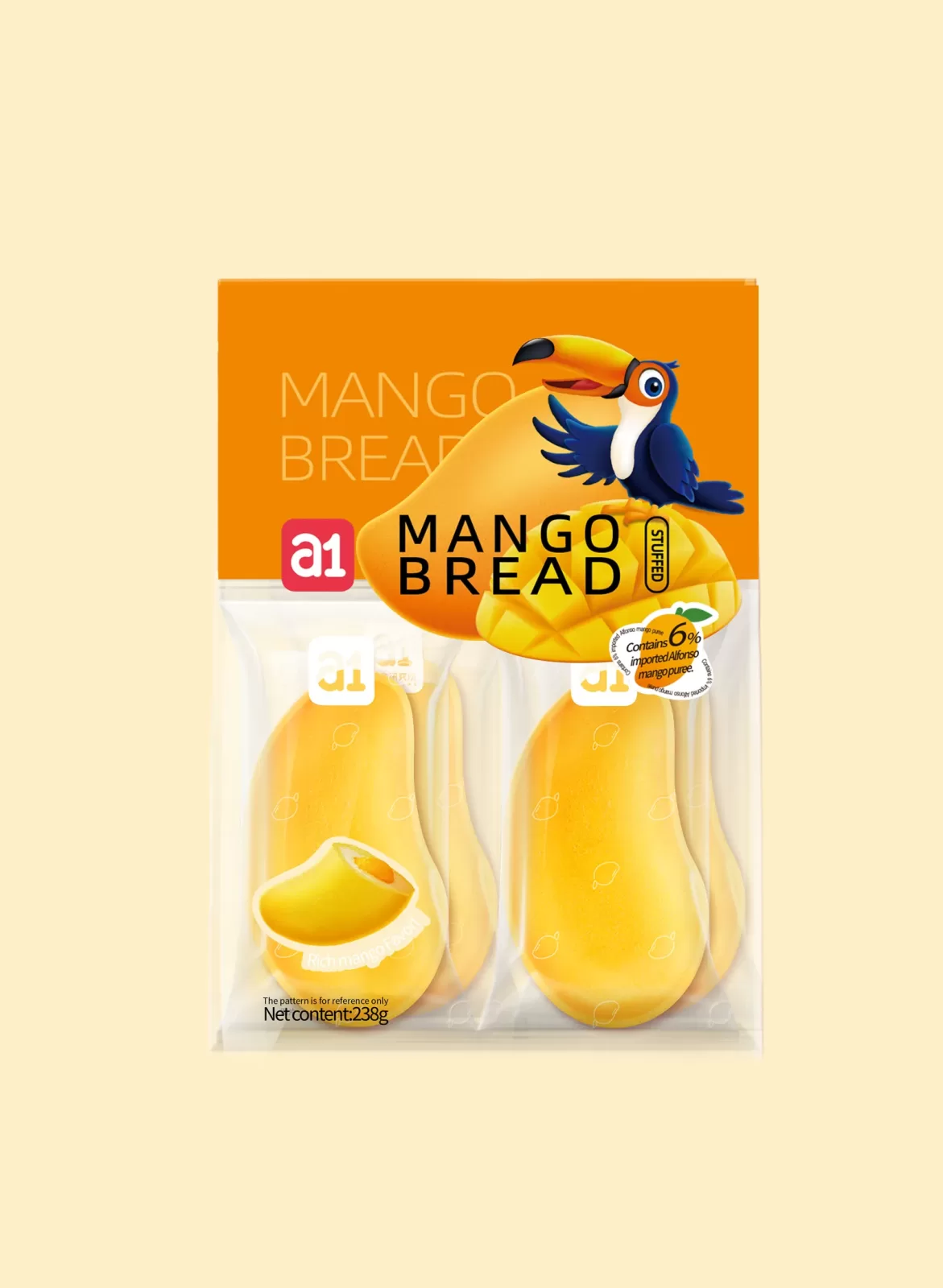
| Mango bread | 238g × 12 bags | 6 months | 2,000 cartons |
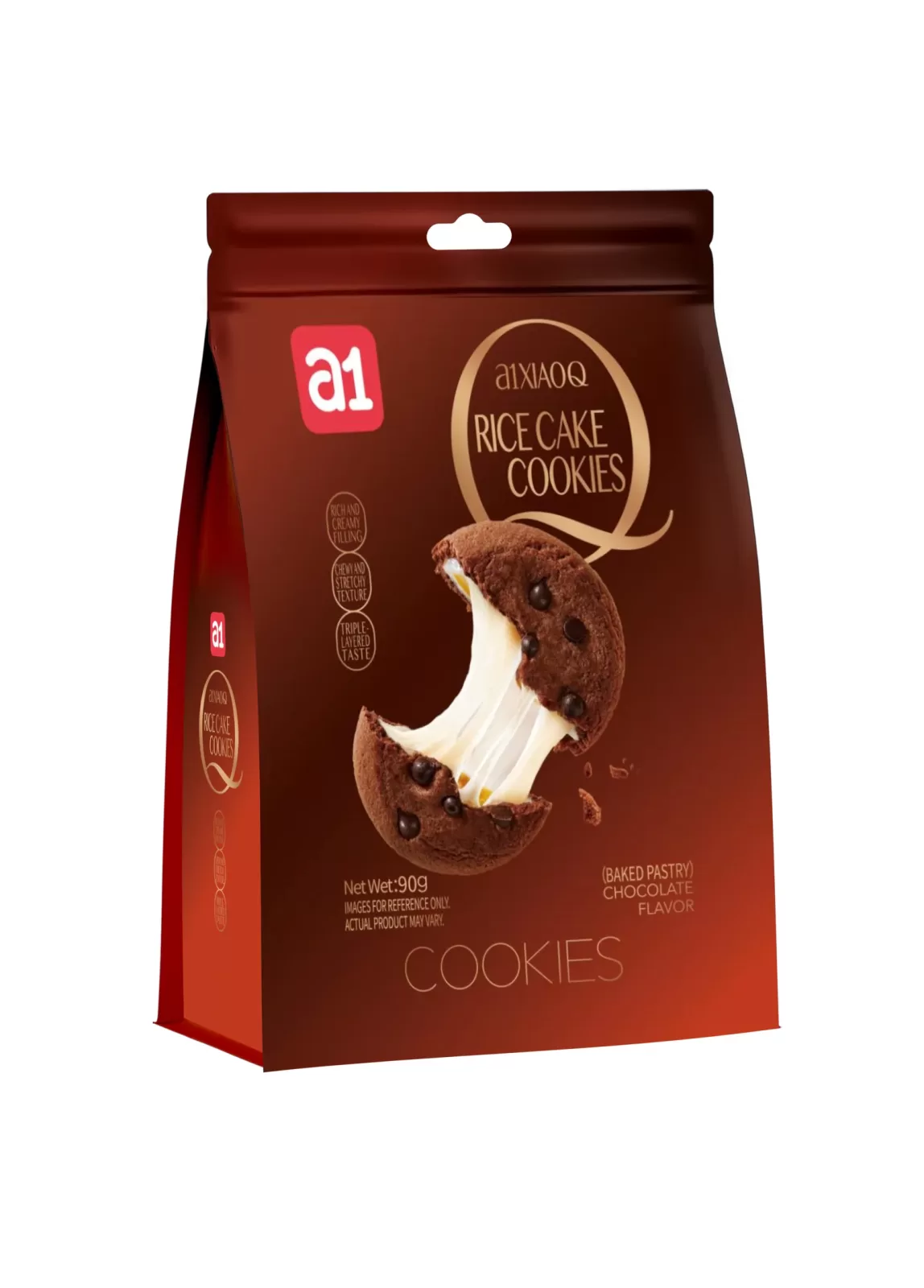
| Rice cake cookie (chocolate / strawberry) | 90g × 24 bags | 9 months | 2,066 cartons |
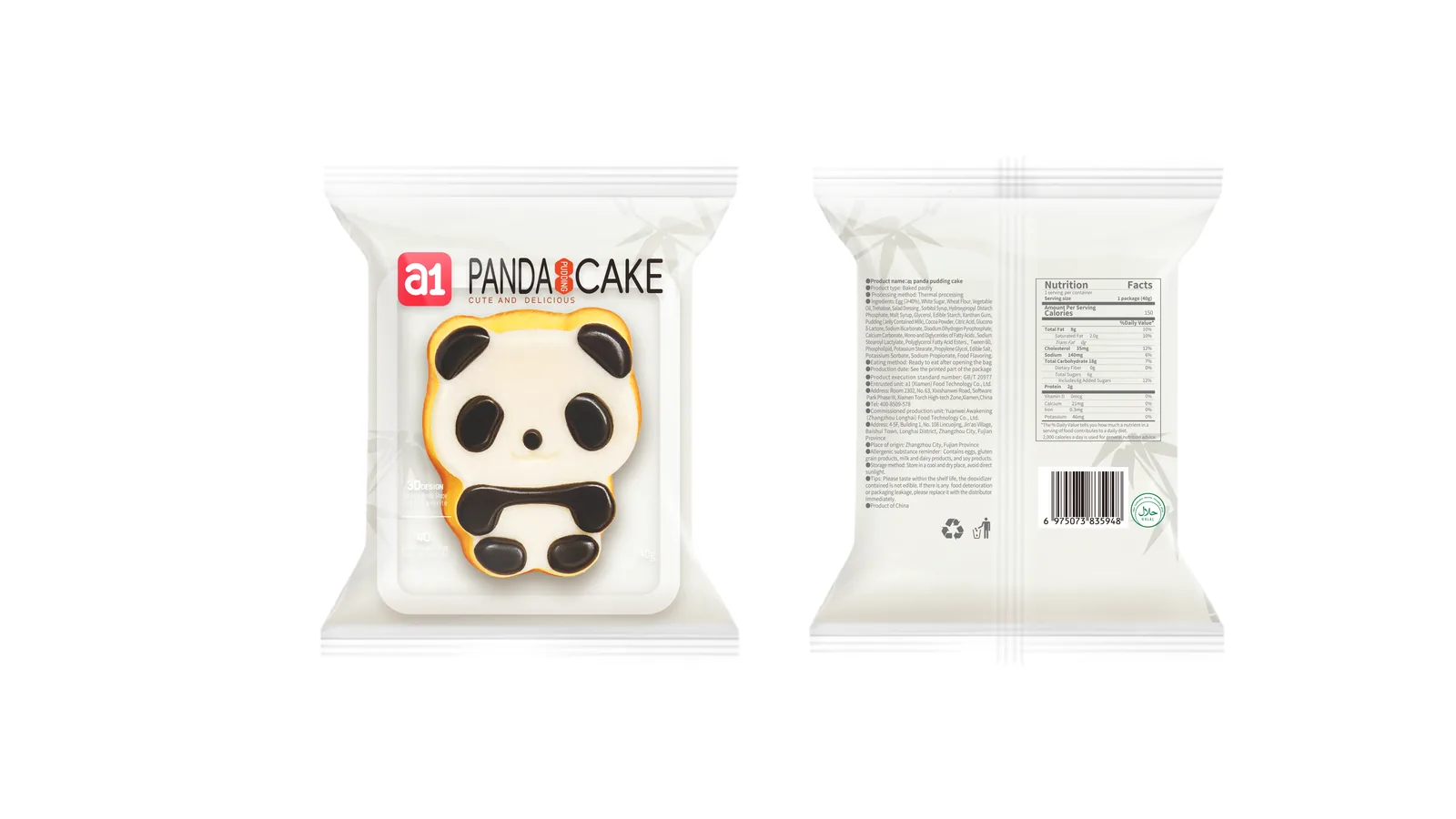
| Panda pudding cake | 240g × 12 bags | 6 months | 1,518 cartons |
None of these figures is a substitute for your own target-market review, but they show the engineering target: a breakfast range that lands on an ambient shelf and stays there for the whole selling season.
How We Built an Ambient-Stable Breakfast Line
We did not start from a recipe and hope it traveled. We started from the constraint. Across our 40+ export markets — from Gulf minimarts to European forecourts to Latin American convenience chains — the common denominator is the ambient shelf. So we designed the breakfast range around ambient stability first, flavor second.
The lesson came from the route, not the kitchen. Early on, distributors would ask for refrigerated-style soft bakery that tasted freshest cold. It photographed beautifully and failed the ocean: two to four weeks in a container, then a warehouse, then a warm shelf, and the texture and mold margin were gone before the first reorder. We standardized instead on formats with low water activity, barrier film, and validated stability — the same discipline behind our 9-month crispy cookie. The result is a line that arrives the same as it left, which is what a convenience buyer actually pays for.

Independent recognition backs the system, not just the recipe: our fruit-shaped baked goods hold a Frost & Sullivan market-position certification as a leading brand in the category, and the range has earned International Taste Institute 3-Star awards across consecutive years. Those honors sit on top of the same certified, COA-backed production that fills the morning shelf.
Building the Morning Planogram With a1 SKUs
A working morning set needs a hero, a value line, and a long-life anchor. Using our range:
- Hero (eye level): the stuffed watermelon toast — a fruit-shaped baked good with strong shelf presence and a 6-month ambient life. It is the SKU that stops the eye on the way to the till.
- Everyday value: banana bread and mango bread, familiar formats that need no education and reorder predictably.
- Long-life anchor: the rice cake cookie at 9 months — the format you can stock deeper without fear of write-off.
Mixing these into one 40HQ lets a new distributor test the whole morning concept in a single shipment. Our banana bread alone loads 1,860 cartons per 40HQ; a balanced mix typically lands around 2,000 cartons of combined SKUs.
Where Each SKU Goes on the Planogram
Placement is half the conversion. A simple rule we give distributors:
- Hero toast at eye level in the morning zone, near the coffee and the till.
- Grab-and-go banana and mango bread at the secondary shelf, for the repeat buyer.
- Cookies in the deep-stock position — their 9-month life means they can sit longer without risk.
- A small clip-strip near the door for the truly impulsive one-hand grab.
The point is to meet the 7–9 a.m. shopper at three points: the door, the coffee, and the till.
Shelf Life as the Invisible Conversion Driver
Shelf life is not just a logistics number — it is a conversion driver. Chain buyers apply an arrival-remaining-shelf-life threshold (commonly two-thirds of the stated life) before they will list a SKU. A 6-month product that spends a month in transit arrives with only about 4 months left, which can fall under the threshold. A 9-month cookie arrives with about 7 — comfortably clear. That is why we treat shelf life as a design input, not an afterthought. The same logic drives our 6-month shelf-life supermarket bid guide, our family-pack vs single-serve margin model, and our chain-buyer tender scorecard.
Packaging Formats That Survive the CVS Shelf
Convenience packaging has to do three jobs at once: protect the product, signal the brand, and fit the peg. We use sturdy film and rigid forming for the toast and cake, and a crush-resistant bag for the cookie. The lesson from the route applies here too — a pretty wrapper that lets oil bleed or lets the product flex in transit becomes a write-off at the DC. Packaging is part of the stability system, not decoration.
Opening the Line — MOQ and Mixed 40HQ
We support new distributors with a MOQ from 500 cartons per SKU, 200-carton trial orders for new markets. Because the breakfast range is compact and ambient-stable, a mixed 40HQ can carry several SKUs — letting you test the morning planogram across formats in one shipment rather than committing to a single hero. Talk to our team via the contact page to build a trial assortment matched to your channel.
A Pre-Order Checklist for the Morning Set
- Confirm the channel runs ambient shelves (most do).
- Pick a hero, a value line, and a long-life anchor.
- Agree the arrival-remaining-shelf-life threshold with the buyer.
- Confirm certifications for the target market.
- Request per-batch COA and stability data.
- Estimate total transit time to your DC.
- Size the first order via a mixed container to limit risk.
- Plan the planogram placement before the product lands, not after.
Frequently Asked Questions
Do I need a cold chain for these breakfast SKUs? No. The range is formulated for ambient shelves with 6–9 months of stable life; no refrigeration is required in transit or on shelf.
What certifications back the line? The facility carries FSSC 22000, BRC, HACCP, HALAL and BSCI certifications, and is an FDA-registered food facility for US-bound goods. We do not claim FDA approval — registration is not approval.
How is quality documented? Every batch ships with a Certificate of Analysis from our CNAS-accredited in-house laboratory, with full batch traceability.
Can you support retail listing requirements? Yes — we provide the pigment-source, stability and certification documentation your team needs for the target-market review.
Talk to Our Team
If breakfast bakery is part of your next convenience program, the planogram should be drawn before the purchase order, not after the rejection. Contact our team for stability data, certification documentation and a mixed-container trial plan built around your morning window.