
Ask a first-time bakery importer what packaging they want and you often get a moodboard. Ask a distributor who has already claimed a damaged container and the conversation changes: bags per carton, cartons per 40HQ, drop tests, shelf width, what sells in December versus March. In export bakery it is a procurement decision long before it is a design decision — and bag, box and gift carton are three positions on cost, protection and margin.
This guide compares the three formats as a buyer should: what each is for, what it does to container math, and what to confirm in writing.
Packaging Is a Procurement Decision, Not a Design Decision
Every packaging format choice moves four lines of your import P&L at once. First, freight: geometry decides how many cartons a 40HQ absorbs, and freight per unit is mostly a cube question. Second, damage: soft cakes and sliced toasts travel 25–40 days by sea; the cheapest format on the artwork quote can be the most expensive per sellable unit. Third, shelf performance: a bag merchandises differently than a box. Fourth, seasonality: a gift carton opens price tiers a flow-wrap bag never will. Treat these as one aesthetics decision and you give up margin on all four.
The Bag: the Default Workhorse of Ambient Bakery
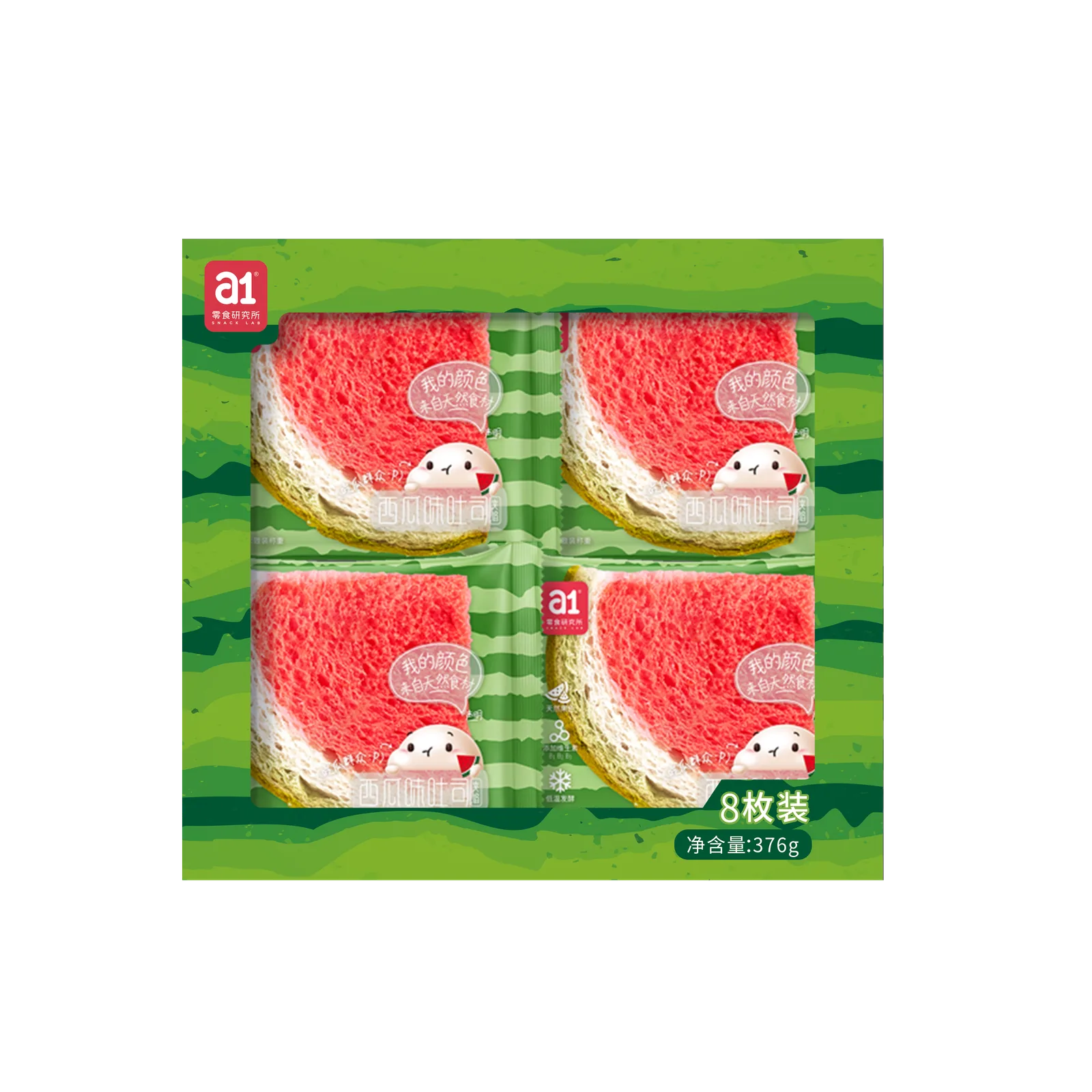
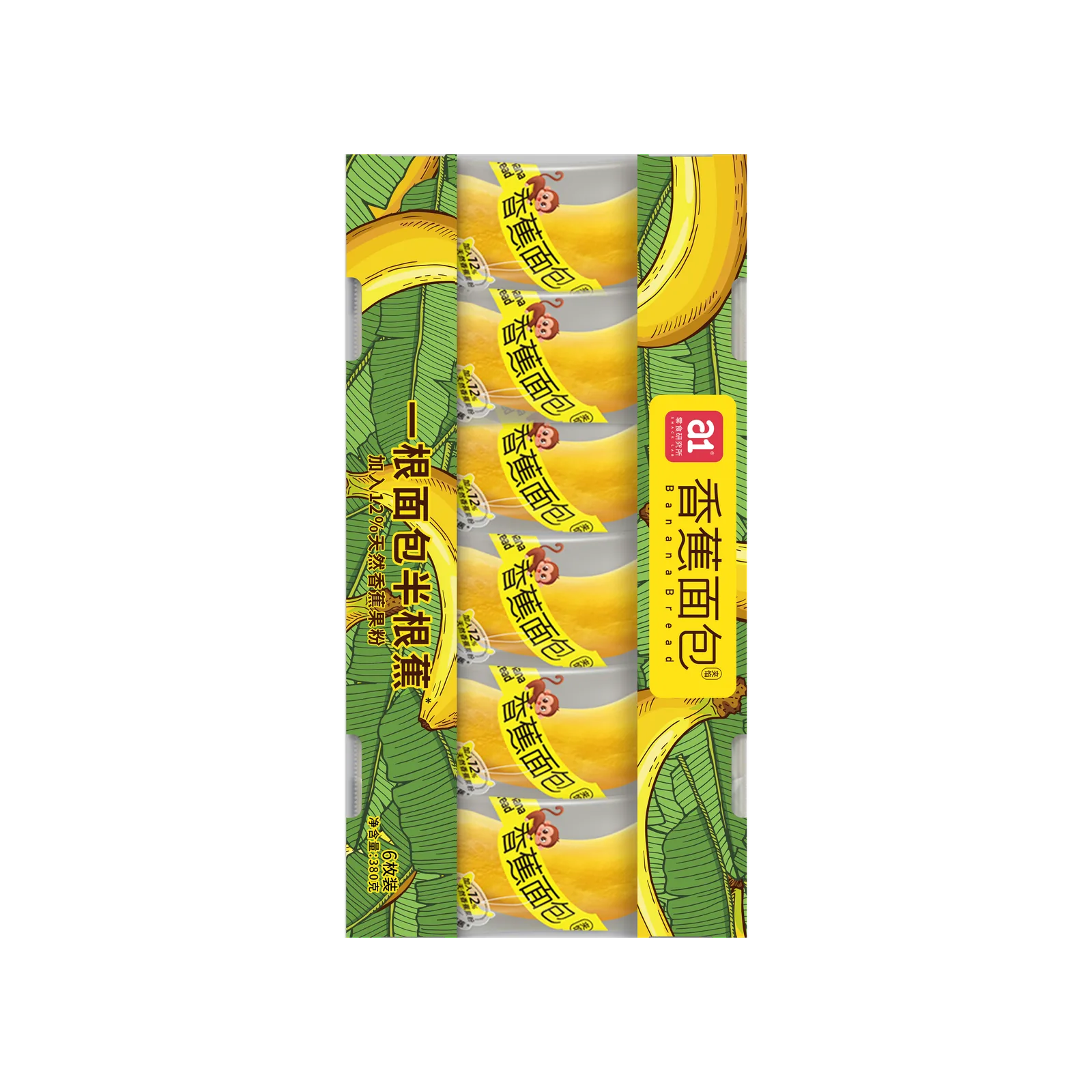
The bag is where ambient bakery starts. A printed flexible bag — flow-wrapped around the product or standing on its own base — is the lightest, cheapest and most cube-efficient format in the range. Every SKU in the a1 bakery line ships this way as primary pack: the stuffed watermelon toast goes out in a 188 g four-slice bag, twelve bags to a carton; banana bread in a 248 g four-slice bag; pudding cakes in 200–240 g multipacks.
What the bag does well: it maximizes carton loading — the watermelon toast reaches 2,204 cartons in a 40HQ — keeps unit cost at mainstream supermarket price points, and modern barrier films carry the 6-month ambient shelf life tenders require. A resealable seal or a clip turns a multi-slice bag into a multi-occasion purchase.
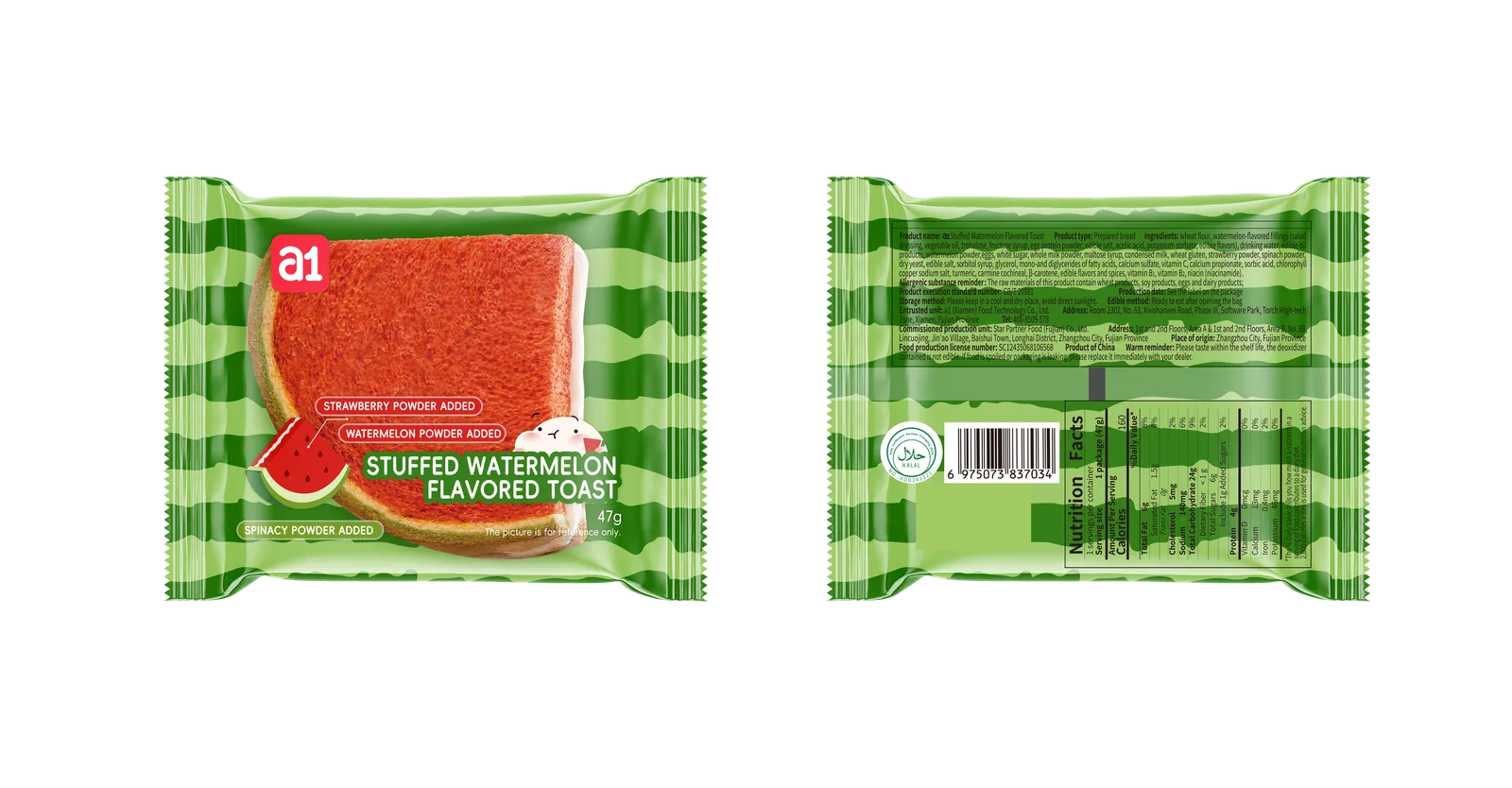
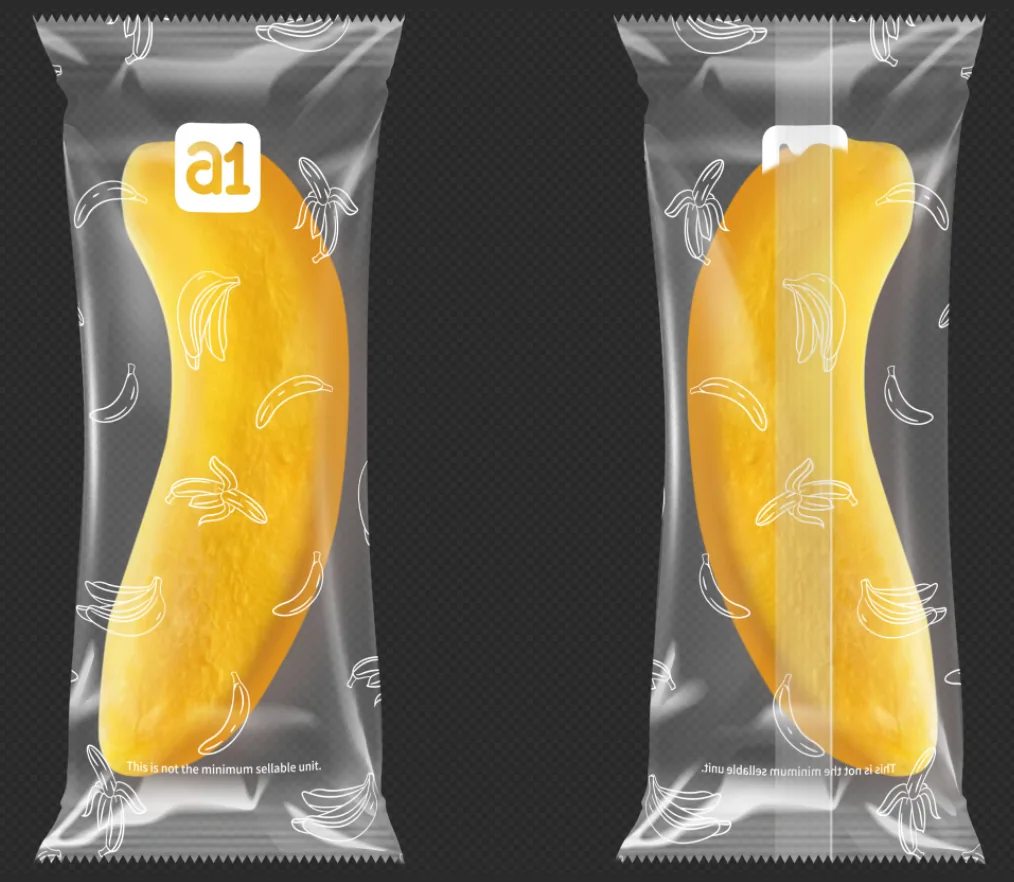
The bag also scales down. A single-piece wrap — one toast, one serving — is the same format family at convenience size. If your route includes c-stores or kiosks, ask for the single-serve variant early; printing both counts in one run beats retrofitting a bag line later.
The Box: Where Structure Earns Its Cube
The box — a folding carton around a bag, or a rigid tray under it — buys three things the bag alone cannot. Protection: a structural wall resists the compression of stacked pallets on a 25–40 day ocean leg, which matters most for soft filled cakes — a deformed piece is unsellable. Presentation: a box front-panels like a mini-billboard, which is why rice cake cookies in a 90 g six-piece format and premium single-serve cakes justify it. Portioning: an internal tray keeps decorated pieces face-up and separated through transit.
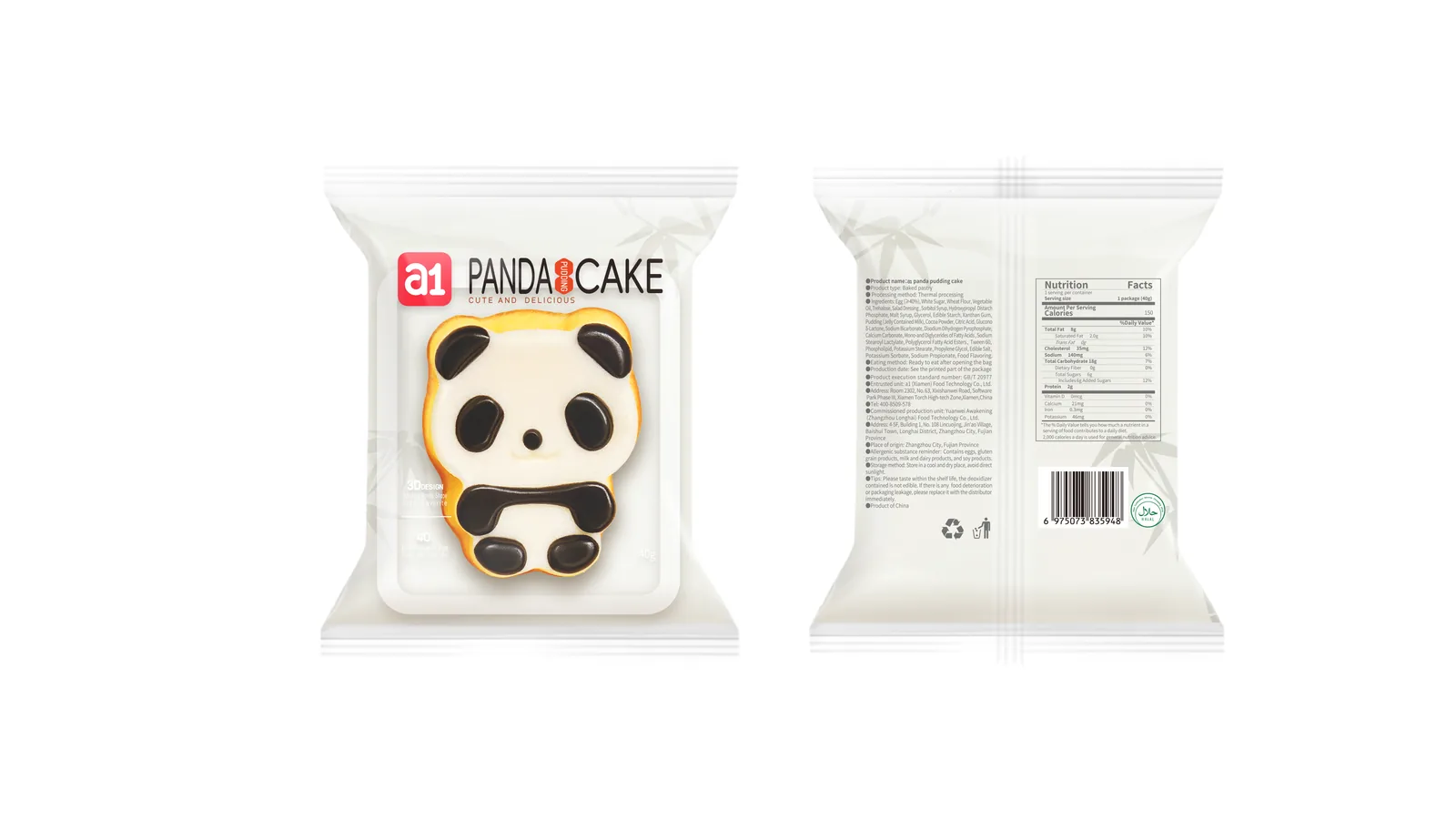
The trade is cube and cost. Structure adds millimeters of wall to every unit, and at 40HQ scale those millimeters are cartons. The rice cake cookie still loads 2,066 cartons per container because the product is dense and the format compact — but compare candidates at the carton-configuration level and get the loading figure in writing. Our 40HQ assortment guide shows how three formats coexist in one mixed container.
The Gift Carton: Seasonality with Better Margin
The gift carton is not a bigger bag — it is a different business. A rigid carton carrying multipacks, finished with a window or printed lid, moves bakery from repeat grocery purchase to occasion purchase: Christmas and New Year hampers, Eid gifting, Lunar New Year visits. Those occasions carry price tolerance no shelf SKU has, and they are calendar-driven — the ordering calendar is part of the product.
Two practical notes. First, gift SKUs are planned against the season's shipping deadline, not the shelf: a gift carton that misses the vessel is inventory, not margin — order against the calendar, as our Christmas and New Year bakery calendar walks through for the October window. Second, gift formats reward early artwork locks: carton tooling and print runs are longer than bag runs, adding weeks to your own lead times.
What Your Format Does to the Container Math
Format choice is a logistics decision with a design on it. Real configurations from the range:
| SKU | Primary pack | Carton config | 40HQ loading | Shelf life |
|---|---|---|---|---|
| Stuffed watermelon toast | 188 g / 4-slice bag | 12 bags per carton | 2,204 cartons | 6 months |
| Banana bread | 248 g / 4-slice bag | 12 bags per carton | 1,860 cartons | 6 months |
| Panda pudding cake | 240 g / 6-piece multipack | 12 packs per carton | 1,518 cartons | 6 months |
| Rice cake cookie (chocolate) | 90 g / 6-piece pouch | 24 pouches per carton | 2,066 cartons | 9 months |
Two readings matter. Bag-led SKUs (toasts, breads) cluster near 1,900–2,200 cartons per 40HQ; structured and multipack formats run lower, buying protection and shelf presence with cube. And the cookie's 9-month shelf life is no accident — it is a packaging-plus-recipe outcome, the next section.
Shelf Life Is a Packaging Function Too
Buyers talk about shelf life as a recipe property. It is a system property: recipe, process and barrier together. The same soft cake that holds 6 months in a high-barrier laminated film can fail tenders in a mono-layer bag — moisture migration, seal integrity and puncture resistance sit between the bakery and the "remaining two-thirds at arrival" clause most supermarket contracts carry. Compare packaging quotes the way you compare artwork: barrier specification, seal method and your market's requirement in writing — our 6-month shelf-life guide covers the tender clauses.
An Eight-Point Checklist Before You Lock a Packaging Format
1. Get the 40HQ loading figure per SKU in writing — cartons and total units, not estimates.
2. Confirm the barrier film structure behind the shelf-life claim, and the seal method on the line.
3. Ask for drop and compression test results on the actual carton, not a similar one.
4. Match the format to your channels: supermarkets want bag-led cube; convenience wants single-serve; gifting needs cartons.
5. For gift programs, work backward from the shipping deadline and lock artwork early.
6. Check which claims the format can legally carry in your market — put the final on-pack wording in writing before print.
7. Verify certification coverage of the producing line (FSSC 22000, BRC, HACCP, halal where required).
8. Size the trial: MOQ from 500 cartons per SKU; 200-carton trial orders for new markets.
Frequently Asked Questions
Can I mix bag, box and gift formats in one first order? Yes — that is the standard structure. A mixed 40HQ with bag-led SKUs for the shelf and one or two gift cartons for the season tests velocity and margin at once. MOQ from 500 cartons per SKU, 200-carton trial orders for new markets.
Does the bag format really hold a 6-month shelf life through tropical routes? With the correct high-barrier film and seal process, yes — the toasts and breads in the range ship 6-month ambient shelf life into tropical and long-transit markets today. Require the barrier specification and batch COA documentation; do not accept "6 months" as a verbal number.
Who is behind the line? a1 runs two production bases and eight lines under FSSC 22000, BRC, HACCP, halal and BSCI certification, exports to 40-plus markets, and releases a batch COA from a CNAS-accredited laboratory.
Pick the Format Your Route Deserves
The bag wins the cube, the box wins the shelf, the gift carton wins the season — and a serious first order usually takes all three. The best buyers make packaging a procurement conversation from day one: loading figures in writing, barriers specified, gift calendars respected.
To review packaging options against your market, request the carton-configuration sheet or a trial slot, contact Katherine at a1 Snack Lab — Justin@a1food.cn or WhatsApp +86-189-6548-2111. MOQ from 500 cartons per SKU, 200-carton trial orders for new markets.