
A distributor in São Paulo or Riyadh rarely loses a candy listing to taste. The first number that decides whether a new SKU survives is what the product looks like when the container is pried open after 40 days at sea. Bakery and chocolate formats carry a hidden spoilage tax on long routes; ambient-stable gummies do not. For an importer building a candy assortment for distant markets, shelf life is not a spec-sheet footnote — it is the difference between a repeat order and a write-off.
What "12-Month Ambient Shelf Life" Actually Means
Our confectionery line is specified for 12 months at ambient temperature — no refrigeration, no cold chain, no climate-controlled container. That is a different risk profile from bakery, where even long-life formats run 6 to 9 months. A gummy that holds for a full year at 25 °C and 60% relative humidity arrives in sellable condition whether the ship took 30 days or 55.
The claim is not marketing copy. It is the output of a low-water formula, a moisture-barrier pouch, and a validated stability program. We document it per batch, which is exactly what an importer should demand before signing a contract.
Why Gummies Stay Stable When Bakery Doesn't
Three mechanisms keep a gummy stable on a tropical crossing:
- Low water activity. The gel matrix binds free water, so microbes and mould cannot grow at ambient temperature.
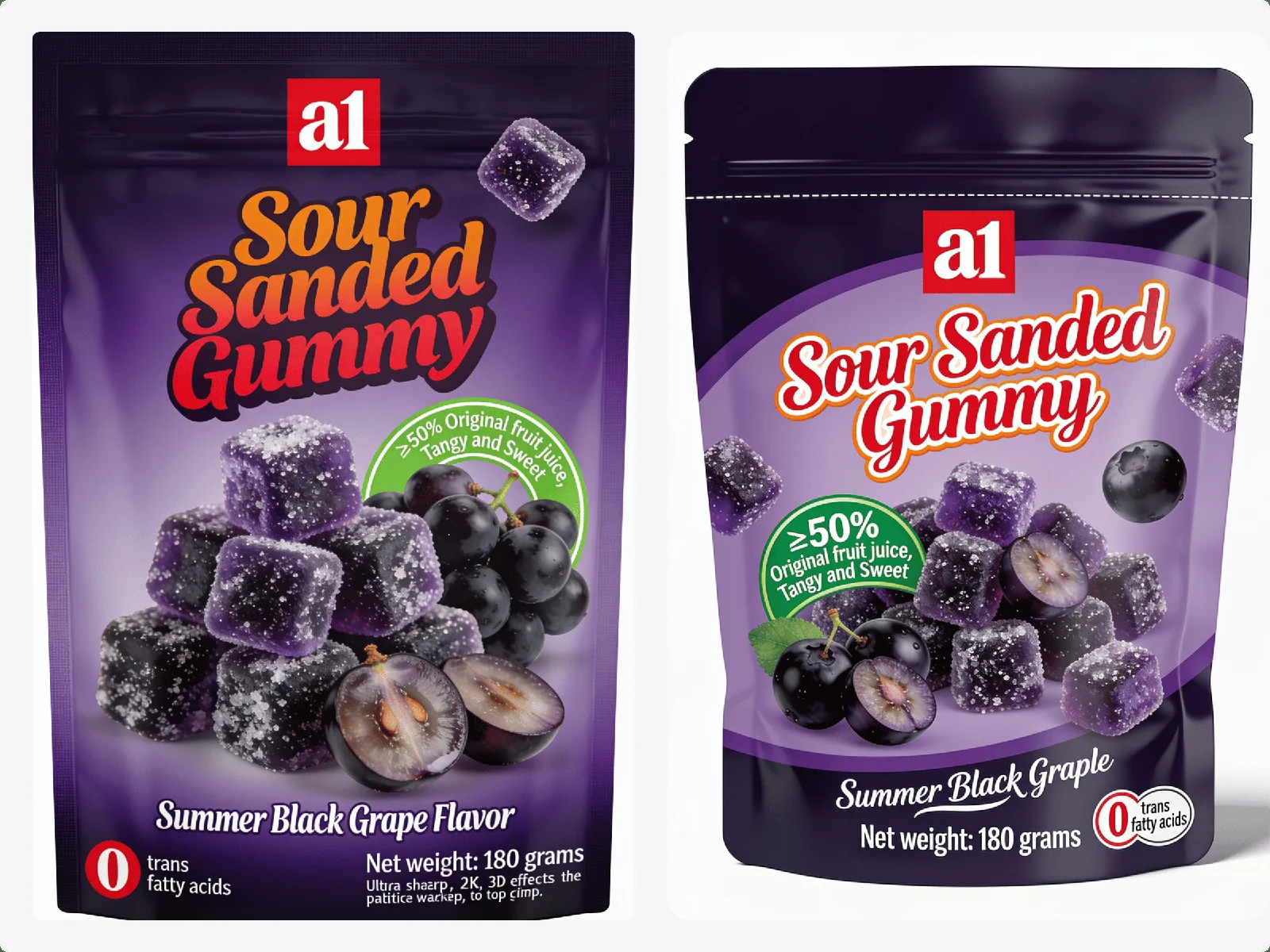
- No fat-sensitive structure. Chocolate and cream fillings bloom, split, or go rancid with heat. A fruit- or agar-based gummy has no such failure mode — which is why our 4D Crispy Dual-Color gummy and peelable grape gummy hold their texture from Xiamen to Lima.
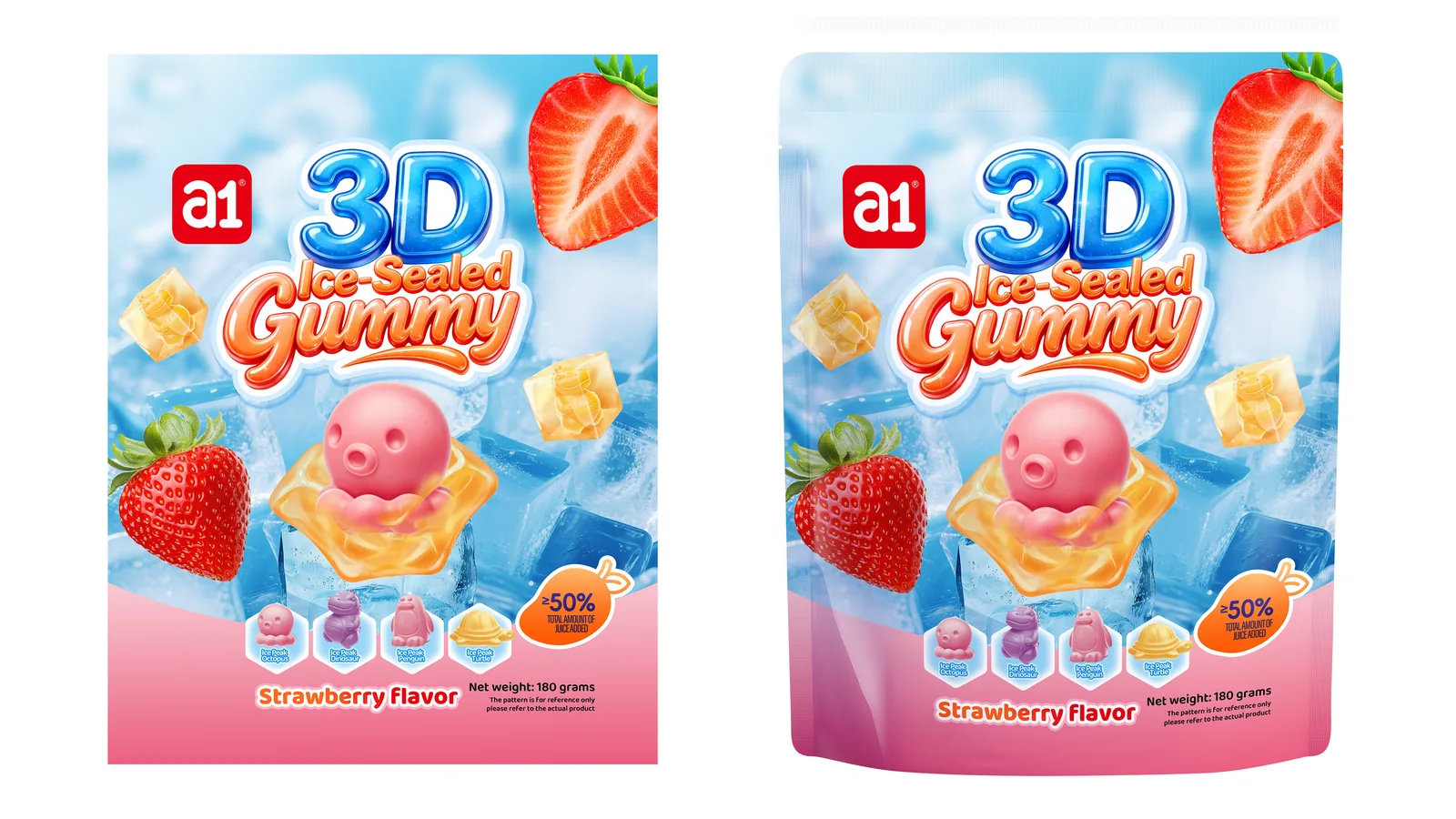
- Heat-stable novelty formats. Our 3D ice-sealed series seals a 3D shape inside the candy and is engineered to resist melting on long, hot routes — a format built for tropical retail, not a refrigerated shelf.
That stability is also why gummies tolerate the mixed-container reality of a first order far better than delicate bakery.
The Arrival-Shelf-Life Math Every Importer Should Run
Supermarkets in the EU, Gulf and LatAm routinely require two-thirds of labelled shelf life remaining at arrival. Run the numbers on a 45-day ocean leg plus 10 days of customs and 7 days in the distribution centre:
| Stage | Time elapsed | 12-month product remaining |
|---|---|---|
| Departure | 0 | 100% |
| Arrival at DC | ~62 days | ~83% |
| After 2/3 arrival rule | — | passes comfortably |
A 12-month product arrives with roughly five-sixths of its life intact — comfortably inside any 2/3 gate. A 6-month product on the same lane arrives at ~66%, at the very edge of the rule and frequently rejected at the dock. For far markets (CIS, Gulf, LatAm west coast), ambient-stable confectionery is the only format that passes without a cold chain.
Four Things That Make a Gummy Last 12 Months
- Formula water activity. Specified and tested, not assumed.
- Barrier packaging. Stand-up pouches (40–200 g) with moisture- and light-barrier film keep water activity stable even after the bag is opened on a humid shelf.
- Validated stability testing. Real-time and accelerated studies run in a CNAS-accredited laboratory.
- Per-batch COA and full traceability. Every shipment ships with a Certificate of Analysis and lot-level tracking back to the line.
This is the same discipline we apply before entering any new market — see our guide to acidic coated formats surviving LatAm and CIS routes.
How We Validate the Claim (and How You Can Check Ours)
Any supplier can print "12 months" on a bag. Few can show the file. Before you commit a container, ask for three things: the stability study protocol and result, the per-batch COA template, and the laboratory accreditation. Our packaging formats guide covers how barrier-film choices change real-world shelf life, and our mixed 20GP loading model shows how a new distributor tests the market without a full container.
We run stability validation in our own CNAS-accredited laboratory and attach a COA to every batch — the same verification discipline detailed in our factory audit checklist.
Route-by-Route: Where Ambient Stability Pays Off
- LatAm. High heat and humidity plus 35–50 day crossings — the worst case for chocolate, the best case for a stable gummy.
- CIS. Long land-plus-sea routes and strict documentation; a 12-month product absorbs transit variance.
- Gulf. Extreme summer temperatures and a 2/3 arrival rule make ambient stability non-negotiable.
- EU. Dense retail with tight dating windows; the buffer protects promotions and second orders.
A Pre-Shipment Shelf-Life Checklist
- Confirm the specified water activity and the test method.
- Request the stability study (real-time + accelerated) and the lab accreditation.
- Review the COA format — is it per batch, with lot traceability?
- Confirm the packaging barrier spec (film, WVTR, light block).
- Estimate total transit time to your DC, including customs.
- Model arrival remaining shelf life against the 2/3 rule.
- Agree storage temperature and "best before" labelling.
- Size the first order via mixed 20GP to limit risk.

MOQ, Mixed Containers and Trial Orders
We support new distributors with a MOQ from 500 cartons per SKU, 200-carton trial orders for new markets. Because gummies are ambient-stable and compact, a mixed 20GP can carry several SKUs — letting you test shelf performance across formats (crispy, peelable, sour sanded) in one shipment. Talk to our team via the contact page to build a trial assortment.
Frequently Asked Questions
Do gummies need refrigeration? No. The line is specified for 12 months at ambient temperature.
What about halal or BRC markets? The facility carries FSSC22000, BRC, HACCP, HALAL and BSCI certifications, and is an FDA-registered food facility for US-bound goods.
Can I verify the shelf life myself? Yes — request the stability study and per-batch COA before ordering.
Talk to Our Team
If you are planning a candy assortment for a distant market, shelf life should be the first spec you lock, not the last. Contact our team for the stability dossier, certification pack and a mixed-container trial plan.