
Most briefs for private label gummy vitamins arrive with a supplement mindset: a dose copied from a tablet, an overage written in as a habit, and a shelf-life assumption nobody has checked. Six months later the container has crossed two summers and the assay starts drifting below the declared value. The pack was never the problem; the sequence was. This page sets out the decisions that matter before you sign a vitamin gummy spec — how much active a chew can actually carry, how the overage gets set, what heat does on an export route, and what the paperwork should prove.
The three numbers buyers keep confusing
Vitamin gummy projects juggle three different numbers, and mixing them is the first failure. The formulated dose is what goes into the batch on day one. The label claim is the number that must still be true when the consumer finishes the pack. The assay result is what the laboratory actually measures on any given batch. A healthy project keeps a gap between the first and the second — that gap is the overage — and expects the third to track the second across the whole shelf life. If a quote shows one number for all three, nobody has done the work yet.
How much active a chew can carry
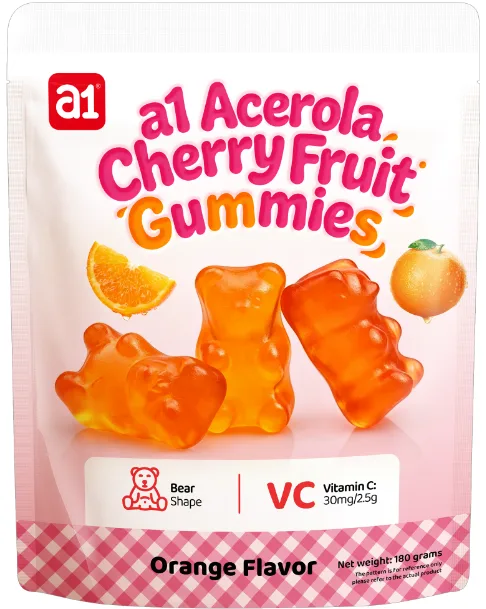
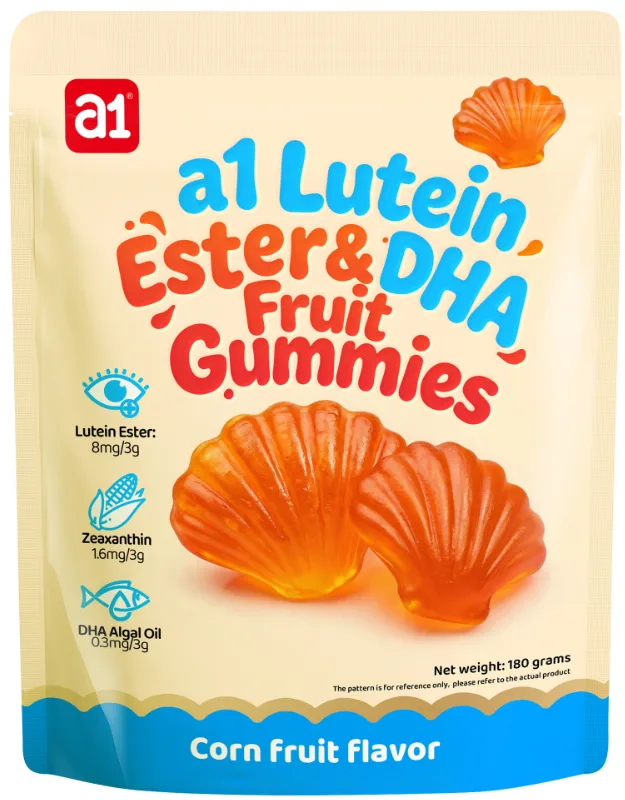
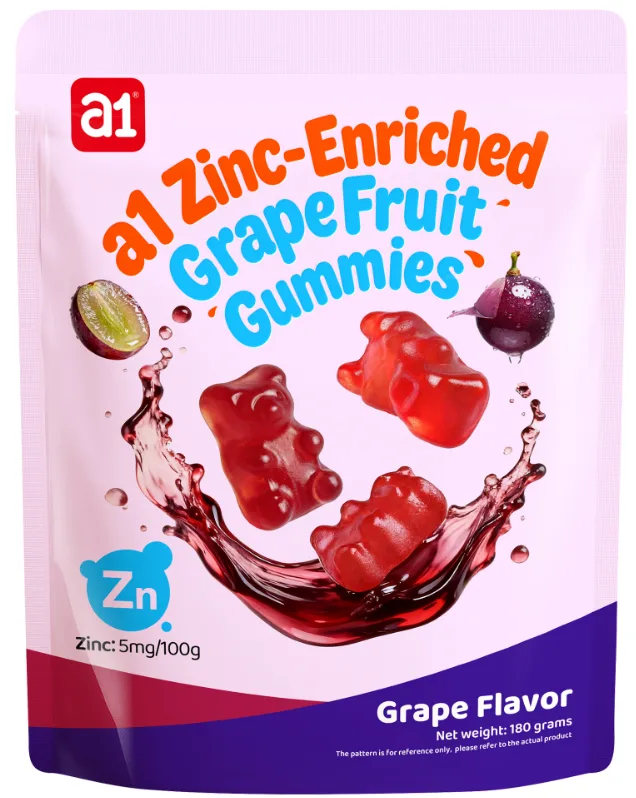
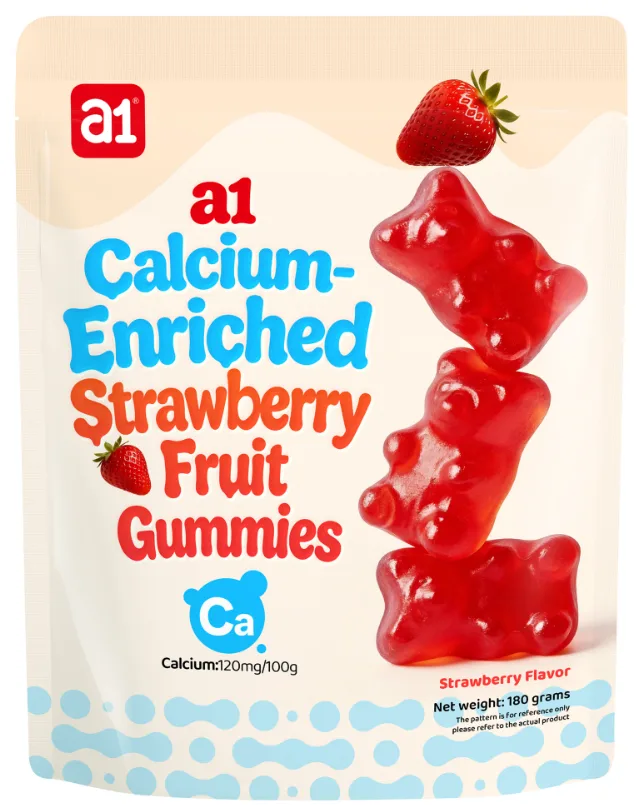
A gummy is a confection, not a tablet. Most vitamin gummies on retail shelves weigh roughly 2 to 3 g per piece (common industry format, as of 2026), and a serving is a handful of pieces, not one. That sets a hard ceiling: minerals and some vitamins dissolve and dose easily at this scale; bulky actives, oils and anything the chew must hold in suspension do not. Our own functional line runs exactly this way — six SKUs across collagen, GABA, vitamin C, lutein with DHA, zinc and calcium in a 160 g stand-up pouch (2026 product range) — and each pack prints its active loading against a serving, not per piece.
One detail our packs demonstrate better than any pitch: the dosing basis is not uniform across the industry. Our acerola cherry pack declares vitamin C at 30 mg per 25 g serving; the zinc pack declares zinc per 100 g; the lutein-and-DHA pack stacks three actives — lutein ester, zeaxanthin and DHA algal oil — each on the same 25 g basis. Compare supplier quotes on different bases and every number is wrong before the trial starts. Fix the basis — per serving or per 100 g — and force every proposal onto it.
Overages: a stability number, not a habit number
An overage is the gap between what you formulate on day one and what the label must still show at the end of shelf life. Formulators work in a broad range — a few percent for robust actives, double digits for sensitive ones — but the honest number is not a rule of thumb; it is whatever the stability data says the degradation curve demands. An overage quoted before any stability work is a guess wearing a lab coat. Ask the supplier one question: which study set this overage, over which shelf life, in which pack. If the answer is a shrug, the number will fail at expiry, not at release.
What heat, oxygen and moisture do on an export route
A container on a long route is not a warehouse. Deck temperatures climb through the tropics, the pack cycles warm and cool, and moisture migrates through every seam that is not a true barrier. The actives respond very differently:
- Vitamin C is among the most labile of the common actives — heat, oxygen and moisture all accelerate its decline (a consensus point in food-science references, as of 2026). It deserves the tightest overage discipline and the densest pack structure.
- DHA and other oils oxidise; off-notes arrive before the assay fails, so sensory checks belong in the protocol, not only chemical ones.
- Zinc, calcium and most minerals barely move — the risk shifts to texture and coating, not potency.
This is also where the gummy base matters. Gelatin and pectin set differently, hold water differently and age differently; the choice changes both the mouthfeel a market expects and the migration behaviour behind it. We cover the trade-offs in our pectin versus gelatin buyer guide.
The pouch is part of the formula
Vitamin stability is decided as much by the pack as by the recipe. Our functional SKUs ship in a 160 g stand-up pouch, within the 40–200 g range we run across the confectionery line (2026 product list). Film structure, seal integrity and headspace decide how much oxygen and moisture the chew ever sees; a jar invites light, a stick pack trades oxygen exposure for portion control. Change the pack after stability testing and the stability data no longer describes the product — so freeze the pack structure before the study starts, not after.
What the stability file should prove before you sign
Before a vitamin gummy program is signed, the stability file should show four things: the protocol (conditions, intervals, pack), release values, at least one interim point, and end-of-shelf-life values against the label claim. Twelve months at ambient is the shelf life our entire confectionery line is built to hold, and the study should be run on the finished product in the actual pack — not on the premix. Every batch ships with a COA from our own CNAS-accredited laboratory, so the file is not a promise; it is a paper trail you can audit lot by lot.
Food or supplement? What the pack may say
In most markets a vitamin gummy can sit either in food or in supplements, and the classification decides the label, the permitted statements and the registration path. EU, US and GCC frameworks diverge on wording, and a claim that is routine in one market is restricted in another. The positioning concept is set at the briefing stage, and the final on-pack claims follow the regulations of each target market — we keep the market-by-market detail in our functional gummy claims guide. Note also that for the United States we operate as an FDA-registered food facility; registration, not an approval of any product.
MOQ, container maths and the first order
A vitamin program should start small enough to learn and large enough to be real. MOQ from 500 cartons per SKU, 200-carton trial orders for new markets. For context, B2B sourcing directories for private-label gummy vitamins commonly list MOQs of roughly 10,000 units and lead times of 8–14 weeks across EU suppliers (as of 2026, Wonnda directory) — which is exactly why the trial-order lane matters for a first market test. Packaging formats, from pouch to jar to stick pack, are part of that first decision.
The sequence we now run
We ship confectionery to more than 40 markets, including Gulf and Southeast Asia routes where a container sees real heat, and every functional SKU is printed with its active loading per 25 g serving. The briefs that used to arrive written tablet-first — a dose lifted from a supplement panel — were the ones that failed: a chew that size cannot carry the dose, and the overage had been written as a habit number rather than a stability number. The damage lands at end of shelf life, when the assay drifts below the declared value and a lot has to be relabelled or retested. So we rejected the tablet-first brief and switched to chew-first: fix piece weight and the serving basis, choose actives that hold at ambient for the full 12 months, set the overage from our CNAS-accredited laboratory stability data, and print only what the data supports — then keep a COA on every batch.
Frequently Asked Questions
How much vitamin can one gummy carry? A standard chew weighs roughly 2–3 g, so the realistic dose per piece is limited; programs are built around a multi-piece serving with the loading printed per serving, and bulky or oily actives hit the ceiling first.
Is an overage a fixed percentage? No. It is the gap the stability curve demands between day one and the end of shelf life, set per active and per pack structure — a percentage quoted before stability data exists is a guess.
Which actives suffer most in an export container? Vitamin C degrades fastest under heat, oxygen and moisture; DHA and other oils oxidise and lose sensory quality first; zinc, calcium and most minerals barely move, leaving texture as the watch item.
What documents should a buyer expect per batch? A COA from a CNAS-accredited laboratory with full traceability, plus FSSC 22000, BRC, HACCP, HALAL and BSCI on the site side. For the United States we operate as an FDA-registered food facility.
What is the minimum order? MOQ from 500 cartons per SKU, 200-carton trial orders for new markets.
If you are scoping a private-label vitamin gummy program now, send the target market, the serving size you want on pack and the actives on your list; we will come back with what a chew can carry, the overage logic behind each active and the stability file in the form we would sign it. Write to Katherine or Justin@a1food.cn, or WhatsApp +86-189-6548-2111. The program entry point is our private label gummy vitamins and OEM page, and samples start on the contact page.