
Search for banana loaf ingredients and you will find two very different readers behind the query. One is a home baker working out how much mashed banana a loaf can take. The other is a buyer — a distributor, a category manager, an importer preparing a tender — who needs to know what an industrially baked banana loaf is made of, why each item is there, and how the list turns into shelf life, labels and container maths. This breakdown is written for the second reader, from the specification sheet of a factory that has shipped ambient bakery to more than 40 markets.
The Core Banana Loaf Ingredients, One by One
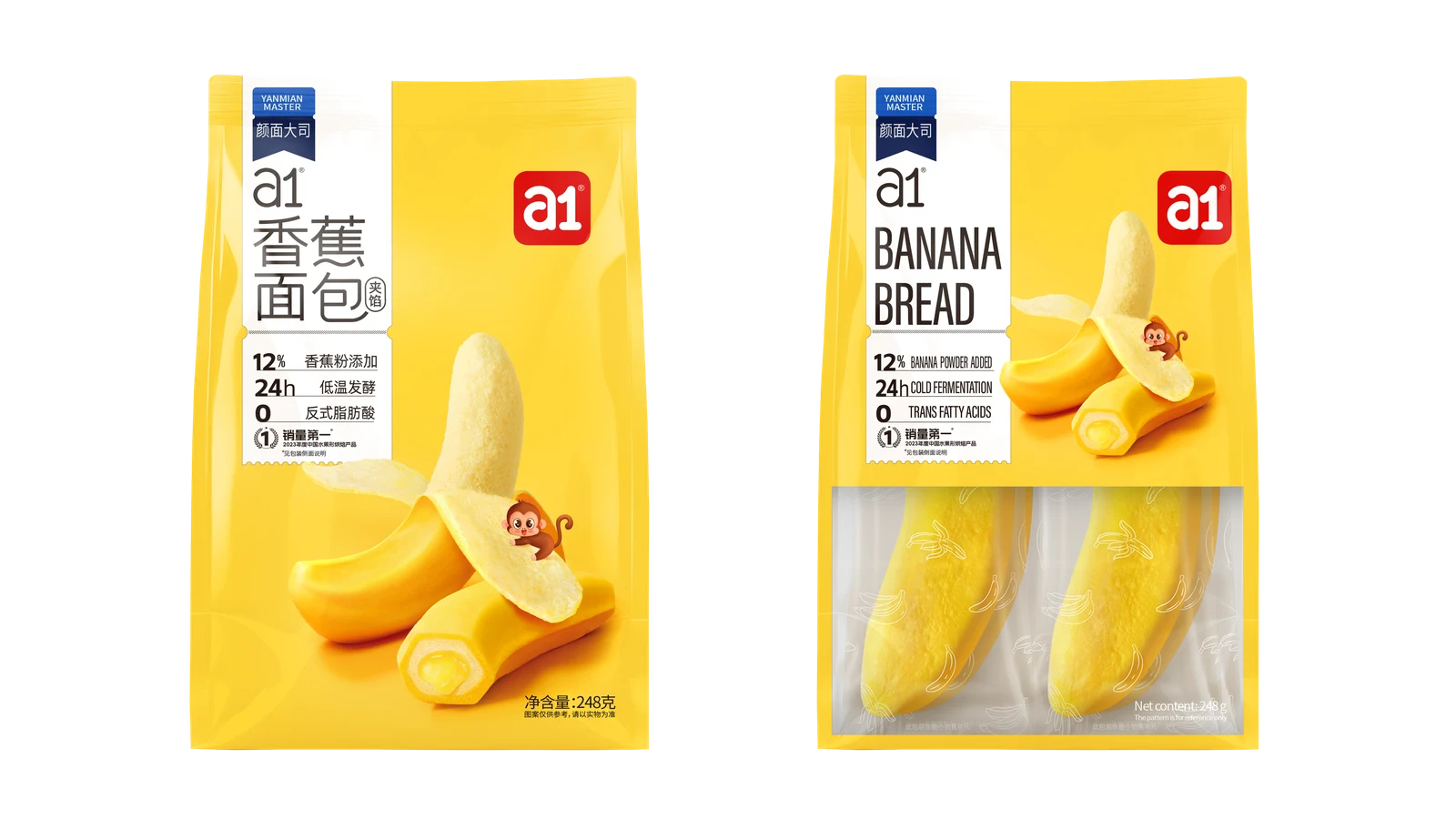
A bakery-grade banana loaf keeps a deliberately short list. Ours reads: wheat flour, sugar, eggs, vegetable oil, banana powder, a leavening system, an emulsifier, salt and natural banana flavour. Each item has a job.
- Wheat flour builds the structure; protein level decides whether the crumb holds up after six months in a pouch.
- Sugar is not only sweetness — it holds moisture, controls browning and keeps the loaf soft at ambient temperature.
- Eggs bind the batter, add richness and give the crumb its warm colour.
- Vegetable oil keeps the crumb soft after cooling and transport, where solid fats firm up and read as dry.
- Banana powder carries the identity of the product: aroma, colour and flavour, without the water that fresh purée brings.
- Leavening is tuned so the loaf rises predictably at line speed; the emulsifier keeps the batter stable until it reaches the oven.
- Salt and natural flavour finish the profile, so the banana reads as banana rather than as sugar.
When buyers ask for a simple ingredient banana bread, this is what a short label means in a factory: a formulation discipline, not an accident. Every ingredient removed has to be replaced by process — longer fermentation, better packaging, tighter water-activity control.
Why Factories Use Banana Powder Instead of Fresh Bananas
Fresh bananas are a moving target: ripeness changes sugar, aroma and water from week to week. A purée adds water to the batter, and water is the single biggest driver of water activity — the parameter that decides how long ambient bakery survives. Banana powder removes that variable: dosed by weight, consistent across seasons, concentrated in flavour.
Our own packs print the figure: 12% banana powder added, and on the family format, half a banana in every loaf. Those are recipe specifications a buyer can put next to the ingredient declaration and the batch record.
What a Printed Percentage Actually Guarantees
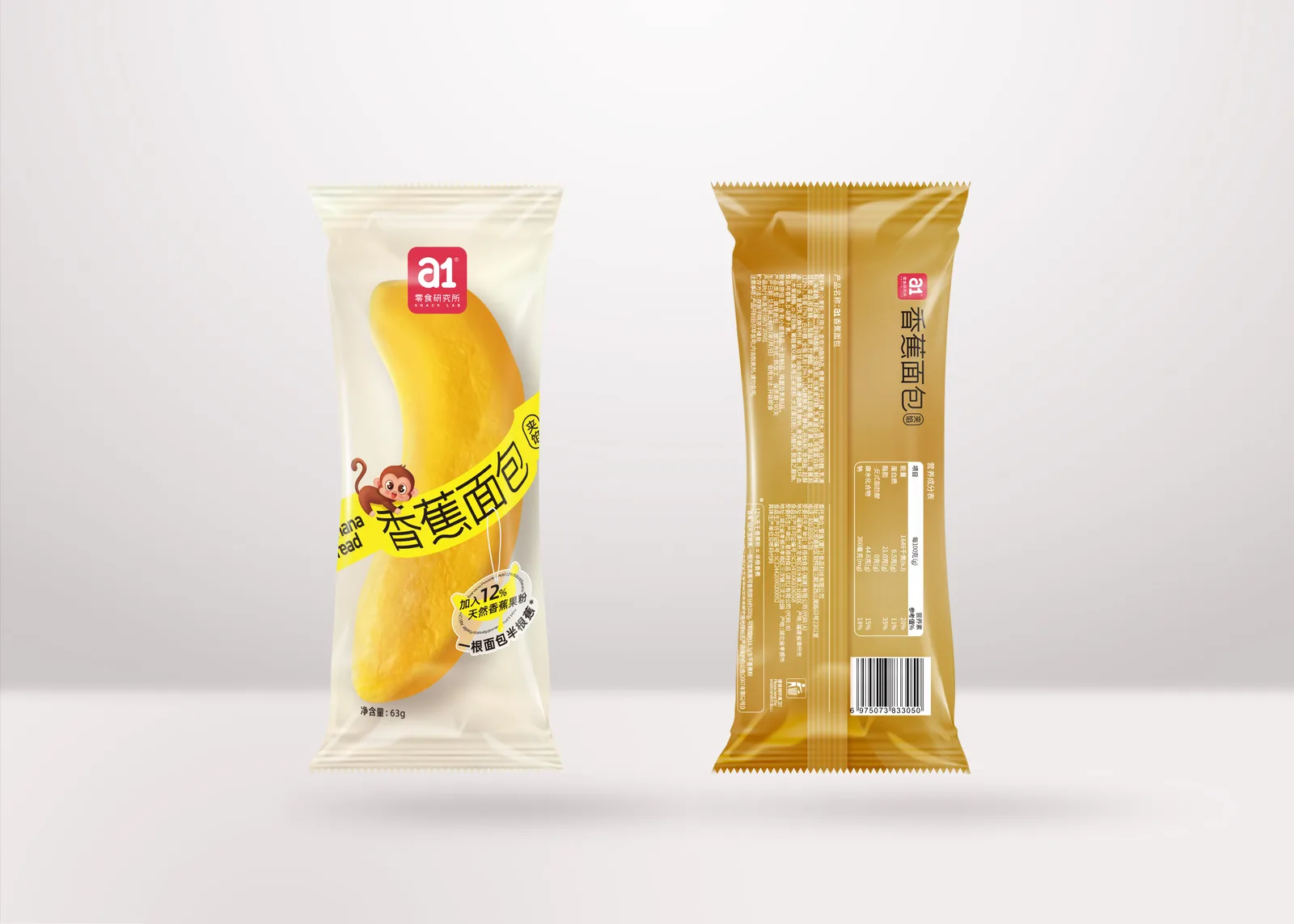
A percentage on a pack is a commitment. 12% banana powder means the recipe is built around that dose; it belongs on the specification sheet as the characterizing ingredient and must be reproducible in batch records. A percentage quoted in a sales deck but absent from the specification is decoration.
In a tender, printed claims must agree with the descending-order declaration, the nutrition panel, and the buyer’s own lab result on a retained sample. A mismatch between pack, spec sheet and certificate of analysis is one of the fastest ways to lose a listing.
The 24-Hour Cold Fermentation Trade-Off
This is the part of the ingredient list that does not appear in the list at all. Our banana bread line runs a 24-hour cold fermentation, printed on the pack because it is the process decision that makes the short ingredient list work. A straight-dough line turns batter around in a few hours. The cold rest takes a full day of line capacity and tighter planning when several SKUs share a mixer, but it buys two things that survive the supply chain: a softer crumb and a rounder banana aroma, still there after six months in a sealed pouch.
We kept the long fermentation when we could have shortened it. The reason is commercial rather than romantic: on reorder, a buyer compares the loaf they receive in month nine with the sample they approved in month one. Fermentation is one of the few variables that holds that comparison together. For the same logic applied to a different filling system, see our comparison of chocolate-filled vs jam-filled bakery.
Fats, and What “0 Trans Fatty Acids” Means
Industrial cakes once leaned on partially hydrogenated fats. Modern formulations have moved away from them, and our packs print 0 trans fatty acids. That claim should trigger two checks: that the specification names the actual fat system, and that the “0” is measured against the destination market’s labelling threshold, because rounding rules for zero differ between the US, the EU and GCC.
Additives, Allergens and Label Declarations
The six-month ambient shelf life comes mainly from formulation and packaging — water-activity control plus a high-barrier film — not from a long list of preservatives. Buyers must still verify the allergen position: wheat (gluten), egg and milk matter in this recipe, and shared lines can introduce others. Ask for the allergen matrix, not a sentence in an email.
Final on-pack claims follow the regulations of each target market — nutrition rounding, the wording of “natural”, any front-of-pack badge. A responsible supplier will tell you which claims travel unchanged and which must be re-worded for a given country.
From Ingredient List to Spec Sheet: The Buyer’s Checklist
Eight documents or answers should be on the table before a first order is confirmed:
- Full ingredient declaration, in descending order, matching the artwork.
- Specification sheet with the percentage of the characterizing ingredient (banana powder) and the fat system named.
- A certificate of analysis for every batch from a CNAS-accredited laboratory — ours is in-house, which shortens the loop between non-conformance and correction.
- Allergen matrix, including shared-line risks.
- Shelf-life evidence: stability data behind the six-month claim, not just the claim itself.
- Certification set: FSSC 22000, BRC, HACCP, HALAL and BSCI. For the United States, confirm the manufacturing site is an FDA-registered food facility — registration is a facility requirement, not an endorsement of the product.
- Packaging specification: film barrier, carton configuration and the format sizes offered.
- A loading plan for the container you intend to book.
These are also the documents that separate a factory from a trading company: a factory answers items three, five and eight from its own records.
Ingredients, Shelf Life and Container Maths
Ingredient decisions determine what logistics can promise. Built for ambient stability, the loaf carries a six-month shelf life, so a container can spend four to six weeks at sea and still arrive with roughly two thirds of its life intact — the threshold most supermarket and CVS buyers apply. The arithmetic is set out in our guide to 6-month shelf-life bakery.
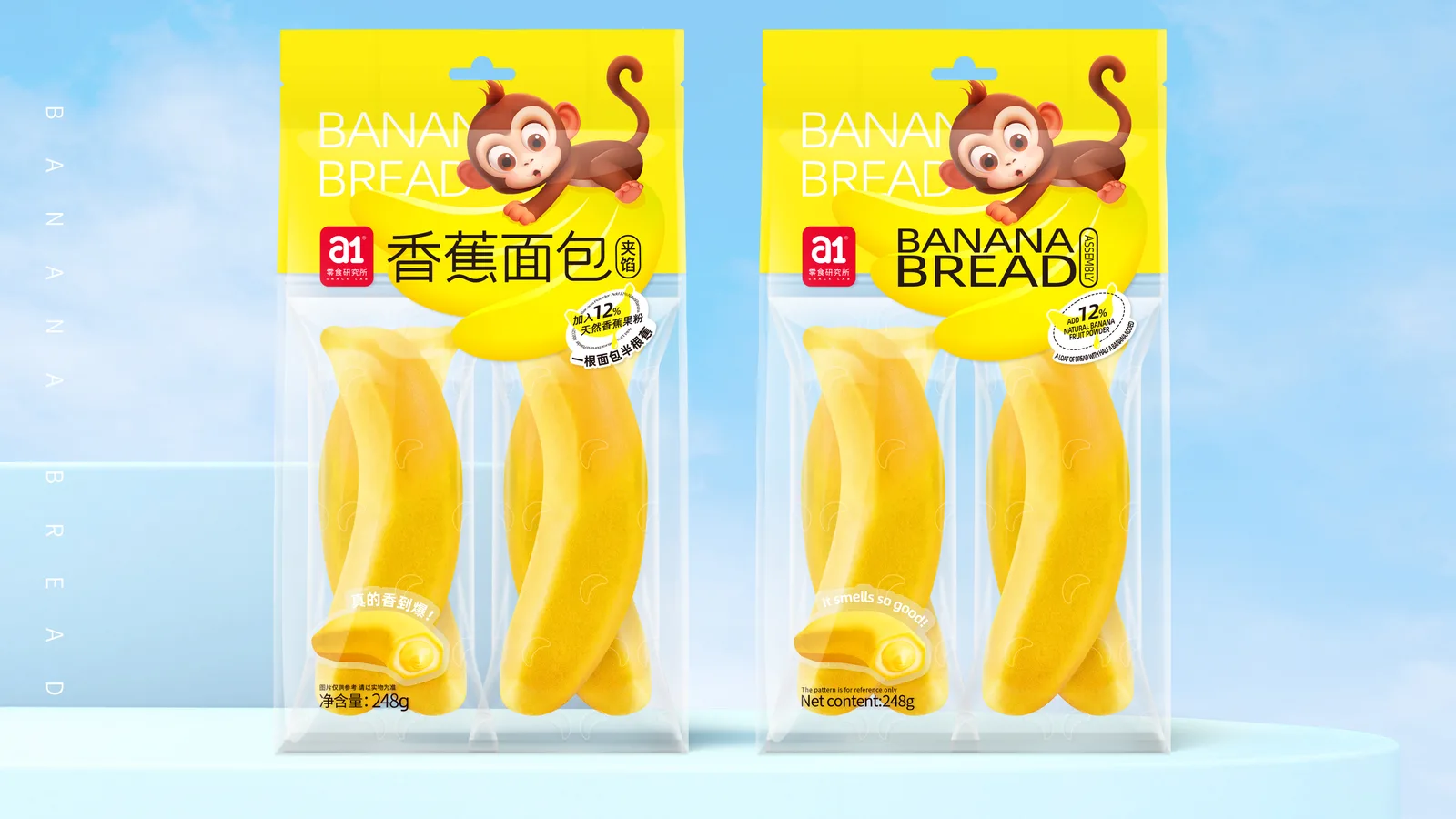
The formats follow the same logic. The 248 g four-slice pack runs 12 bags to a carton and 1,860 cartons to a 40HQ; the 372 g six-slice family pack runs 8 bags to a carton and 1,778 cartons. Both figures are from our 2026 product list, and both depend on a formulation that never needs a cold chain.
Sourcing Banana Loaves at Factory Scale
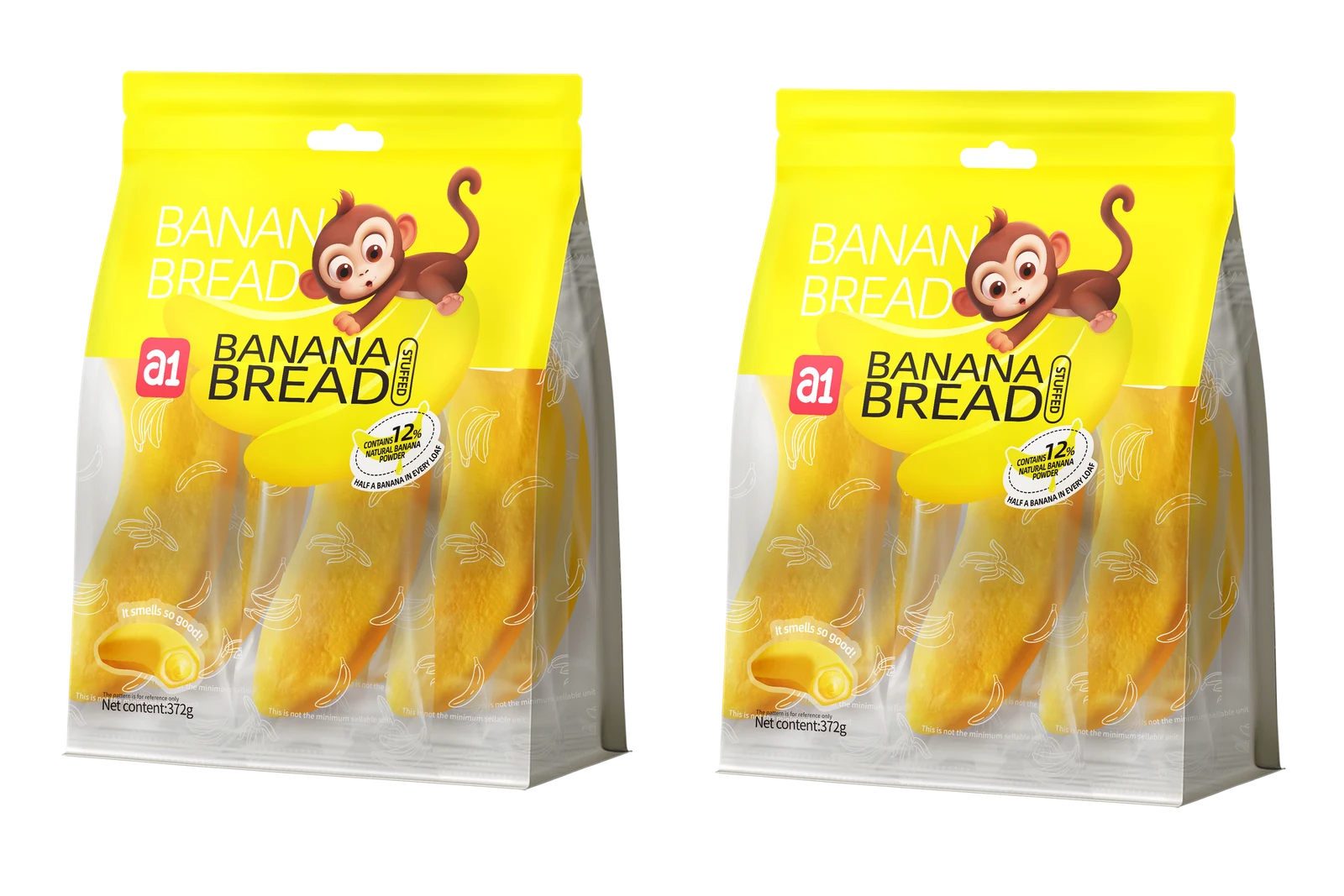
If you are building a banana loaf listing, the useful conversation is the specification behind it: which banana dose, which fat system, which film, which shelf-life evidence. Our bakery range: a1 banana bread, with a second ambient line at a1 mango bread that many distributors carry as a companion flavour.
MOQ from 500 cartons per SKU, 200-carton trial orders for new markets. Share your target market, the format you want and the shelf life your retail customer requires, and we will send the specification sheet, allergen matrix and certification set for review. Katherine and the export team answer from our contact page; WhatsApp +86-189-6548-2111 also works for a first conversation.