
Type custom gummy manufacturer into a search bar and suppliers use it interchangeably with private label gummy. The difference decides what you sample, what tooling gets cut, and — the part buyers discover too late — who owns the formula and the mold when the program succeeds. Here is how a factory separates the two.
Two Terms, Two Different Commitments
Private label means choosing from a manufacturer's existing catalog: a validated formula, existing molds, your artwork on the pouch. Recipe, process parameters and stability data already exist, so a private label program can reach first shipment in weeks. You buy speed and predictability, accepting that the same formula may sit on other buyers' sheets.
Custom manufacturing — the work a true custom gummy manufacturer does — starts from your brief: your actives, your sugar or sugar-free system, your shape and texture. R&D builds or substantially modifies a formula, tooling is cut or adapted, and the result is validated before production. You gain differentiation and, if the contract says so, exclusivity — on a runway measured in months, not weeks.
| Decision point | Private label | Custom (OEM) |
|---|---|---|
| Formula source | Validated catalog recipe | Built or modified from your brief |
| Shape & molds | Existing catalog molds | New or adapted tooling |
| Trial batches | Sampling only; stability on file | Bench trial, pilot batch, stability plan |
| Formula ownership | Shared or non-exclusive | Exclusive, if written into the contract |
| Time to first shipment | Weeks | Months (R&D plus validation) |
| Typical buyer stage | New program, first market test | Established volume, own positioning |
What Tooling Actually Changes: The Mold Is the Product
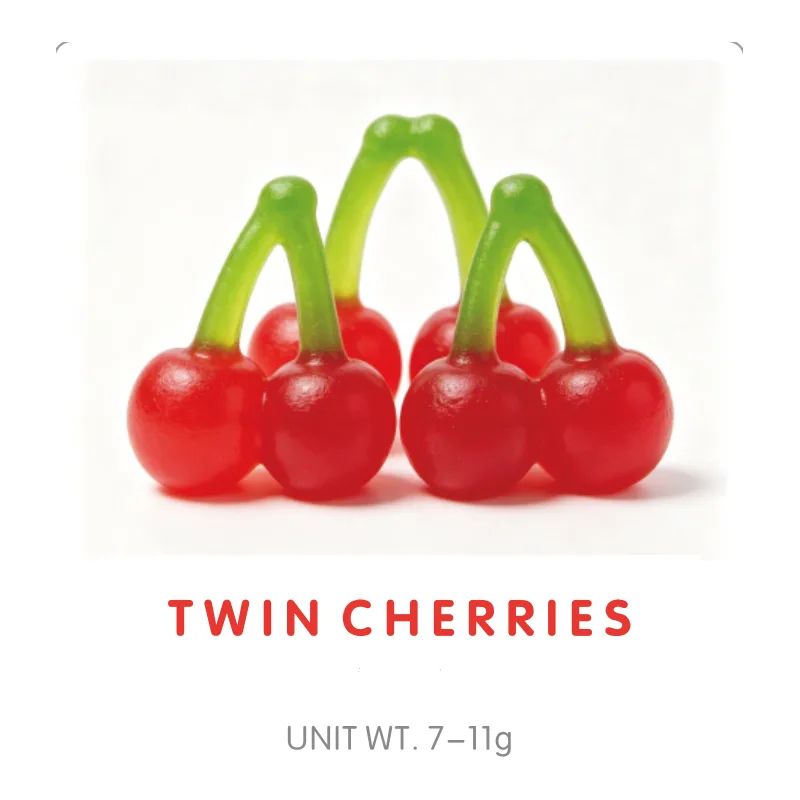
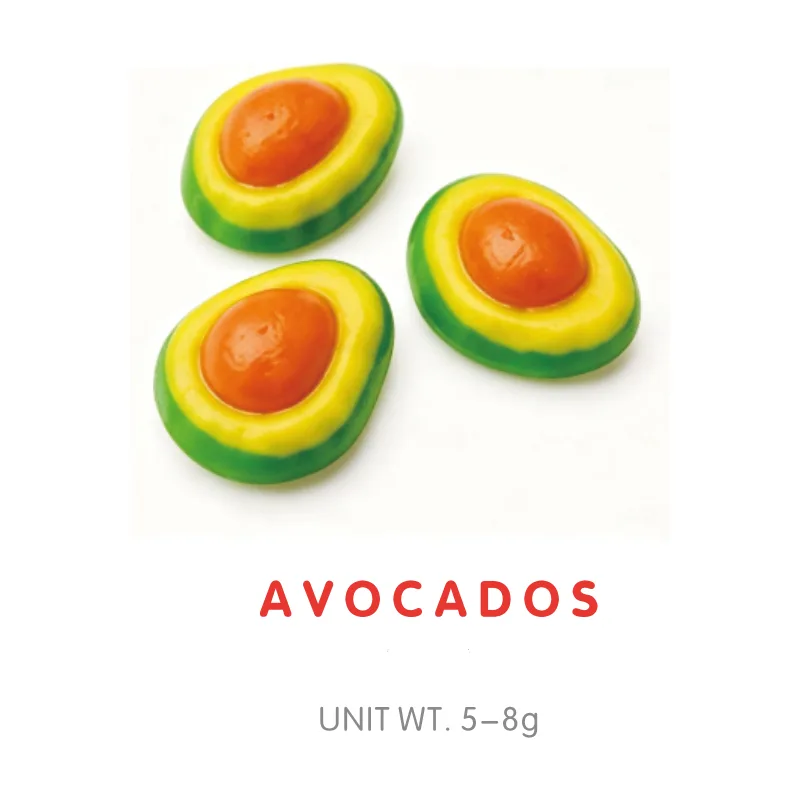
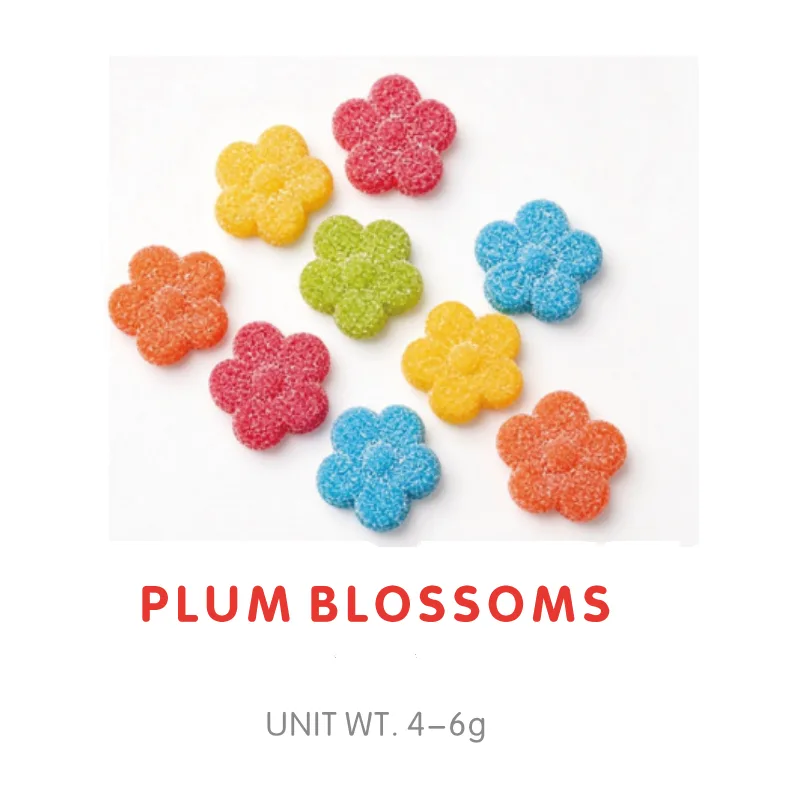
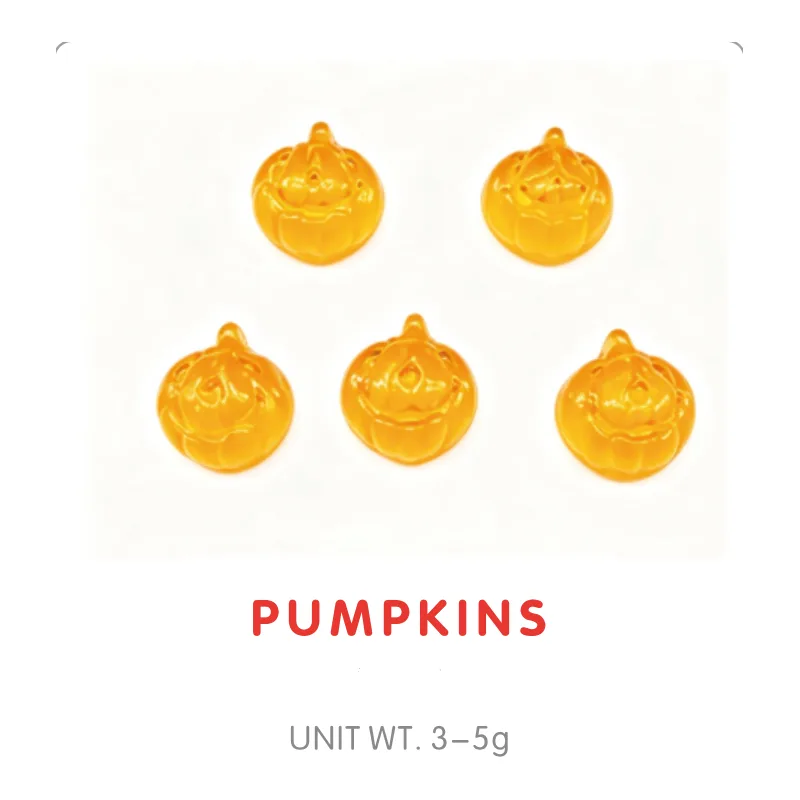
In gummy manufacturing the mold is not a detail — it is the product. A catalog mold defines the piece weight, the depositing behaviour and the eating experience. Our sheets describe shapes precisely: the twin cherries above run 7–11 g on a twin cavity with fused stems; plum blossoms run 4–6 g with a sour-sanded surface; pumpkins run 3–5 g for seasonal programs; the avocado needs a two-tone deposit with a centre fill for the “pit”.
A custom shape therefore touches everything downstream: a new sculpt must be drawn, approved as a sample, and matched to depositing parameters — each step a validation loop a catalog shape has already passed. That does not make custom tooling a bad idea; it makes it a decision that belongs after your market test, not before it.
Trial Batches: Where Custom Projects Are Won or Lost
A disciplined custom program runs a fixed sequence: brief, bench trial, pilot batch on the line, stability assessment, then first production. Each step catches a specific failure — an active that breaks the gel system, a pH window that shifts during drying, a texture that drifts between pilot and full run. Private label skips most of this because the failures were caught years ago.
Whichever route you take, ask for the same documentation: every batch ships with a COA from an accredited laboratory — ours carry a COA from our CNAS-accredited in-house lab — plus retained samples and a stability plan matched to the destination climate. For custom programs, also ask what the stability assessment covers: ambient shelf life and surface-treatment behaviour.
Who Owns the Formula and the Mold?
Intellectual property in a gummy program sits in three layers, and each deserves its own line in the contract:
- The recipe — formula, parameters and stability data. On private label it stays with the manufacturer; on custom, ownership or exclusivity is what the contract says.
- The mold and sculpt — a custom shape is an asset. Specify who keeps the tooling and whether the same mold can be sold to another buyer.
- The brand layer — artwork, trademark and pack copy are always yours.
Exclusivity deserves the same precision: name the market, the channel and the duration, in writing. We file our own patents — more than 200 across the group — so we treat a buyer's custom program the way we treat our own: defined, documented, defensible.
Our own history is the best guide here. We developed the 3D ice-sealed, peelable and crispy dual-color formats at our three R&D centers, filed the patents, and only then opened those SKUs into the catalog. We ran the custom path first and industrialised it into private-label-ready products — so our judgment on order of operations is not theoretical: a buyer who starts on a catalog SKU validates the market with stability data that already exists; a buyer who jumps to a custom mold before any market test is learning a new product and a new market at once, and the penalty arrives as reformulation cycles and delayed listings. Start catalog; migrate custom when volume justifies it.
MOQ, Lead Time and the Ambient Advantage
Our terms are the same for both routes: MOQ from 500 cartons per SKU, 200-carton trial orders for new markets. What changes is the runway — a private label order can be scheduled promptly against existing stability data, while a custom program adds R&D and validation up front. Plan listing dates around that difference.
Both routes share the same logistics physics: our gummy range carries a 12-month ambient shelf life in stand-up pouches from 40–200 g, with piece weights adjustable to your requirement. Ambient stability is why gummies tolerate long ocean routes without a cold chain — whatever the formula's origin.
An Eight-Point Checklist Before You Sign
- Name the route — catalog SKU or custom brief — and get the matching specification sheet.
- Write down mold ownership and exclusivity — market, channel, duration.
- Fix the trial batch plan: bench trial, pilot batch, and a COA from an accredited lab for every batch.
- Collect the certification pack: FSSC 22000, BRC, HACCP and HALAL certificates, plus FDA-registered food facility status for US programs.
- Confirm piece weight and pouch format — 40–200 g stand-up pouches in our range.
- Verify the 12-month ambient shelf life with stability evidence; set an arrival shelf-life clause.
- Put the MOQ terms in the PI: 500 cartons per SKU, 200-carton trials for new markets.
- Agree the claims boundary: final on-pack claims follow the regulations of each target market.
Frequently Asked Questions
Is a custom gummy manufacturer the same as a private label supplier? No. Private label sells validated catalog products with your branding; a custom gummy manufacturer develops a new formula, shape or format from your brief. The question is which one your contract describes.
Can I start with private label and move to custom later? Yes — a catalog SKU proves the market while stability data already exists; the custom version then differentiates a proven program.
Who owns a custom gummy mold? Whatever the contract says — which is why the contract must say it. Specify ownership, exclusivity scope and what happens to the tooling if the program moves.
What MOQ should I expect for custom gummy candy? Our terms apply to both routes: MOQ from 500 cartons per SKU, with 200-carton trial orders for new markets. Ask any manufacturer to state terms for both routes separately.
Where to Start
Our OEM and private label gummy program runs both routes from the same certified lines. The 4D crispy dual-color gummy and the peelable gummy both began as custom R&D projects — see how a catalog format earns its shelf — then read how to vet a gummy manufacturer before you shortlist anyone. For samples, specifications and a program plan, contact Katherine at a1.